









Blisters, silence, laughter and something deeper… the Camino is never what you expect, but always what you need
The Camino de Santiago is often described as a beautiful journey. And it is. But that’s only part of the truth.
Because between the postcards, the sunsets and the inspiring quotes, there is another reality—one that every pilgrim eventually faces. A reality that lives somewhere between pain and freedom.
And that’s where the real Camino begins.
The physical truth no one tells you
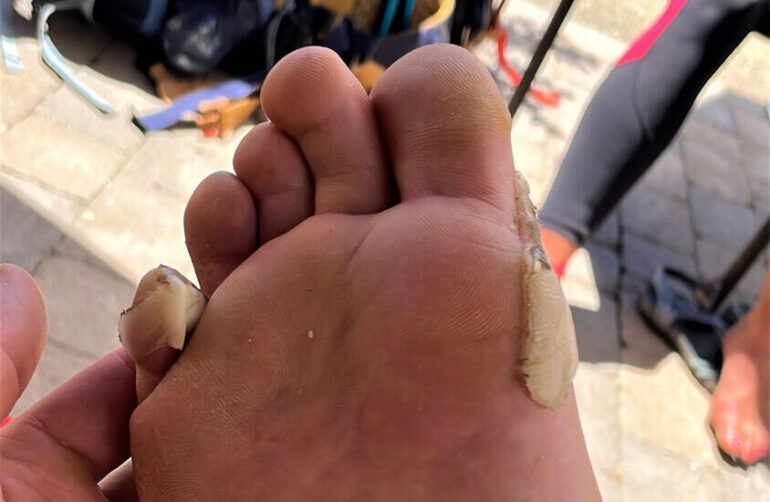
The first days are usually the hardest. Your body is not used to walking long distances day after day. Muscles ache, shoulders tighten under the weight of the backpack, and your feet… they quickly become the center of everything.
Blisters appear.
Fatigue builds.
And suddenly, every step feels heavier.
It’s in these moments when many pilgrims start to question why they came.
But something interesting happens: the body adapts. Slowly, almost silently, it gets stronger. And what felt impossible on day one becomes manageable a few days later.
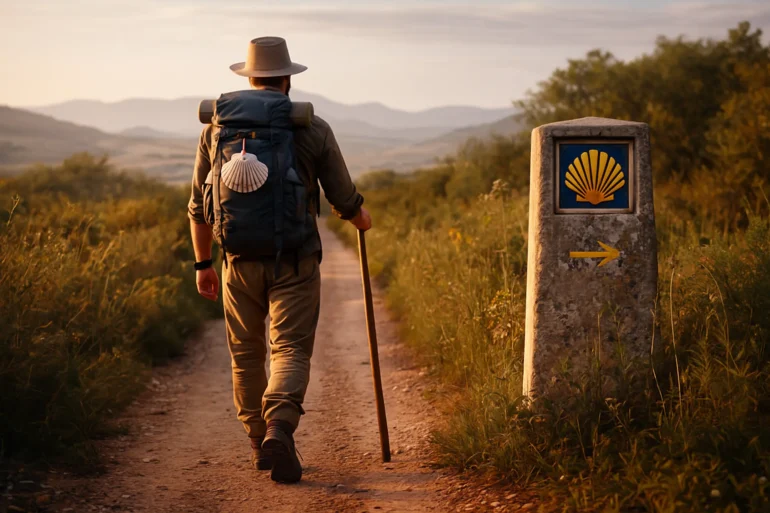
The mental battle is even stronger
What surprises most pilgrims is not the physical pain, but the mental challenge.
There are moments of doubt.
Moments of loneliness.
Moments when the Camino feels endless.
Walking for hours gives you time to think. And sometimes… too much time.
But this is also where the transformation begins.
Because without distractions, without noise, without the constant rush of everyday life, you start facing yourself.
And that can be uncomfortable… but also powerful.
Freedom you don’t expect
At some point, something changes.
You stop worrying about distance.
You stop checking the time.
You stop thinking about what comes next.
You just walk.
And in that simplicity, a strange kind of freedom appears. A freedom that doesn’t come from escaping life, but from reconnecting with it in a more honest way.
There is no pressure to be perfect.
No need to impress anyone.
Just you… and the path.
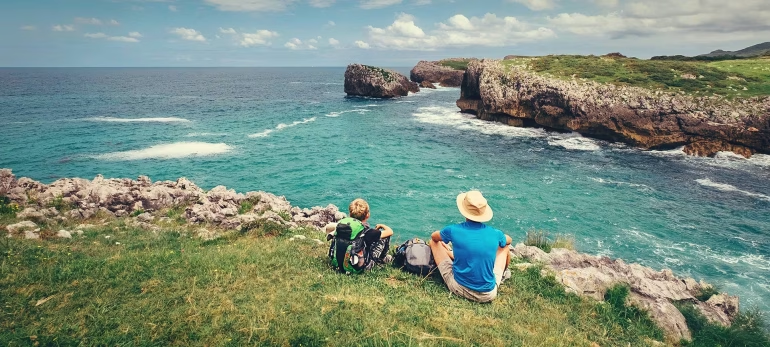
The people who change everything
One of the most unexpected parts of the Camino is the people.
You meet strangers who quickly become part of your story. Conversations happen naturally, without effort, often deeper than those you have at home.
You share meals, stories, struggles and laughter.
And even if you only walk together for a day, those connections stay with you.
Because on the Camino, everyone is open in a way that feels rare.
The beauty of simple moments
What pilgrims remember most are not the big moments, but the small ones.
A coffee at sunrise.
A quiet path through the forest.
A laugh in an albergue after a long day.
These simple experiences become meaningful because they are real.
There are no filters here. No need to capture everything. Some moments are just meant to be lived.
Pain and freedom, together
The Camino de Santiago is not about choosing between pain or freedom.
It’s about experiencing both.
The pain makes you aware.
The freedom makes you understand.
And somewhere between the two, something changes inside you.
Why the Camino stays with you
When the journey ends, most pilgrims realize something unexpected: the Camino doesn’t really finish.
Because what you felt, what you learned, what you experienced… stays.
And long after you leave the path, you find yourself thinking about it.
Not as a trip.
But as a moment that changed something inside you.