







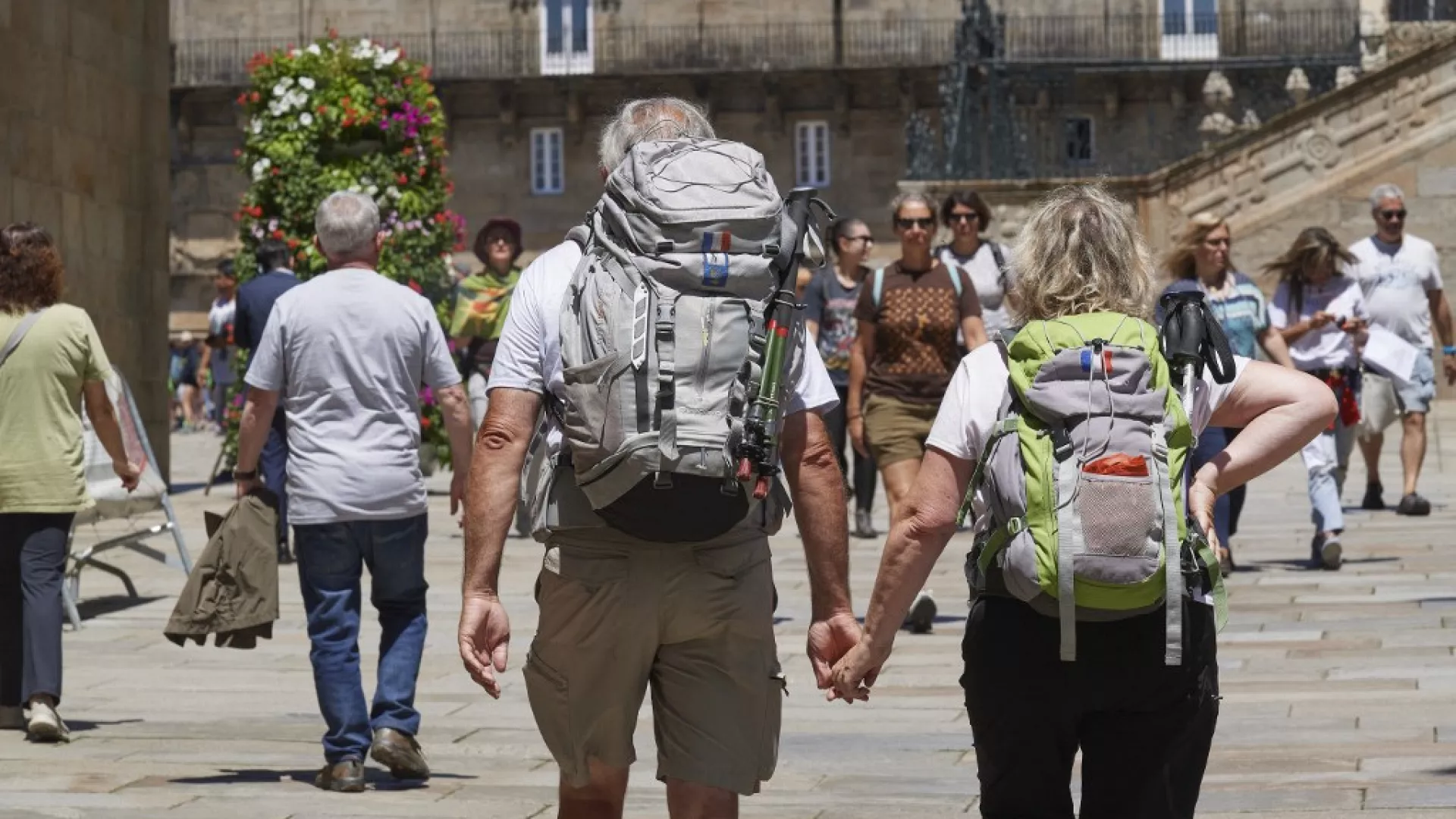
What many pilgrims still don’t realize could affect their entire journey this year
The Camino de Santiago in 2026 is not just changing in spirit… it’s changing in logistics.
Behind the scenes, new rules and stricter controls are quietly reshaping how pilgrims move, pack and even finish their journey in Santiago. And for many, these changes are coming as a surprise.
If you’re planning to walk the Camino this year, there are three key updates you simply cannot ignore.
The 15 kg rule: the limit that can stop your backpack
For years, backpack transport services have made the Camino easier for thousands of pilgrims. But in 2026, the rules are being enforced more strictly than ever.
The two main providers have one clear limit:
15 kilograms per backpack.
If your bag exceeds that weight, you may face extra charges—or worse, it may not be transported at all.
There’s another detail many overlook: items hanging outside the backpack are not accepted. Boots, sleeping mats or loose gear attached to the outside can lead to rejection.
This is forcing many pilgrims to rethink how they pack, embracing a lighter and more minimal approach.
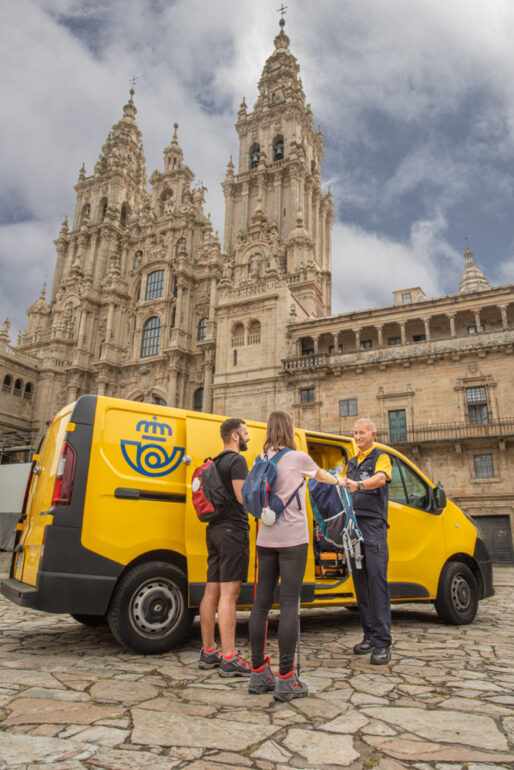
Santiago’s historic center: tighter controls on access
Arriving in Santiago has always been a magical moment. But in 2026, the final stage comes with new restrictions.
Authorities have introduced stricter regulations in the historic center, limiting tourist-related services and controlling vehicle access.
This directly affects luggage delivery.
Fewer storage services.
More restrictions for delivery vehicles.
Less flexibility for last-minute logistics.
For pilgrims staying inside the old town, this means planning ahead is now essential.
New bus rules: your backpack might not fit anymore
For those who occasionally skip a stage by bus, there’s another important update.
New transport regulations in Galicia now include stricter size limits for carry-on luggage.
Backpacks must fit within specific dimensions to travel with you inside the bus. Larger packs may need to go in the luggage compartment, sometimes with additional costs or restrictions.
This might seem like a small detail… until you’re standing at the station with a full-size backpack.
A Camino that demands more planning
These changes point to a clear trend: the Camino is becoming more regulated and structured.
Spontaneity is still possible—but preparation is now more important than ever.
Packing light, booking in advance and understanding the rules can make the difference between a smooth journey and a stressful one.
Less weight, more awareness
At its core, the Camino has always been about simplicity.
And in a way, these new rules reinforce that idea.
Carry less.
Plan better.
Move smarter.
Because in 2026, the Camino is not just testing your legs…
It’s testing how well you adapt.