










Prices, bookings and trail conditions every pilgrim should know
The Portuguese Way of the Camino de Santiago continues to grow steadily in 2026, and with that growth come important practical changes for pilgrims. While the route remains one of the most accessible and well-organized Camino options, real data shows shifts in costs, accommodation demand, and trail conditions—especially in northern Portugal.
If you’re planning to walk this year, here’s what is actually happening on the ground.
Average prices in 2026: what pilgrims are really paying
Costs on the Portuguese Way have remained relatively stable, but there is a clear difference depending on comfort level and route choice.
Most pilgrims in 2026 are spending between €35 and €75 per day, with €40–€60 considered a comfortable average budget.
Accommodation remains the biggest expense. Public (municipal) albergues still offer the cheapest option, typically costing around €10 per night, while private albergues range between €15 and €20 per bed.
Food costs also remain predictable. A typical pilgrim menu costs around €10–€15, and simple breakfasts or coffees are inexpensive, especially in Portugal where café culture is strong.
However, there is an important trend in 2026: coastal routes, especially from Porto along the Atlantic, are slightly more expensive due to tourism pressure in beach towns.
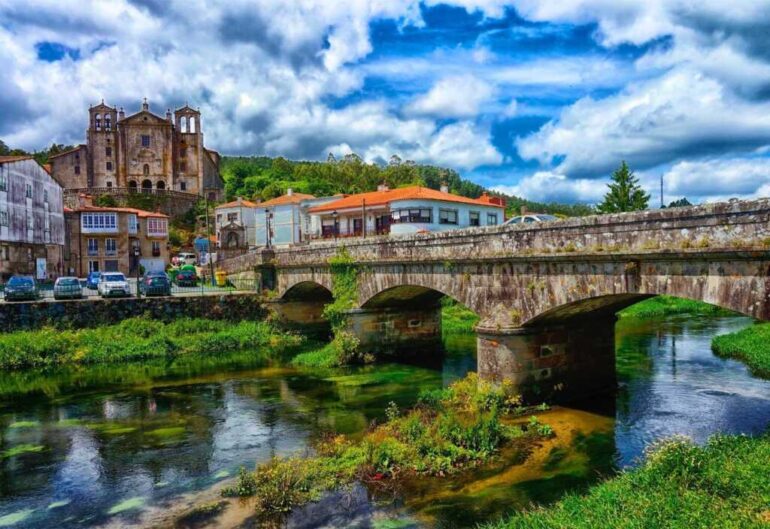
Do you need to book ahead in 2026? Yes, more than before
One of the biggest changes compared to previous years is the need to plan accommodation more carefully.
The Portuguese Way is now the second most popular Camino route, attracting a large share of total pilgrims.
This increase is already creating pressure in certain areas. For example, closures of some albergues, like one reported in Vila do Conde in 2026, highlight how supply does not always keep up with demand.
As a result, booking ahead—especially in peak months like May, June, and September—is becoming more important than before.
- Public albergues still work on a first-come basis
- Private albergues and guesthouses are increasingly booked online
- Coastal stages and popular towns fill up faster
Pilgrims walking without reservations can still find accommodation, but flexibility is now key.
Yellow arrows in northern Portugal: still reliable
The famous yellow arrows—the backbone of Camino navigation—remain generally reliable along the Portuguese Way.
In northern Portugal, especially between Porto and the Spanish border, the marking system is:
- Consistent on main routes (Central and Coastal)
- Well maintained in most urban and rural areas
- Occasionally less visible in busy towns or construction zones
This reflects a broader effort in recent years to improve and standardize Camino routes in Portugal, including official certification processes that have been ongoing since 2021.
Pilgrims today rarely get lost if they follow the arrows carefully, though many now use GPS apps as a backup.
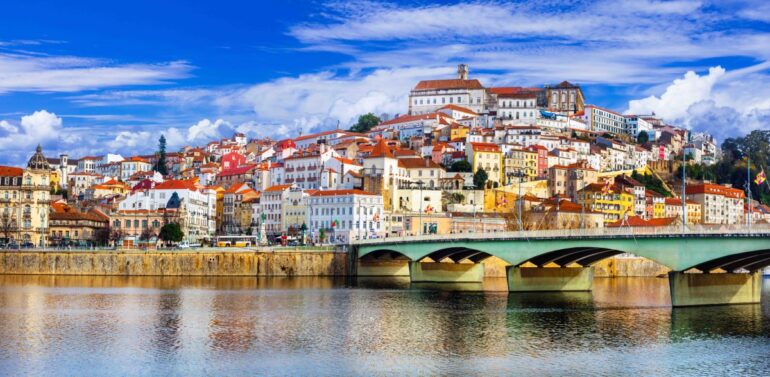
Growth without chaos: the Portuguese Way in 2026
Unlike the Camino Francés, which faces overcrowding in some stages, the Portuguese Way is growing in a more balanced way.
The increase in pilgrims is real, but it is being absorbed across different variants:
- Central route (most traditional)
- Coastal route (increasingly popular)
- Litoral and hybrid options
This distribution helps avoid extreme congestion, although certain stages—especially near Porto and in Galicia—can still feel busy.
Porto remains the main starting point
Most pilgrims in 2026 continue to start their journey from Porto, walking approximately 240–270 km to Santiago.
The city remains the key gateway due to:
- International airport access
- Strong accommodation network
- Clear route options (Central, Coastal, Litoral)
This has not changed in 2026 and reinforces Porto’s role as the main hub of the Portuguese Way.
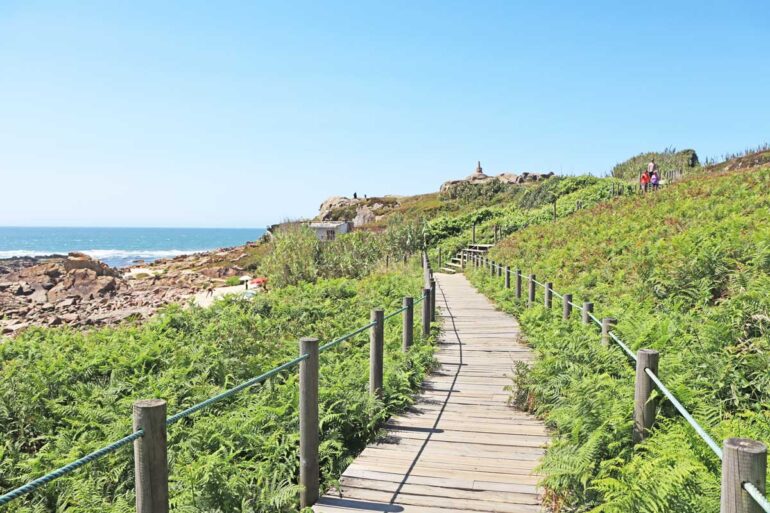
What has actually changed in 2026
There is no sudden revolution this year, but several gradual trends are now clearly visible:
- Slight increase in daily costs due to demand
- Greater need for advance booking in peak season
- Continued improvement in route marking and infrastructure
- Growing popularity of coastal variants
- More international pilgrims choosing Portugal
These changes reflect maturity, not instability. The Portuguese Way is evolving, not transforming overnight.
What pilgrims should expect today
Walking the Portuguese Way in 2026 still offers one of the most balanced Camino experiences available.
Pilgrims can expect:
- Good infrastructure and clear signage
- Reasonable prices compared to other routes
- A mix of quiet and busy stages
- Strong local hospitality
At the same time, better planning is now part of the experience.
Conclusion: a route growing, but still manageable
The Portuguese Way in 2026 is not overcrowded, but it is no longer a hidden secret. Prices remain accessible, but demand is rising. Yellow arrows are reliable, but digital tools are now common. Booking is not mandatory everywhere, but increasingly recommended.
In short, the route is evolving in a natural way—becoming more popular while still maintaining the qualities that made it attractive in the first place.
For pilgrims, the message is simple: prepare a bit more than before, but expect a well-organized and rewarding journey.