












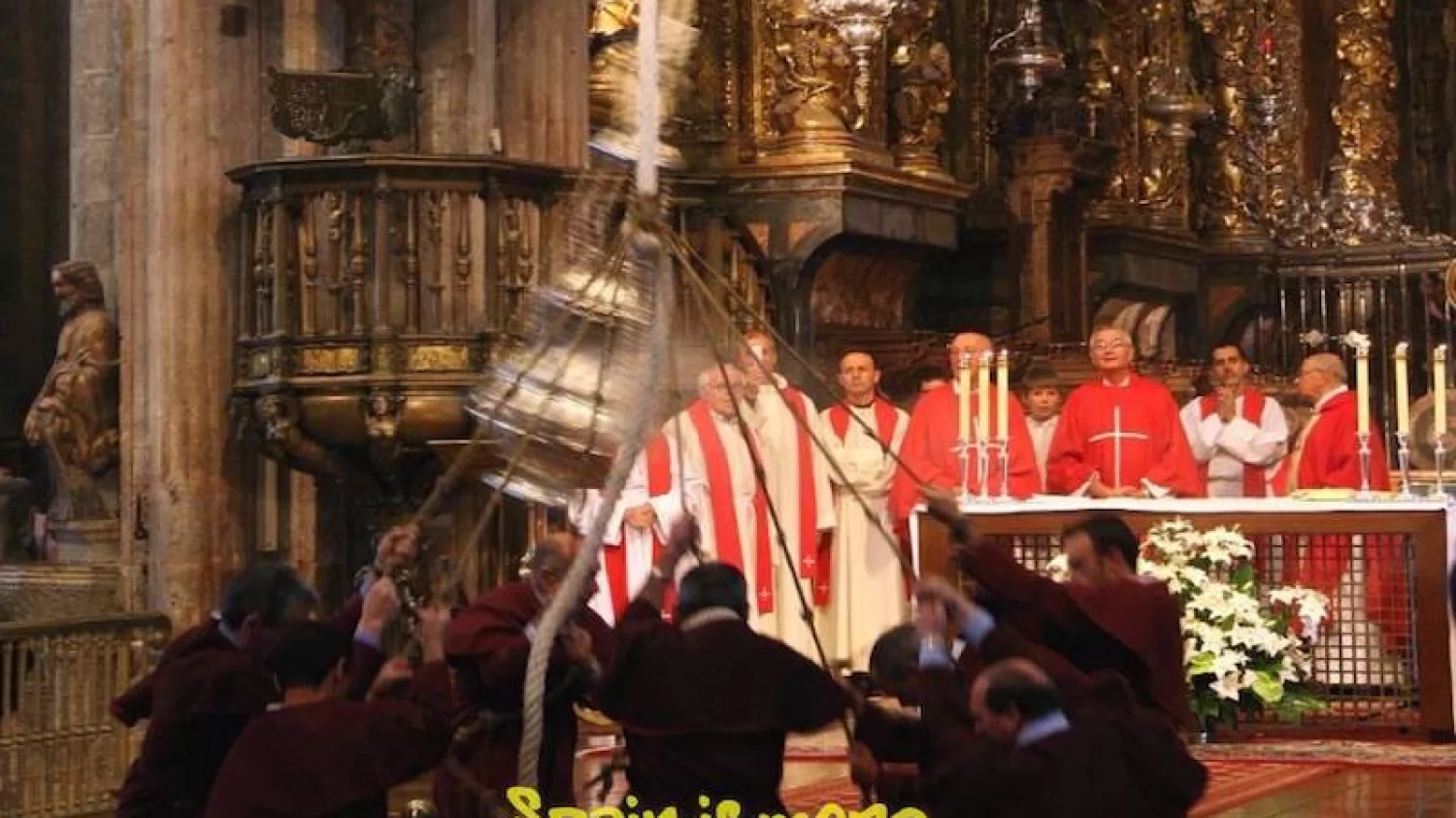
A tradition that has amazed pilgrims for centuries
There are many symbols along the Camino de Santiago, but few are as powerful and unforgettable as the Botafumeiro. Suspended high above the nave of the Cathedral of Santiago, this massive incense burner has fascinated pilgrims for centuries.
For many, seeing it in motion is one of the most emotional moments of the entire journey. It is not just a ritual. It is a spectacle, a tradition, and a connection to the history of the Camino itself.
Origins rooted in faith and necessity
The Botafumeiro dates back to at least the Middle Ages. At that time, thousands of pilgrims arrived at the cathedral after weeks or even months of walking. Hygiene conditions were very different from today, and the interior of the temple could quickly become overwhelming.
The solution was practical but symbolic: a giant censer that would fill the cathedral with incense, purifying the air and creating a spiritual atmosphere. Over time, this practical function evolved into a powerful ritual linked to important religious celebrations.
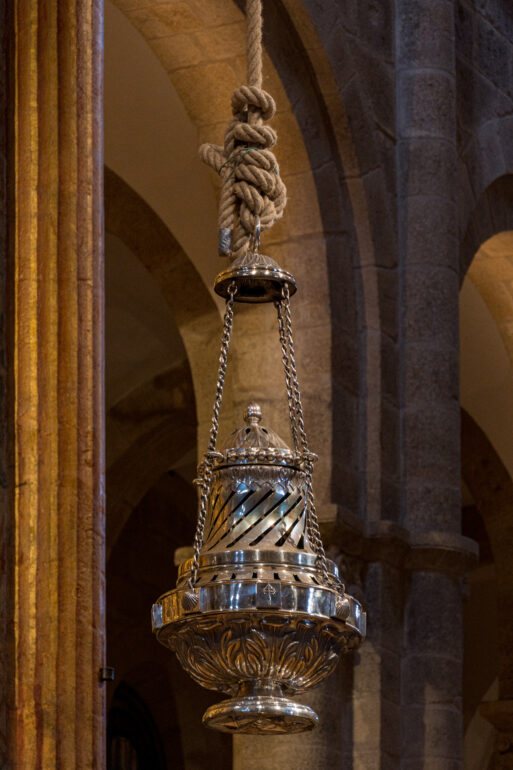
Engineering and ritual combined
The Botafumeiro is not only impressive for its size, but also for how it moves. Weighing around 50 kilos, it is suspended from the dome and swung by a group of attendants known as “tiraboleiros.”
With coordinated pulls on thick ropes, they set the censer in motion until it reaches speeds of up to 70 kilometers per hour, crossing the transept of the cathedral in a dramatic arc.
The moment when it flies from one side to the other, almost touching the ceiling, leaves the entire cathedral in silence. It is a mix of tension, beauty and tradition that is hard to forget.
A symbol of arrival
For many pilgrims, the Botafumeiro represents more than a ceremony. It marks the end of the journey. After days or weeks on the road, standing inside the cathedral and watching it swing becomes a deeply personal experience.
Some see it as a reward. Others as a moment of reflection. And for many, it is simply something they had dreamed of seeing for years.
When can you see the Botafumeiro?
Today, the Botafumeiro is not used at every mass. It usually appears during major religious celebrations and special occasions, although it can also be requested.
This makes the experience even more special. Not everyone gets to see it in motion, which adds a sense of rarity and anticipation.
A tradition that continues to inspire
The Botafumeiro is more than a historical object. It is a living tradition that continues to inspire pilgrims from all over the world.
In a world that changes constantly, this ritual remains almost untouched. It connects the present with the past, reminding everyone inside the cathedral that they are part of something much bigger.
Because in Santiago, the journey does not end at the door of the cathedral…
sometimes, it reaches its peak when the Botafumeiro begins to fly.