









The historic Camino Inglés is once again looking towards the Atlantic. Centuries after pilgrims from Ireland and northern Europe sailed to Galicia before walking to Santiago, the route is regaining international visibility and strengthening its ties with the Irish pilgrim tradition.
For centuries, the Camino de Santiago was not only a network of roads across the Iberian Peninsula.
It was also a journey across the sea.
Pilgrims from Ireland, Britain, Scandinavia and other parts of northern Europe travelled by ship to the Galician coast, arriving mainly through A Coruña and Ferrol before continuing on foot towards Santiago de Compostela.
That maritime connection gave birth to what is now known as the Camino Inglés, one of the most historically distinctive routes in the entire Jacobean network.
Today, that old Atlantic connection is beginning to attract attention again.
Ireland and Santiago: an old relationship
The link between Ireland and Santiago is not a recent tourism strategy.
It has deep historical roots.
During the Middle Ages, Irish pilgrims travelled towards Galicia as part of a wider Christian pilgrimage tradition that connected the island with continental Europe.
For many of them, travelling by sea was a practical way of avoiding the long overland journey through Europe.
Galician ports therefore became gateways to Santiago.
Once ashore, pilgrims continued walking through Galicia towards the tomb of the Apostle.
That historical relationship is now being rediscovered by institutions, associations and pilgrims interested in reviving the Atlantic dimension of the Camino.
A route with a very different personality
The Camino Inglés is much shorter than the Camino Francés and significantly less crowded than some of the most popular routes.
That is precisely part of its appeal.
Pilgrims can still find quieter stretches, small towns, green landscapes and a strong sense of connection with Galicia’s Atlantic identity.
The route traditionally begins in Ferrol or A Coruña, depending on the chosen itinerary, before heading inland towards Santiago.
For international pilgrims who want a shorter Camino with strong historical meaning, it offers a particularly attractive combination.
History.
Landscape.
Silence.
And a direct connection with the sea.
Why Ireland matters
Ireland has become especially important in the renewed international promotion of the Camino Inglés.
The country has its own long pilgrimage culture and a strong historical connection with Santiago.
Recent initiatives have sought to strengthen that relationship and make the Camino Inglés more visible among Irish walkers.
The opening of new cultural links, cooperation between local institutions and growing awareness of historic pilgrimage routes are all contributing to this renewed interest.
The aim is not simply to attract more visitors.
It is also to recover a shared history between Ireland and Galicia that had become less visible over time.
The Atlantic as part of the Camino
Modern pilgrims often imagine the Camino as a purely land-based journey.
But historically, that was not always the case.
For pilgrims from the British Isles and northern Europe, the sea was part of the pilgrimage.
Ports were stages.
Ships were part of the route.
And arrival in Galicia marked the beginning of the final walk towards Santiago.
The Camino Inglés therefore represents something unique within the Jacobean world.
It is not only a walking route.
It is the surviving trace of a much larger maritime pilgrimage network.
Less crowded, but full of history
One of the great opportunities for the Camino Inglés is precisely that it remains less saturated than some other routes.
Many pilgrims today are looking for a quieter experience.
They want to walk without large crowds.
They want time to stop.
To speak with local people.
To enjoy the landscape.
To feel that the Camino still has space for silence.
The Camino Inglés fits that profile very well.
Its scale is more manageable, its history is powerful and its connection with the Atlantic gives it a character that is immediately recognisable.
A route with international potential
The renewed interest from Ireland also opens the door to a broader international audience.
English-speaking pilgrims often look first at the Camino Francés because it is the best-known route abroad.
But the Camino Inglés offers something different.
It has a clear story.
A strong identity.
And a historical relationship with the very countries from which many international pilgrims travel today.
That gives the route considerable potential for cultural tourism, pilgrimage and heritage promotion.
Promotion must go together with quality
Greater visibility also brings responsibility.
If the Camino Inglés continues to grow internationally, promotion must be accompanied by improvements in services, infrastructure, information and signposting.
The pilgrim experience begins long before someone arrives in Galicia.
It begins when they search for routes.
When they compare stages.
When they look for accommodation.
When they decide whether a route feels right for them.
Clear information in English and other languages will therefore be essential if the Camino Inglés wants to strengthen its international profile.
The opportunity of being different
The Camino Inglés does not need to become another Camino Francés.
In fact, its greatest strength may be precisely the opposite.
It can grow while preserving a quieter, more intimate identity.
Its villages, Atlantic landscape and maritime history give it enough personality to stand on its own.
For Irish pilgrims in particular, the route offers something especially meaningful.
It is not simply a Camino in another country.
It is part of their own pilgrimage history.
From Ireland to Santiago once again
The revival of the Irish connection with the Camino Inglés is therefore much more than a tourism campaign.
It is a return to an old relationship.
Centuries ago, Irish pilgrims looked south towards Galicia and Santiago.
Today, that same connection is being rebuilt through heritage, culture and pilgrimage.
The ships are different.
The journey is different.
But the destination remains the same.
Santiago de Compostela.
And perhaps the future of the Camino Inglés lies precisely in remembering where so much of its history began:
on the other side of the Atlantic horizon.
-
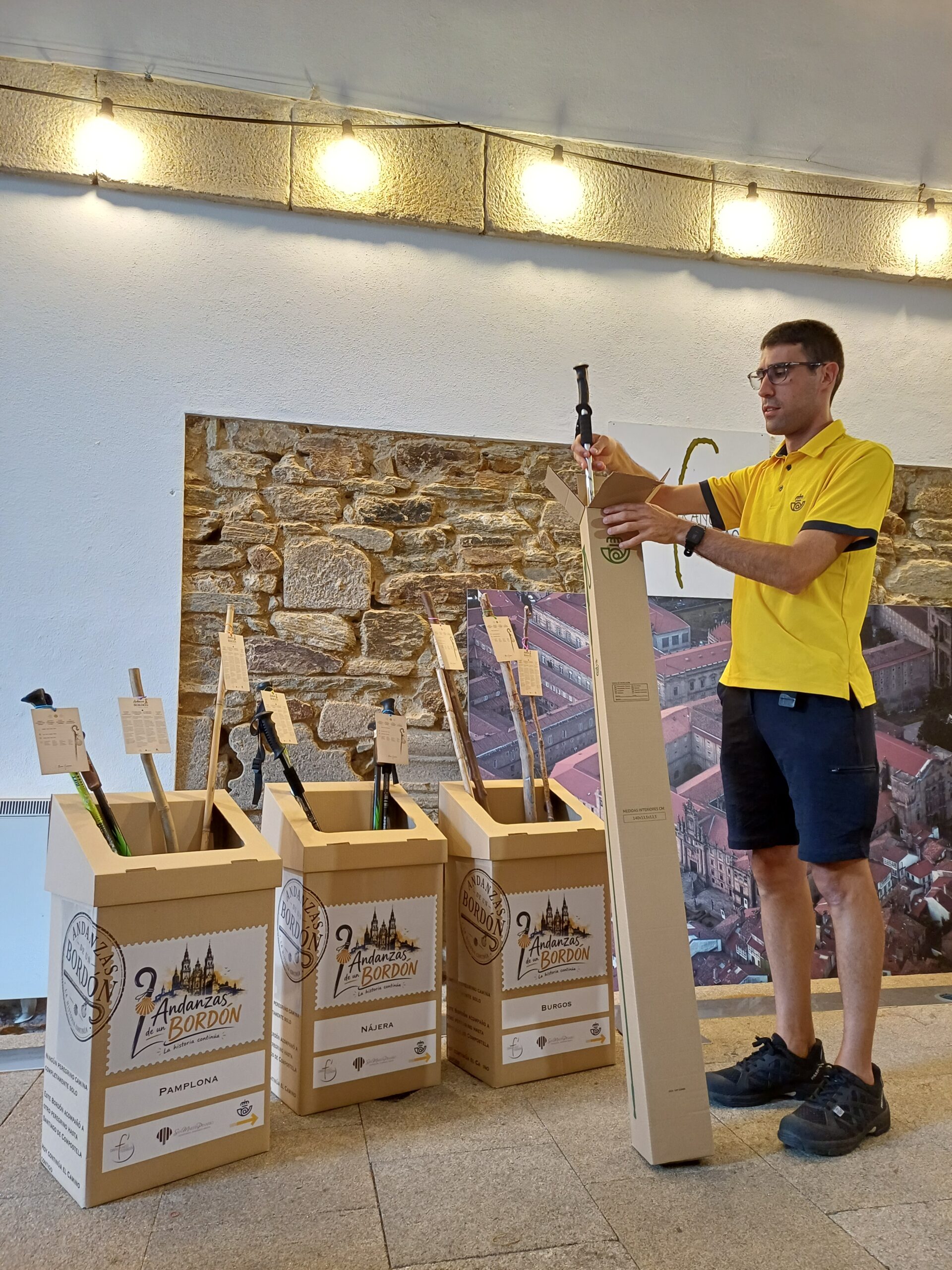
Os bastões dos peregrinos voltam ao Caminho
Os bastões deixados por peregrinos depois de chegar a Santiago de Compostela estão a ganhar uma segunda vida. Em Navarrete, na Rioja, outros caminhantes podem recebê-los gratuitamente e continuar com eles a sua própria peregrinação pelo Caminho Francês. Há objetos que, depois de centenas de quilómetros, deixam de ser simples objetos. Um bastão de caminhada…
-
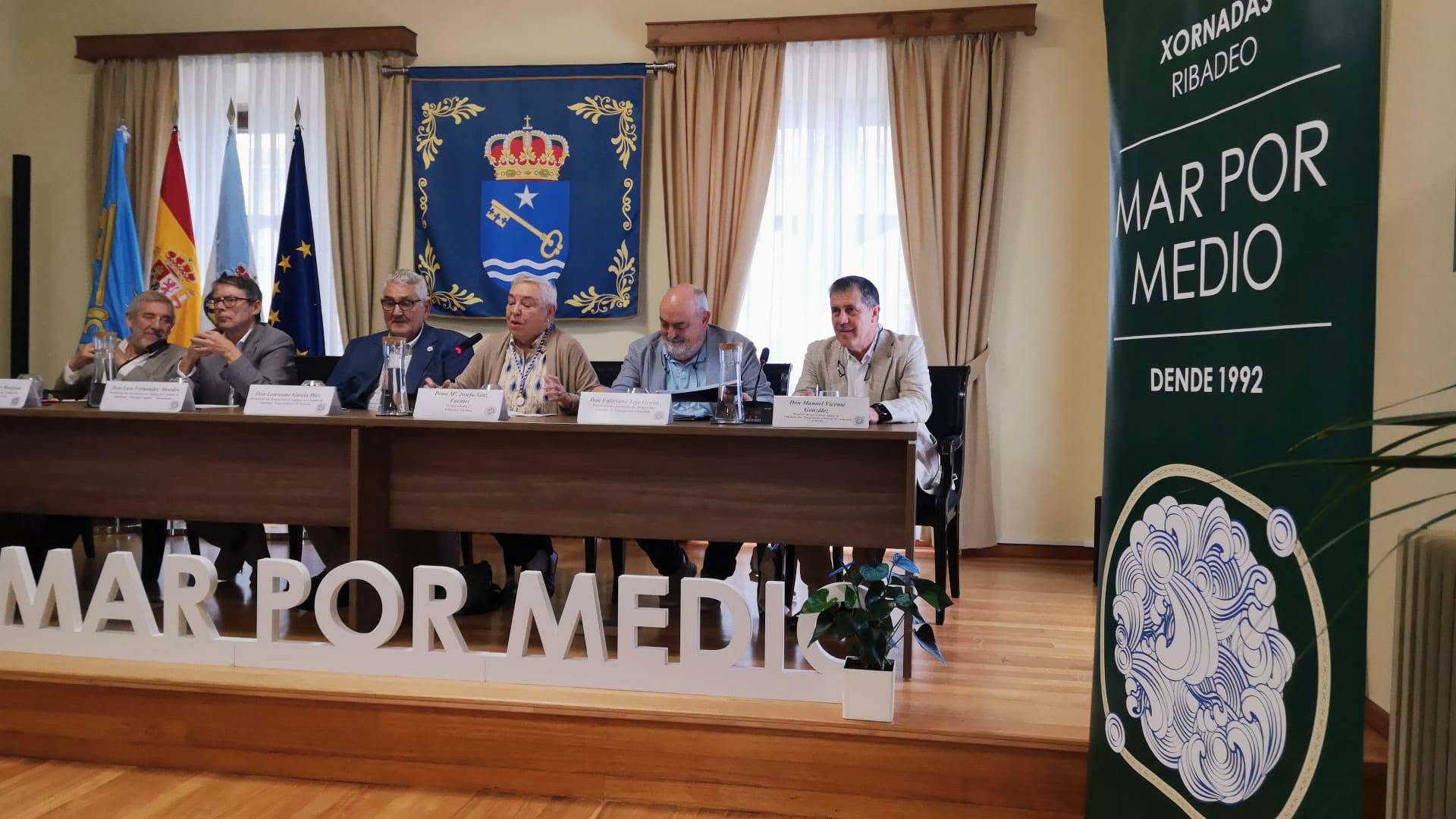
Ribadeo pone los valores del Camino en el centro del debate
Las XXI Xornadas «Mar por Medio», organizadas por la Academia Xacobea, reunieron en Ribadeo a académicos, periodistas y representantes de asociaciones jacobeas de Galicia, Asturias y Cantabria para reflexionar sobre el presente del Camino de Santiago, su dimensión cultural y el papel de quienes trabajan cada día para conservar sus valores. Ribadeo volvió a convertirse…
-
Ireland Rediscovers the Camino Inglés
The historic Camino Inglés is once again looking towards the Atlantic. Centuries after pilgrims from Ireland and northern Europe sailed to Galicia before walking to Santiago, the route is regaining international visibility and strengthening its ties with the Irish pilgrim tradition. For centuries, the Camino de Santiago was not only a network of roads across…