




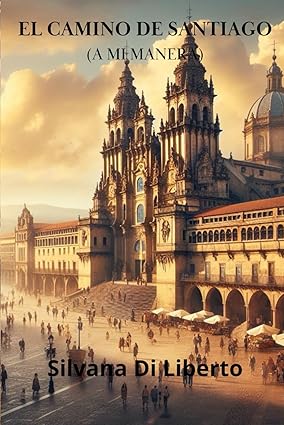




The Camino de Santiago does not begin only in France, Portugal or Spain.
There is another route, far less known but deeply rooted in the medieval history of pilgrimage: the Celtic Camino, a journey that connects Ireland with Santiago de Compostela through the Atlantic and continues in Galicia along the Camino Inglés.
For centuries, Irish pilgrims crossed the sea in search of the tomb of Saint James.
Today, that ancient relationship is being rediscovered.
A Camino born on the Atlantic
The links between Ireland and Santiago go back centuries.
From at least the Middle Ages, pilgrims from Ireland travelled from ports such as Cork, Limerick, Waterford or Wexford towards the north-west of the Iberian Peninsula.
They crossed the Atlantic in small boats, often in extremely difficult conditions, before continuing their journey on foot towards Compostela.
Those journeys helped create a maritime pilgrimage tradition that would later become closely associated with what we now know as the Camino Inglés.
For Irish pilgrims, Santiago was not simply a distant Spanish destination.
It became part of a much wider Atlantic religious and cultural world linking Ireland, Galicia and other regions of Western Europe.
The Celtic Camino today
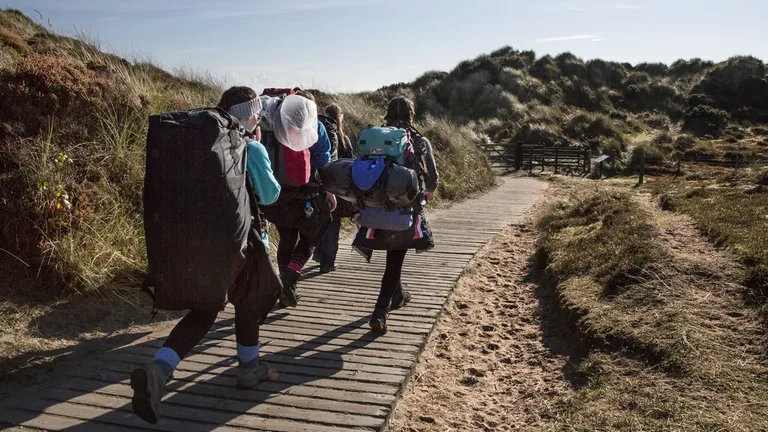
The modern Celtic Camino combines walking in Ireland with the Camino Inglés in Galicia.
Pilgrims can complete at least 25 kilometres of an accredited route in Ireland and then walk the approximately 75 kilometres from A Coruña to Santiago de Compostela.
Together, the two sections reach the minimum 100 kilometres traditionally required to request the Compostela on foot.
The Camino Society Ireland issues a pilgrim credential that allows walkers to record their Irish stages before travelling to Galicia.
The connection between both sections is necessarily made by sea or air.
It is therefore one of the most unusual versions of the Camino:
walk, cross the Atlantic and keep walking.
Saint Patrick and Saint James on the same journey
The route also brings together two enormous traditions of European Christianity.
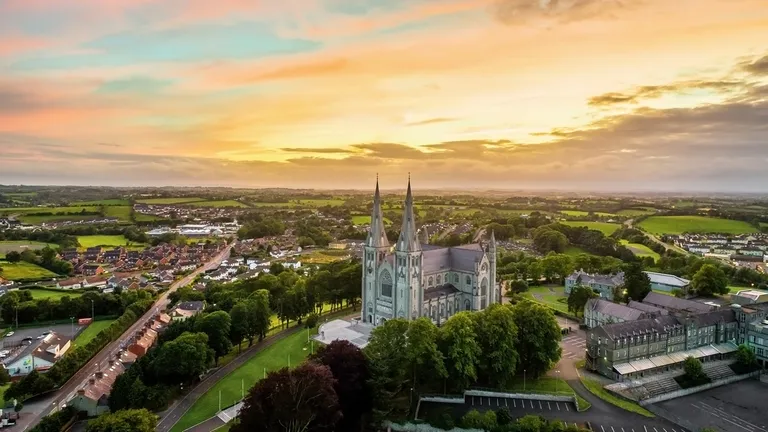
Ireland is inseparable from Saint Patrick, while Galicia and the Camino are linked to Saint James the Apostle.
Walking the Celtic Camino therefore creates a symbolic bridge between two ancient pilgrimage cultures.
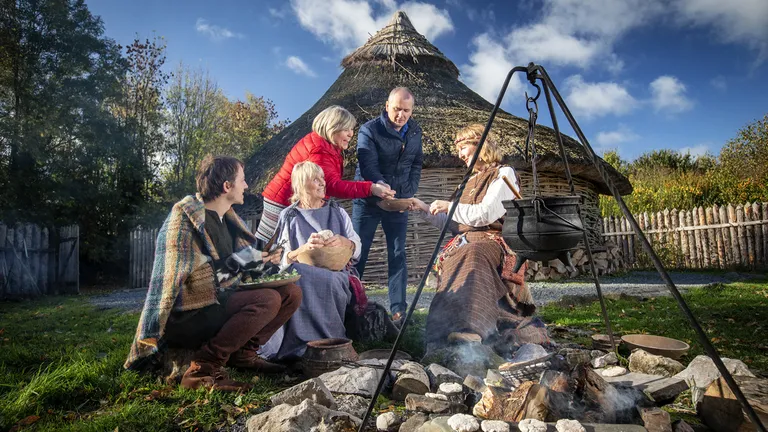
The Irish stages pass through landscapes filled with early Christian heritage, monastic history, Celtic traditions and places associated with centuries of religious life.
Then, after reaching Galicia, the pilgrim joins the historical route used by travellers arriving by sea from northern Europe.
Why start from A Coruña?
For many modern pilgrims, the Camino Inglés begins in Ferrol.
Historically, however, A Coruña was also one of the great ports of arrival for pilgrims coming from Ireland and Britain.
Ships carrying pilgrims would arrive on the Galician coast, allowing travellers to continue towards Santiago on foot.
This maritime history explains why the Celtic Camino uses A Coruña as its Galician starting point.
From there, pilgrims continue through the countryside of A Coruña province before joining the final stages towards Santiago.
The last stage traditionally approaches Compostela from Sigüeiro, with approximately 16 kilometres remaining to the Cathedral.
One of the Camino’s best-kept secrets
For many international pilgrims, the Camino de Santiago is still almost synonymous with the Camino Francés.
But the Celtic Camino reveals a much broader story.
The pilgrimage to Santiago was never exclusively a Spanish or French phenomenon.
It was European.
Pilgrims arrived by land and by sea.
They came from England, Ireland, Scandinavia and other parts of northern Europe.
And many of them entered Galicia through its ports.
The modern revival of the Celtic Camino is therefore not simply the invention of another route.
It is the recovery of an old Atlantic connection.
From the Emerald Isle to the Obradoiro
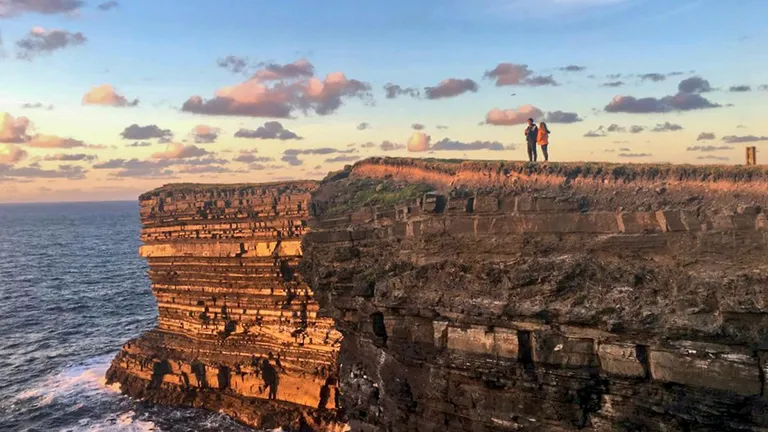
Today, a pilgrim can begin among the green landscapes of Ireland, collect stamps along an Irish Camino route, cross to Galicia and continue walking towards the towers of Santiago Cathedral.
Two countries.
An Atlantic crossing.
One pilgrimage.
And one destination.
The Celtic Camino may remain one of the least-known routes associated with Santiago, but perhaps that is precisely part of its attraction.
For pilgrims searching for something different, it offers history, spirituality, dramatic landscapes and one of the most unusual ways imaginable to reach Compostela.
From Ireland to Santiago, the Camino also crosses the sea.