













How to prepare your pet for a safe and unforgettable pilgrimage experience
Walking the Camino de Santiago is already a life-changing adventure. But for many pilgrims, sharing every sunrise, trail and arrival with an animal companion makes the journey even more special. Every year, more people decide to walk the Camino with their dogs, while others choose horses or even donkeys, reviving a centuries-old tradition deeply connected to pilgrimage routes across Spain.
However, traveling with animals requires careful planning. The health and well-being of your companion should always come first.
Dogs are by far the most common animals seen on the Camino de Santiago. From energetic border collies and friendly labradors to rescued mixed-breed dogs, many become beloved companions not only to their owners but also to fellow pilgrims met along the way. Many walkers say their dogs help reduce loneliness, provide emotional support and create meaningful connections with people from around the world.
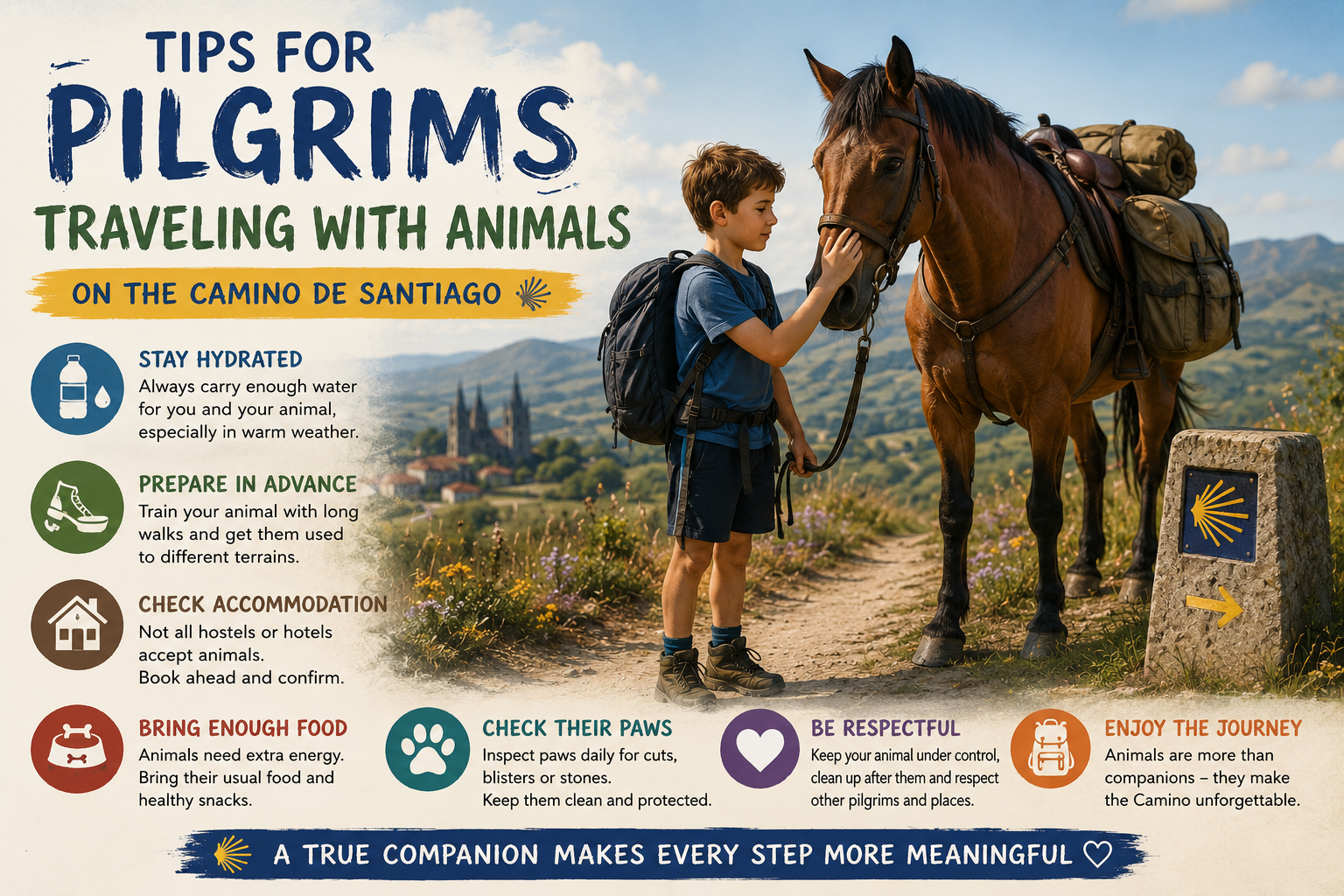
One of the most important recommendations is preparation. Animals should gradually get used to long-distance walking before beginning the pilgrimage. Veterinarians often advise several weeks of training to strengthen muscles, improve endurance and prevent injuries.
Hydration is another key factor, especially during the warmer months. Pilgrims should always carry enough water and a portable bowl, particularly when crossing areas with long stretches between villages. Frequent breaks in shaded areas can help prevent overheating and exhaustion.
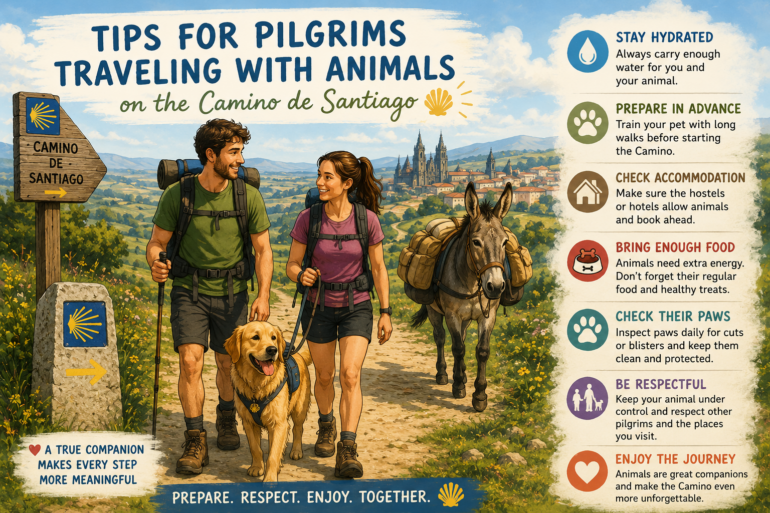
Accommodation planning is also essential. While many hostels, rural guesthouses and hotels along the Camino now welcome pets, availability varies depending on the route and season. Booking ahead can help avoid unexpected problems at the end of a long stage.
Food requirements may also change during the pilgrimage. Since animals burn more energy while walking long distances, many owners increase food portions slightly and carry healthy snacks to maintain strength throughout the journey.
Besides dogs, some pilgrims complete the Camino on horseback. Others choose donkeys to carry luggage, creating a slower and more traditional travel experience. These animals have been linked to pilgrimage routes for centuries and continue to attract attention from fellow walkers and tourists.
Daily health checks are highly recommended. Paw pads should be inspected regularly for cuts, blisters or small stones. Any sign of discomfort, limping or fatigue should be taken seriously to prevent more serious problems later in the journey.
Respect for other pilgrims is equally important. Keeping animals under control, cleaning up after them and ensuring they do not disturb fellow travelers helps maintain the welcoming atmosphere that makes the Camino de Santiago so unique.
Many pilgrims discover that animals become unexpected stars of the route. Fellow walkers often remember the friendly dog they met in an albergue or the donkey carrying supplies through the countryside. These companions frequently appear in photos, conversations and memories long after the pilgrimage ends.
The Camino de Santiago offers a remarkable opportunity to enjoy nature, cultural heritage, rural tourism and personal reflection alongside a loyal companion. With proper preparation and care, walking the Camino with an animal can become one of the most meaningful and unforgettable experiences of a lifetime.
#CaminoDeSantiago #Pilgrims #TravelWithDogs #PetFriendlyTravel #CaminoFrancés #DogTravel #Nature #Adventure #SpainTravel #Pilgrimage #CaminoLife