










The Camino de Santiago is lined with medieval churches that have watched millions of pilgrims pass for centuries. Some are famous for their architecture. Others are remembered for strange light phenomena, legends of the Holy Grail, unexplained structures or stories that still blur the line between history and mystery.
Walking the Camino is not only a journey through landscapes and villages. It is also a journey through one of Europe’s richest collections of medieval religious architecture.
Romanesque churches, isolated monasteries and ancient sanctuaries appear again and again along the different routes to Santiago.
Many were built to protect, guide or welcome pilgrims.
Others became surrounded by legends.
And a few still contain details that continue to fascinate historians, travellers and pilgrims today.
Here are some of the most mysterious medieval churches and monasteries connected with the Camino de Santiago.
1. Santa María de Eunate: the octagonal mystery
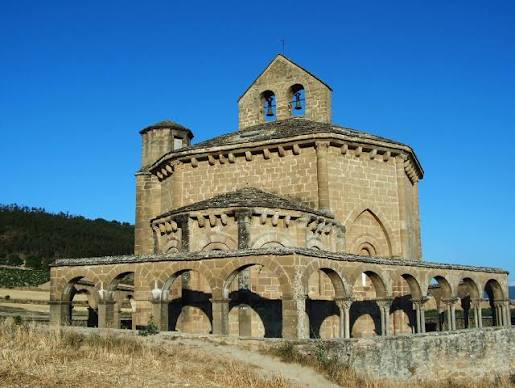
Few churches on the Camino create such an immediate sense of mystery as Santa María de Eunate, in Navarra.
Standing almost alone in the countryside, not far from the Camino Francés, the small Romanesque church was built in the 12th century and has an unusual octagonal plan surrounded by an external arcade.
Its original purpose has been debated for generations.
Was it a funerary church?
A pilgrims’ chapel?
A hospital church?
Its isolated location, geometric design and unusual architecture have also encouraged legends linking it with the Knights Templar.
That connection has become extremely popular among visitors, although historians have never found solid evidence proving that Eunate belonged to the Templars.
And perhaps that uncertainty is precisely what makes the place so fascinating.
You arrive expecting an explanation.
You usually leave with more questions.
2. The Church of the Holy Sepulchre in Torres del Río
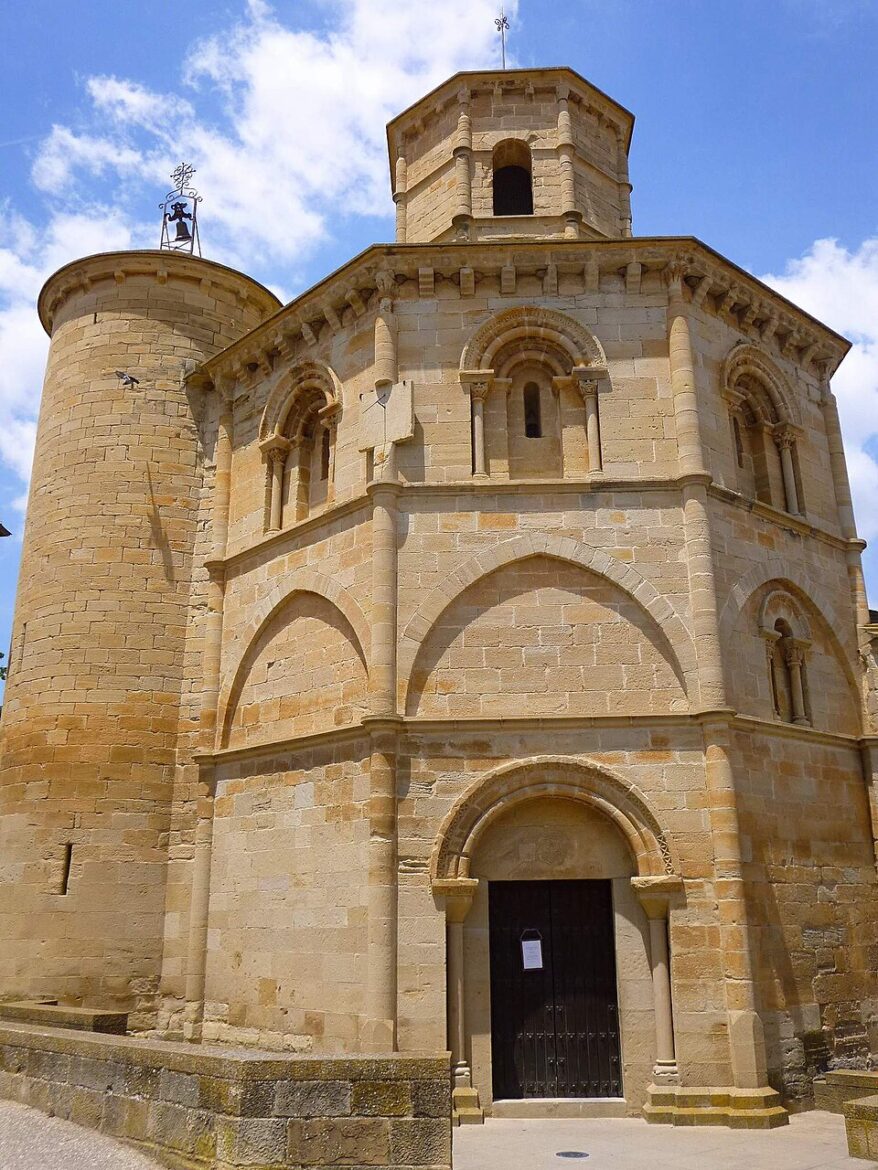
A little farther west, another extraordinary octagonal church stands directly beside the Camino Francés.
The Church of the Holy Sepulchre of Torres del Río, also in Navarra, dates from the 12th century.
Its design immediately recalls religious buildings connected with Jerusalem, and the interior is dominated by an unusual ribbed dome whose geometric structure has fascinated generations of visitors.
Like Eunate, it has often been associated with the Knights Templar.
Again, the historical reality is more complicated than the legend.
What is certain is that the building is highly unusual within the architecture of the Camino.
For a medieval pilgrim travelling towards Santiago, entering such a space must have been an extraordinary experience.
Eight centuries later, it still is.
3. San Juan de Ortega and the miracle of light
In the mountains of Burgos lies one of the most remarkable light phenomena on the Camino.
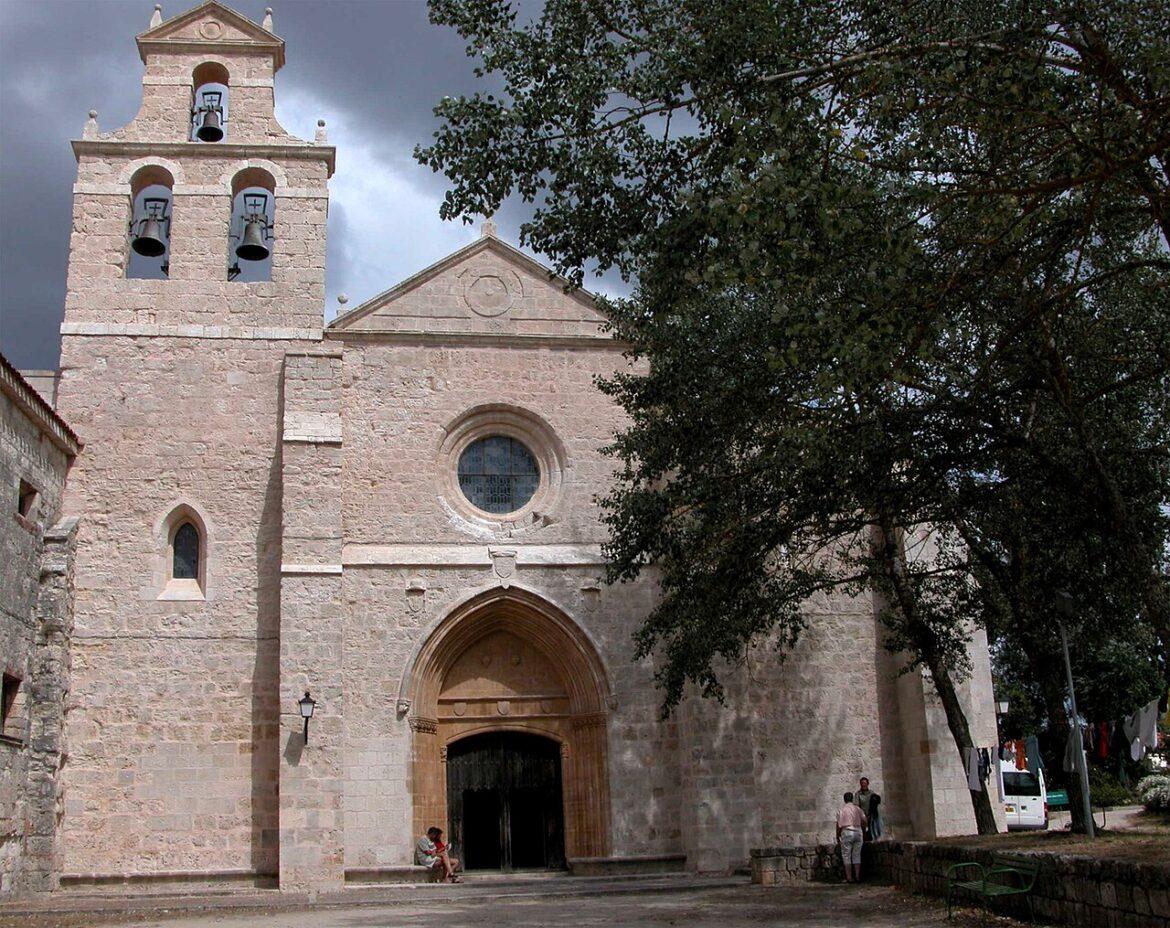
The monastery and church of San Juan de Ortega were founded in the 12th century by Juan de Quintanaortuño, a disciple of Santo Domingo de la Calzada who dedicated much of his life to improving the route and helping pilgrims.
Inside the church is a Romanesque capital depicting scenes connected with the Nativity.
Around the spring and autumn equinoxes, sunlight enters through one of the openings of the church and gradually illuminates the sculpted capital.
The phenomenon has become known as the “miracle of light.”
Whether medieval builders deliberately calculated the effect remains a source of fascination.
But the phenomenon itself is real and continues to attract visitors.
For a few minutes, stone, architecture and sunlight seem perfectly aligned.
4. Santa Marta de Tera: another medieval secret of the sun
San Juan de Ortega is not the only Jacobean church where sunlight creates an extraordinary spectacle.
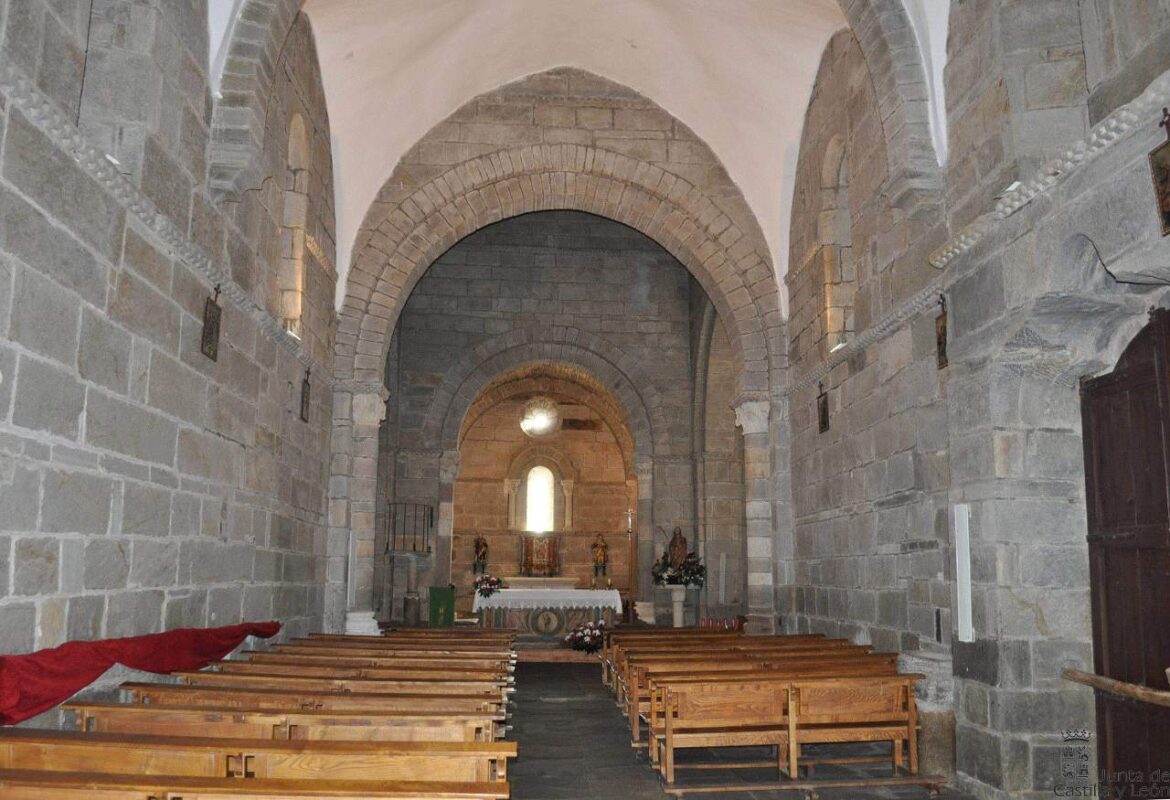
On the Sanabrés route, in Zamora, stands the Romanesque church of Santa Marta de Tera.
During the spring and autumn equinoxes, sunlight enters through an opening in the eastern end of the church and illuminates a particular Romanesque capital traditionally known as the “saved soul.”
The phenomenon was identified in modern times, but the church itself dates from the Middle Ages.
Was this alignment intentional?
Was it part of a medieval symbolic programme connected with light, resurrection or salvation?
No definitive answer exists.
What is beyond dispute is the precision of the effect.
Santa Marta de Tera also preserves an important 12th-century sculpture of Saint James represented as a pilgrim, one of the most remarkable images associated with the Jacobean tradition.
5. O Cebreiro and the legend of the Holy Grail
High in the Galician mountains, Santa María la Real de O Cebreiro feels mysterious even before entering.
Mist, snow and isolation have shaped the history of this small sanctuary for centuries.
The church dates back to the 9th century and is one of the oldest surviving religious buildings associated with the Camino de Santiago.
Its most famous story is the medieval legend of the Holy Miracle of O Cebreiro.
According to tradition, during a winter Mass a priest doubted the reality of the Eucharist. In front of a faithful pilgrim who had crossed the mountains despite the storm, the bread and wine were said to have been transformed into flesh and blood.
The church still preserves a medieval chalice and paten associated with the tradition.
The story spread far beyond Galicia and helped give O Cebreiro an extraordinary spiritual reputation.
For centuries, the bells of the settlement were also said to have guided pilgrims through fog and snow.
Few places on the Camino combine landscape, faith and legend so powerfully.
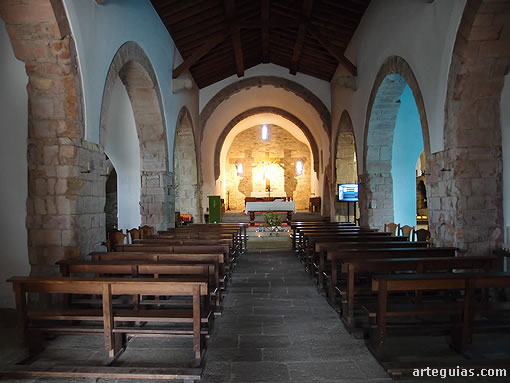
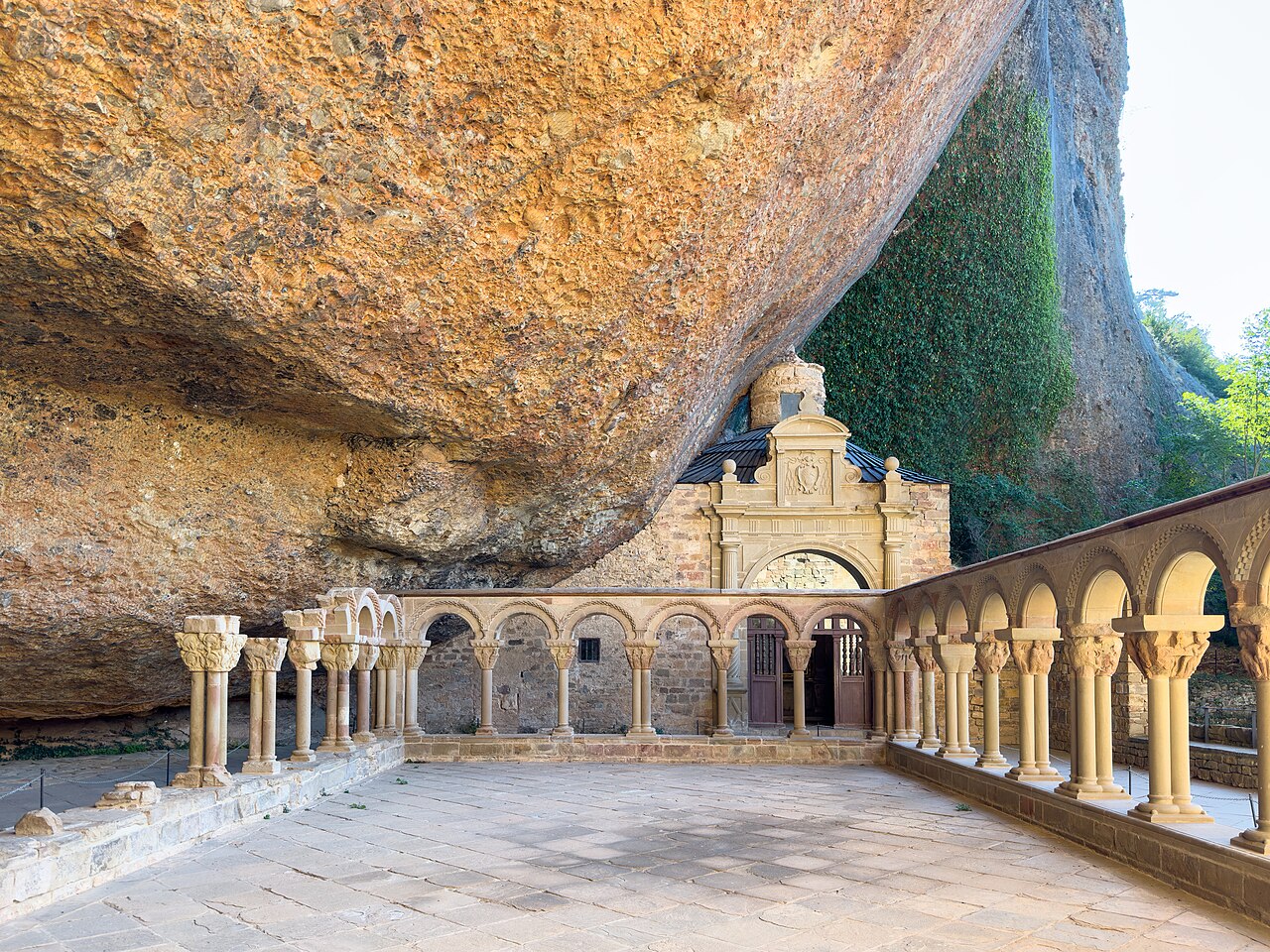
6. San Juan de la Peña: a monastery beneath the mountain
There are impressive monasteries.
And then there is San Juan de la Peña.
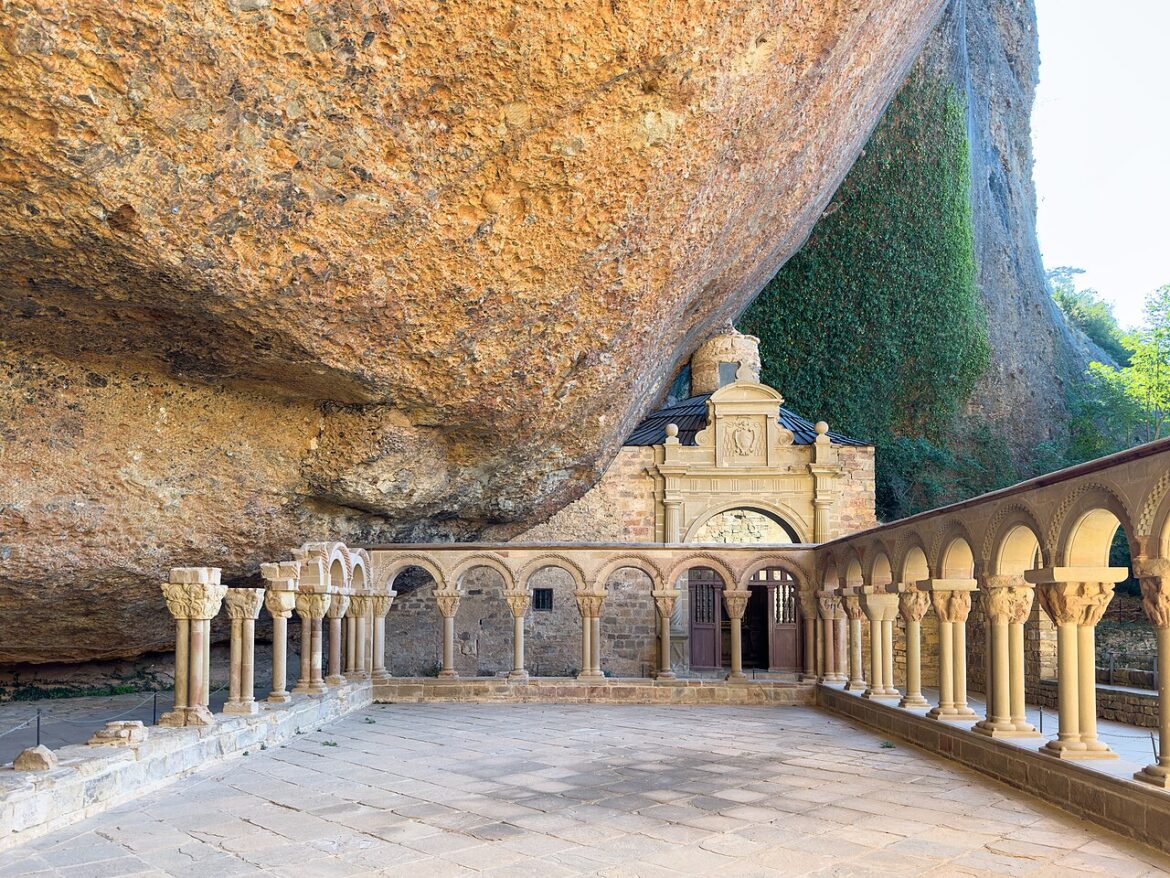
Hidden beneath an enormous natural rock overhang in Aragón, the old monastery looks almost as if it has been carved into the mountain itself.
Its origins go back to the early Middle Ages, and it later became one of the most important religious and political centres of the Kingdom of Aragón.
It was also a royal pantheon.
But mystery surrounds the monastery because of its connection with one of Christianity’s greatest legends: the Holy Grail.
Aragonese tradition maintains that the sacred cup was protected here during the Middle Ages before eventually being transferred elsewhere.
Historical documentation connects the monastery with the relic tradition, although centuries of storytelling have greatly expanded the legend.
For pilgrims travelling through the Aragonese route, San Juan de la Peña feels like one of those places where history almost naturally produces myths.
Its location alone is enough to explain why.
7. San Martín de Frómista: strange creatures carved in stone
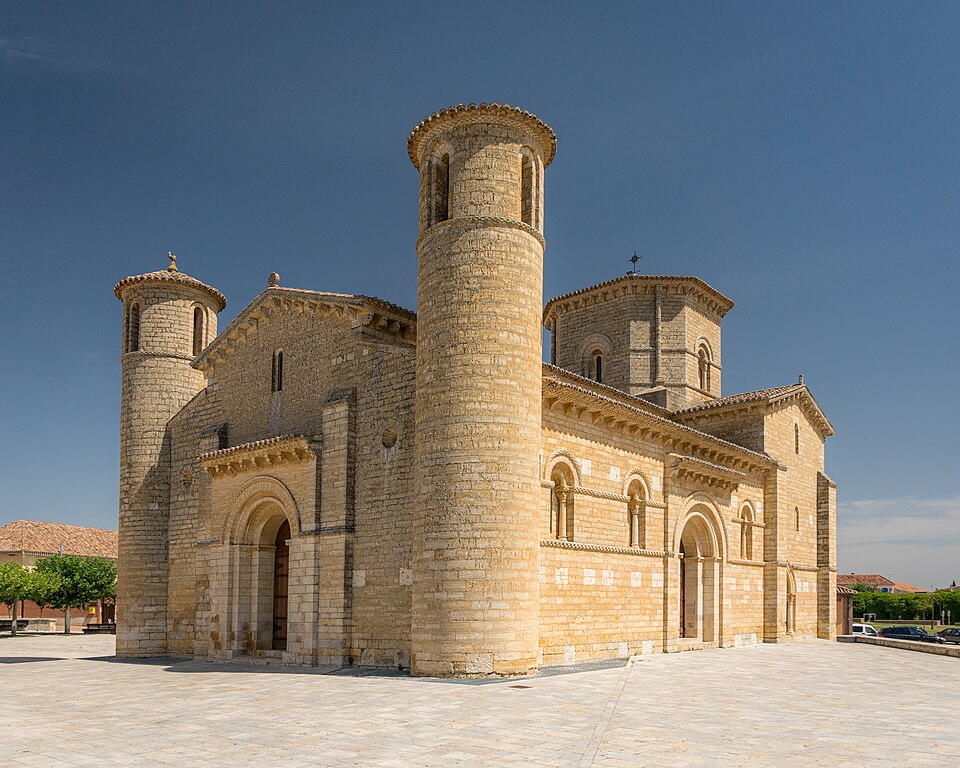
At first glance, San Martín de Frómista, in Palencia, is famous for something quite different: architectural perfection.
It is one of the great masterpieces of Spanish Romanesque architecture and one of the most recognisable churches on the Camino Francés.
But look closely at its decoration.
Its capitals and corbels contain an extraordinary world of animals, human figures, monsters and symbolic scenes.
Medieval churches often used images to communicate moral ideas to a population that could not read.
But some of these creatures remain difficult for modern visitors to interpret.
Why were certain animals chosen?
What did hybrid creatures mean to a medieval pilgrim?
Were some images warnings against sin, echoes of older traditions or simply products of the sculptors’ imagination?
Frómista reminds us that medieval churches were once filled with a visual language that modern travellers no longer fully understand.
8. Santa María de Sar: the church that appears to be falling
Very close to the end of the Camino, in Santiago de Compostela itself, stands another remarkable medieval church.
The Collegiate Church of Santa María de Sar began to be constructed in the early 12th century.
Inside, something immediately feels wrong.
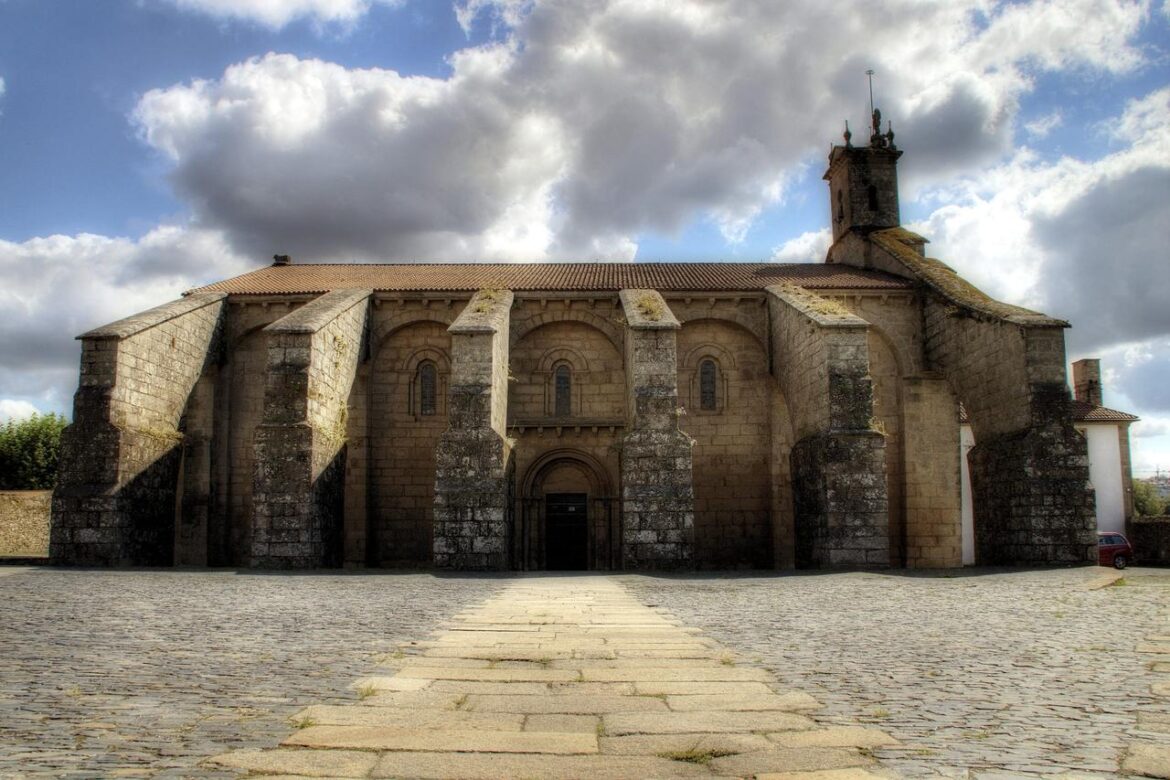
Its pillars and walls appear to lean dramatically.
The inclination is so striking that many first-time visitors wonder whether the building is actually safe.
Massive exterior buttresses were added centuries later to reinforce the structure.
Why the original walls began to move has generated different explanations connected with construction, foundations and ground conditions.
The result is one of the strangest interiors in medieval Galicia.
After walking hundreds of kilometres towards one of Europe’s greatest cathedrals, pilgrims can discover another medieval puzzle almost at Santiago’s doorstep.
The Camino was built in an age of symbols
Modern pilgrims walk with GPS, smartphones and detailed guidebooks.
Medieval pilgrims entered a completely different world.
Churches were maps of symbols.
Light could represent salvation.
Monsters could warn against sin.
Relics could turn a remote mountain sanctuary into a major pilgrimage destination.
Geometry could carry religious meaning.
Architecture was not simply decoration.
It communicated.
That is why many medieval churches along the Camino still feel mysterious today.
We can understand their stones.
We can date their construction.
We can identify many of their sculptures.
But we cannot always recover exactly what a pilgrim standing inside them eight centuries ago would have understood.
History, legend and the Camino
Not every popular story surrounding these churches is historically proven.
Claims about the Knights Templar, secret geometries or hidden messages should always be treated carefully.
The Camino has accumulated legends for more than a thousand years, and separating documented history from later tradition is part of the fascination.
But mystery does not require invention.
A beam of equinox sunlight crossing a Romanesque church is real.
A monastery built beneath an enormous rock is real.
An octagonal medieval chapel standing alone among fields is real.
And a ninth-century sanctuary surrounded by stories of miracles and pilgrims lost in the snow is real.
Sometimes the Camino does not need us to invent mysteries.
It already has enough of its own.