







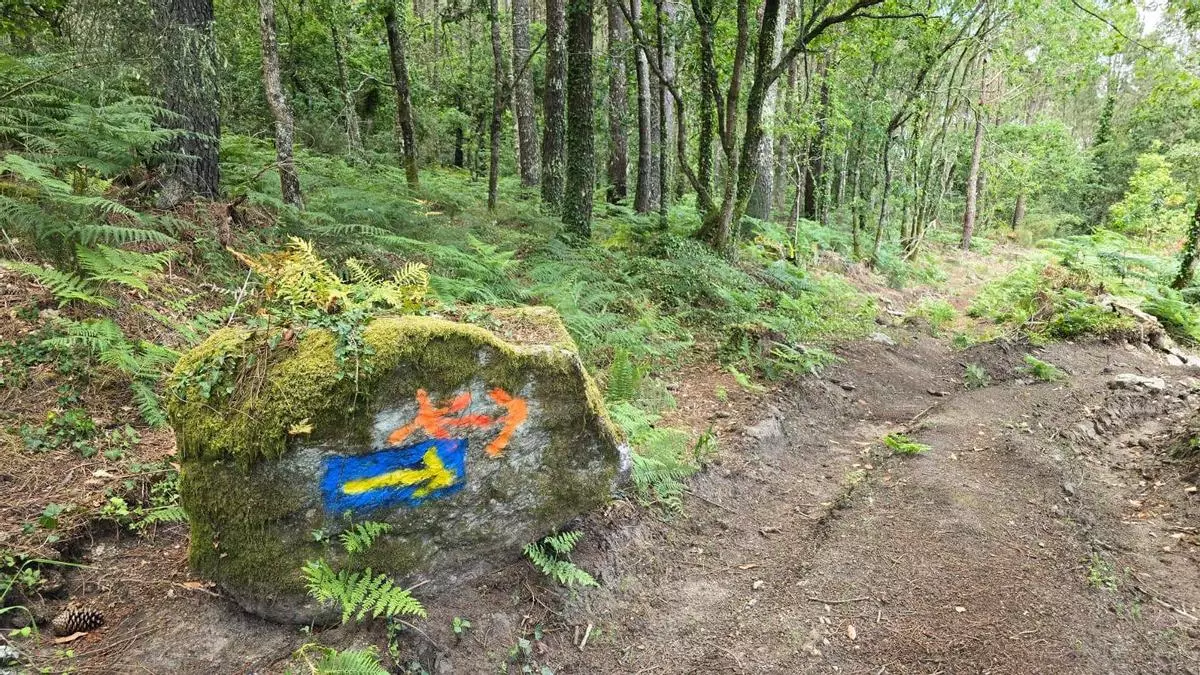
The Camino de Santiago has always been much more than a route leading to Santiago de Compostela. For centuries, it has been a place of personal transformation, healing, solidarity and human connection. This week, the Camino Francés has become the stage for another inspiring story as a group of pilgrims set out with a special purpose: raising awareness of aphasia, a neurological communication disorder that affects thousands of people around the world.
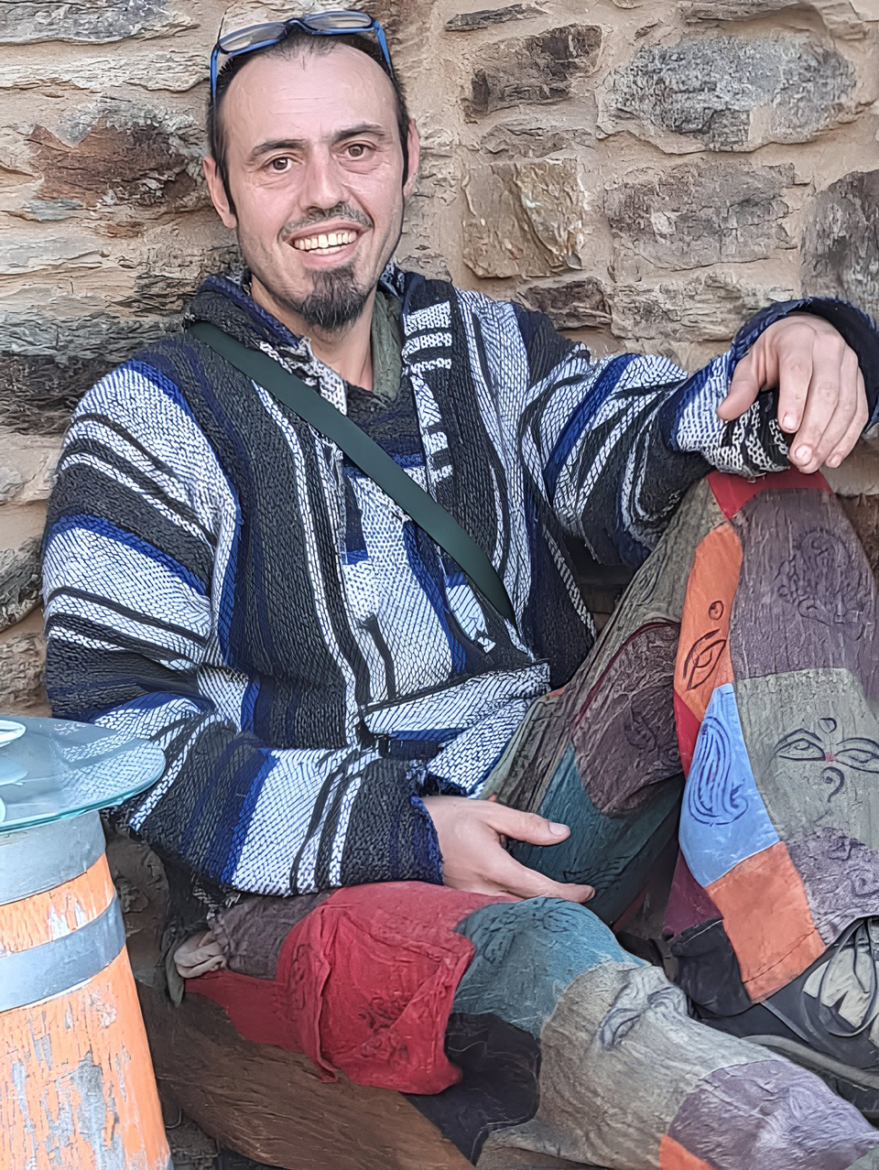
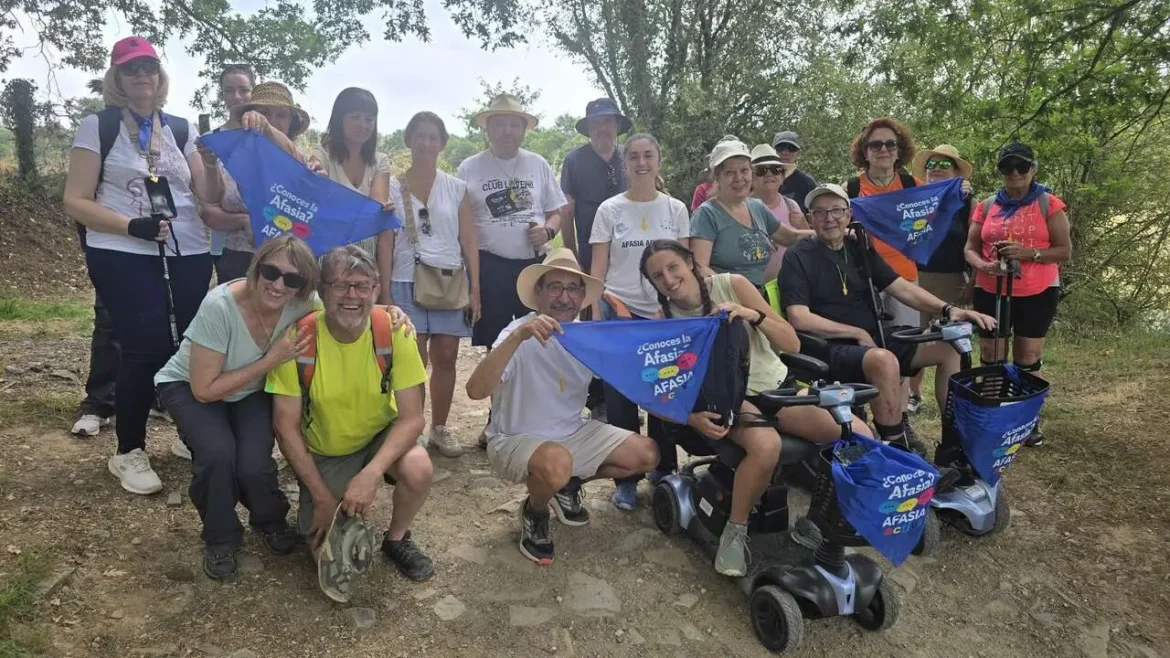
Members of the association Afasia Activa are walking sections of the Camino while sharing a powerful message with fellow pilgrims and local communities. Their goal is simple but important: to help people understand what aphasia is and how it affects the lives of those who live with it every day.
For many people, the word «aphasia» is completely unfamiliar. Yet it is a condition that can dramatically change a person’s life. Aphasia usually occurs after a stroke, traumatic brain injury or other neurological damage. People with aphasia often know exactly what they want to say but struggle to find the words to express themselves. Others may have difficulty understanding language, reading or writing.
The association’s slogan perfectly summarizes this reality:
«I don’t lack ideas, I’m looking for the words.»
Walking Towards Understanding
For the participants, this pilgrimage is not only about reaching Santiago. It is about demonstrating that people affected by aphasia can continue to enjoy meaningful experiences, travel, make friends and overcome challenges.
The group includes people living with aphasia, family members, caregivers and volunteers. Together they are walking the Camino, sharing stories and showing that communication difficulties should never be a barrier to participation in society.
Every day, they meet pilgrims from different countries who stop to learn about the project. Many admit they had never heard of aphasia before. Others recognize family members or friends who have experienced similar difficulties after suffering a stroke.
In this way, the Camino itself becomes a powerful awareness campaign stretching across hundreds of kilometres.
The Camino as Therapy
Experts often highlight the positive effects that walking can have on both physical and mental health.
For people recovering from neurological conditions, regular exercise, social interaction and outdoor activities can play an important role in rehabilitation. The Camino offers all three.
Walking encourages independence and self-confidence. Sharing meals and conversations with other pilgrims helps reduce social isolation. The daily routine of the Camino provides motivation and a sense of achievement.
Many participants describe the experience as therapeutic.
Rather than focusing on limitations, the pilgrimage focuses on possibilities.
Each completed stage becomes a victory.
Each conversation becomes an opportunity.
Each kilometre becomes a symbol of progress.
A Journey of Inclusion
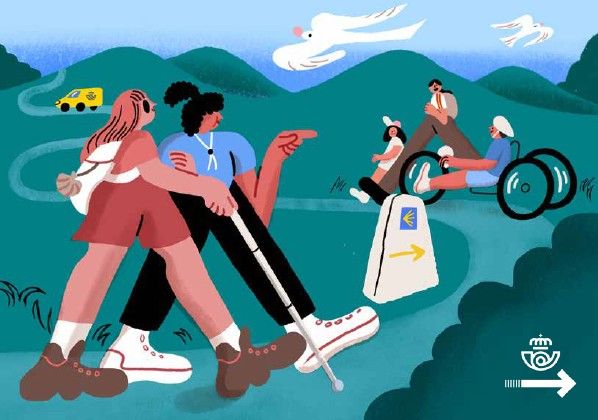
One of the most inspiring aspects of the project is its commitment to accessibility.
The association has adapted the route so that participants with different needs can take part safely. Volunteers provide assistance when necessary, ensuring that everyone can enjoy the experience.
This reflects one of the great strengths of the Camino de Santiago: its ability to bring together people from all backgrounds.
Young and old.
Religious and non-religious.
Athletes and beginners.
People from different countries, cultures and life experiences.
And now, people living with aphasia are demonstrating that they too belong on the Camino.
Raising Awareness Beyond Santiago
The importance of this initiative extends far beyond the pilgrimage itself.
According to specialists, many people living with aphasia feel misunderstood because the condition is often invisible. A person may appear physically healthy while struggling significantly with communication.
This lack of awareness can lead to frustration, isolation and reduced opportunities for social participation.
By walking the Camino and sharing their experiences, the members of Afasia Activa are helping to break down misconceptions and encourage understanding.
Their message is simple:
Communication difficulties do not define a person.
Behind every struggle to find words is an individual with thoughts, feelings, dreams and experiences that deserve to be heard.
The Human Spirit of the Camino
Stories like this remind us why the Camino de Santiago continues to inspire millions of people around the world.
It is not only a path to a cathedral.
It is a path of solidarity.
A path of resilience.
A path where people support one another regardless of language, nationality or circumstance.
For these pilgrims, reaching Santiago will represent much more than completing a journey.
It will symbolize determination, inclusion and hope.
And for the many people they meet along the way, it will leave an important lesson:
Sometimes the most powerful conversations are not measured by the number of words spoken, but by the courage required to speak them.
As the group continues its journey toward Compostela, they carry with them a message that resonates far beyond the Camino itself: every person deserves to be understood, included and given the opportunity to participate fully in life.
Their footsteps are helping to build awareness one kilometre at a time.