









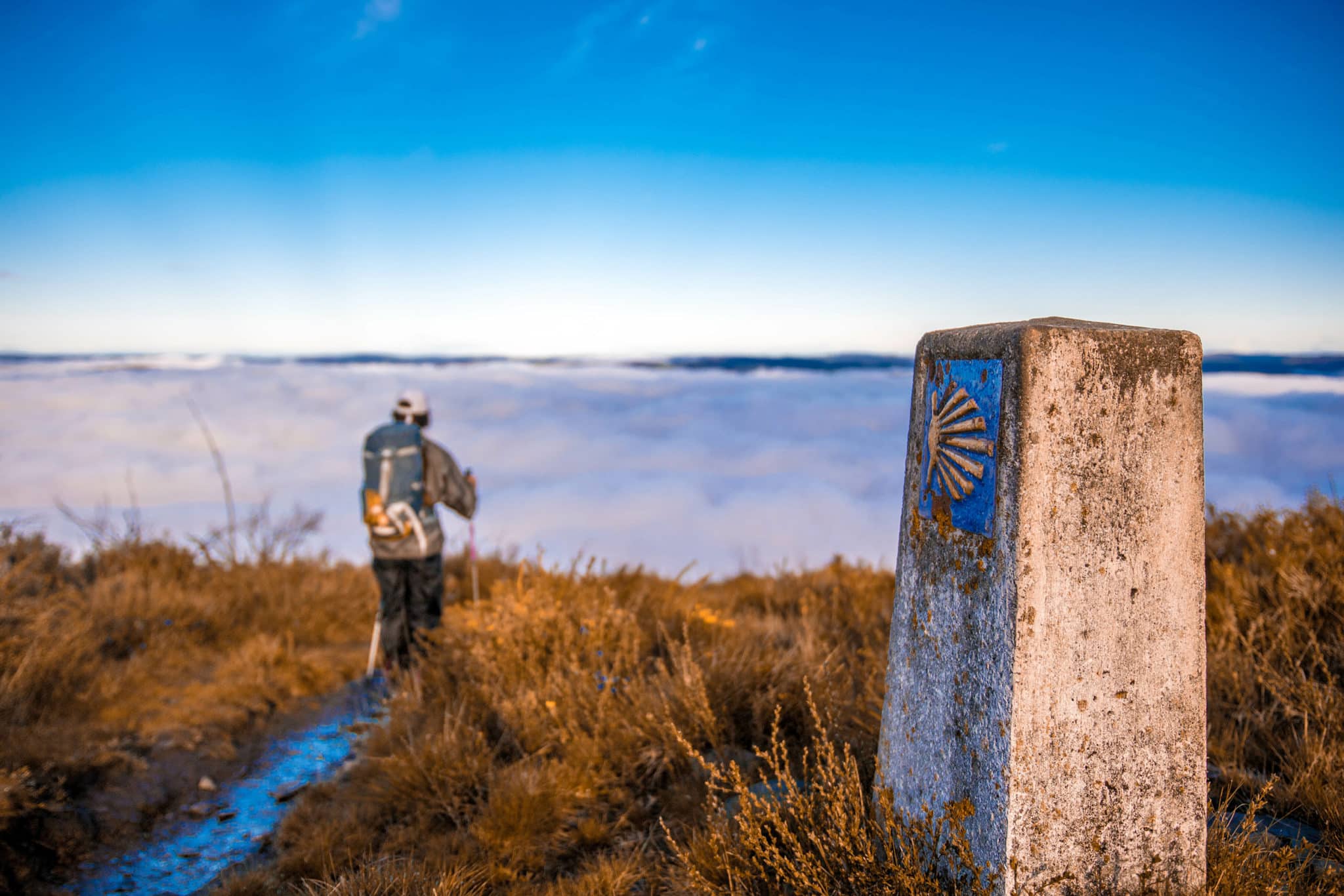
There is a Camino de Santiago where mountains replace crowds, where some stages still feel genuinely remote and where the history of the pilgrimage takes you back more than a thousand years. It starts in Oviedo, crosses the mountains of Asturias and enters Galicia before finally reaching Santiago de Compostela. This is the Camino Primitivo — the oldest route to Santiago and, for many pilgrims, one of the most spectacular.
While the Camino Francés remains the route most international pilgrims immediately associate with Santiago, the Primitivo offers something very different. It is shorter, tougher and considerably more mountainous, with long climbs, isolated stretches and landscapes that can make the walker feel far removed from the increasingly busy world of the Camino.
Its appeal is precisely there.
This is not necessarily the Camino for somebody looking for the easiest first pilgrimage. But for walkers who want mountains, history, rural villages and physically demanding stages, the Primitivo has become one of the great alternatives.
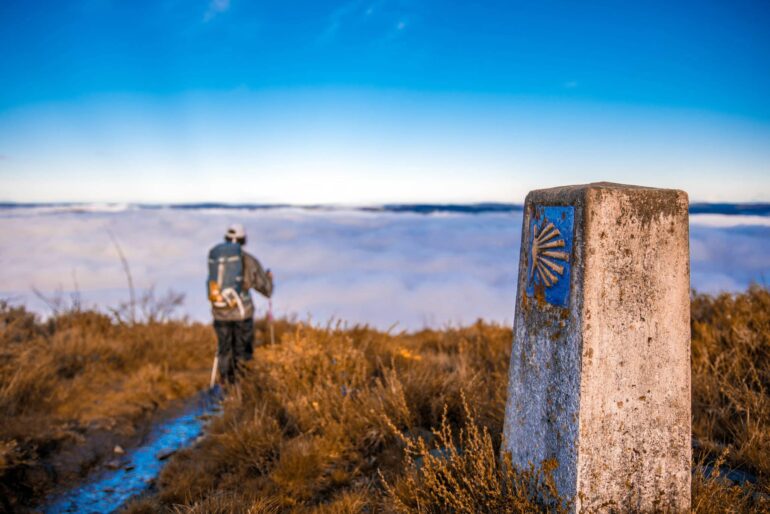
The Camino that came before the Camino
The word Primitivo can occasionally confuse foreign pilgrims. It does not mean primitive in the modern sense of rudimentary or undeveloped.
It refers to its origins.
The route is traditionally associated with King Alfonso II of Asturias, regarded as the first recorded pilgrim to travel to the place where the remains attributed to the Apostle James had been discovered in the 9th century.
His journey from the Asturian kingdom towards what would become Santiago de Compostela gave rise to what we now know as the Camino Primitivo.
Asturias’ official tourism authority describes it as the first known Jacobean pilgrimage route in history.
More than a thousand years later, pilgrims can still leave from Oviedo Cathedral and head west through the Asturian countryside.
That historical connection gives the Primitivo a character that is difficult to reproduce elsewhere.
You are not simply choosing another Camino.
You are walking towards the origins of the Camino itself.
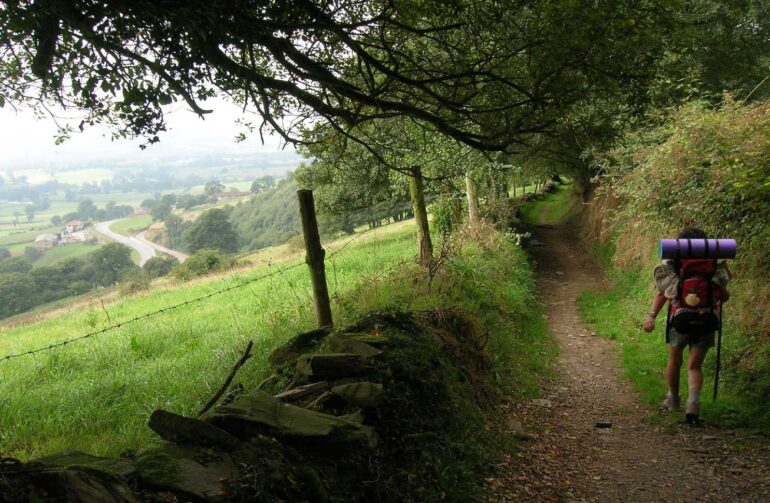
From Oviedo into the mountains
Oviedo is one of Spain’s great historic cities and deserves time before starting the pilgrimage.
From there, however, the urban landscape disappears remarkably quickly.
The route leads towards places such as Grado, Salas, Tineo, Pola de Allande and Grandas de Salime before entering Galicia and eventually joining the route towards Santiago.
Official tourism information divides the Asturian section into seven stages, although pilgrims can adapt them according to fitness and available accommodation.
And this is where one of the biggest differences with other Caminos becomes apparent.
The Primitivo makes you climb.
Then descend.
And then climb again.
The mountains are not simply a beautiful backdrop to the pilgrimage. They are part of the experience.
The famous Hospitales route
Few names on the Camino Primitivo generate as much conversation among pilgrims as Hospitales.
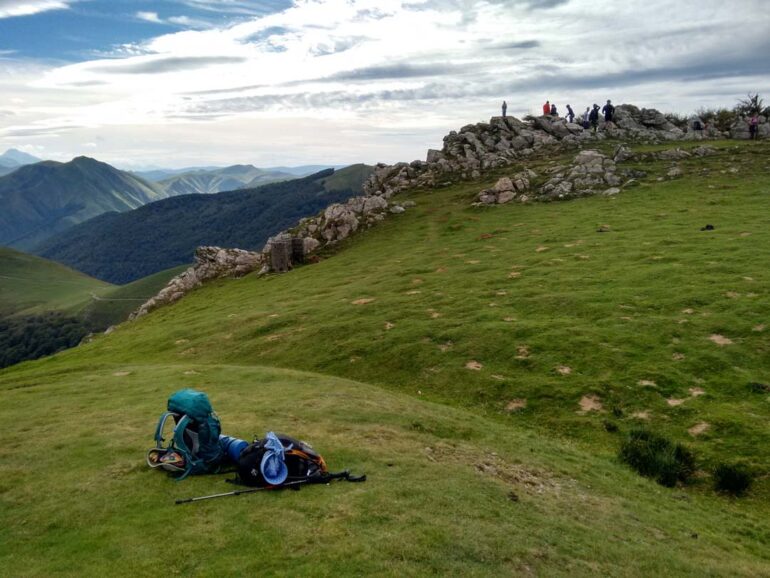
This high-level alternative crosses an exposed and largely uninhabited mountain landscape. Remains of old pilgrim hospitals give the route its name, recalling a time when travellers crossing these mountains depended on places of refuge.
Asturias Tourism warns that the route has very steep gradients and crosses completely unpopulated terrain, recommending good physical condition for anyone choosing it.
In good conditions, Hospitales can provide some of the most extraordinary scenery on the entire Camino.
But it deserves respect.
Mountain weather can change quickly, visibility can deteriorate and there are fewer opportunities to simply stop at the next café or village.
That combination of beauty and exposure is precisely why the Primitivo should not be approached as simply a shorter version of the Camino Francés.
Is the Camino Primitivo difficult?
Yes — compared with many other popular Camino routes.
That doesn’t mean you need to be an elite athlete.
Thousands of ordinary pilgrims complete it successfully. But arriving with reasonable fitness makes a substantial difference, particularly if you intend to walk conventional stage distances carrying your own backpack.
Expect repeated elevation changes rather than endless flat kilometres.
The difficulty also changes the rhythm of the journey.
Twenty kilometres through mountainous Asturias can feel very different from twenty kilometres across flatter terrain.
For this reason, one of the worst mistakes is planning stages based purely on distance.
Look at elevation as well as kilometres.
Your knees will understand why.
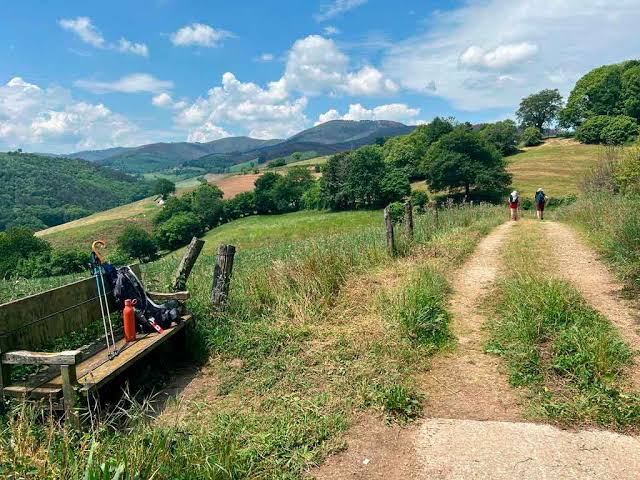
A quieter Camino — but not an empty one
The Camino Primitivo has sometimes been promoted as a secret alternative to the busy Camino Francés.
That description needs qualification.
It is no longer a secret.
International pilgrims know about it, guidebooks cover it extensively and its reputation has grown enormously.
Its historical importance has also received international recognition: the Primitive Route forms part of the Routes of Santiago de Compostela in northern Spain included on UNESCO’s World Heritage List.
Nevertheless, its geography naturally produces a different atmosphere.
Mountain stages, smaller settlements and fewer large pilgrimage towns mean that stretches can still feel remarkably peaceful.
For pilgrims coming from busy lives, that can be one of the Primitivo’s greatest attractions.
There are moments when the soundtrack becomes remarkably simple:
boots on the trail, cowbells somewhere in the valley, wind through the trees and perhaps another pilgrim somewhere behind you.
Asturias is part of the experience
Walking the Primitivo isn’t simply about getting to Santiago.
Asturias gives the route a powerful identity of its own.
There are medieval towns, forests, mountain landscapes, traditional villages and a food culture that provides a fairly convincing reward after a difficult day’s walking.
Oviedo introduces the pilgrim to Asturian history before the route progressively moves into a much more rural landscape.
Grado, Salas and Tineo become names that Primitivo pilgrims quickly learn. Later come the mountains around Allande and the spectacular landscape towards Grandas de Salime.
Then Galicia waits on the other side.
The transition between the two regions is one of the great pleasures of walking rather than simply travelling through northern Spain.
You notice the landscape changing slowly because you cross it at human speed.
Who should choose the Camino Primitivo?
Choose it if the mountains excite you more than they intimidate you.
Choose it if you are comfortable with physically demanding days.
Choose it if the history of the pilgrimage matters to you.
And choose it if you want a Camino where the landscape itself becomes one of the principal characters of the journey.
But don’t choose the Primitivo simply because you have heard that it is quieter.
A quieter Camino isn’t automatically an easier Camino.
Good footwear, sensible stages, appropriate clothing and preparation for rapidly changing weather are far more important here than chasing an image of an undiscovered pilgrimage route.
More than a thousand years later
Perhaps the most extraordinary thing about the Camino Primitivo is not its mountains.
It is the continuity.
More than a millennium separates today’s international pilgrim carrying a smartphone and lightweight backpack from the medieval travellers who crossed these landscapes without GPS, modern roads or detailed weather forecasts.
The conditions have changed beyond recognition.
The direction has not.
From Oviedo towards Santiago.
Across Asturias.
Into Galicia.
Following one of the oldest threads in the extraordinary history of the Camino de Santiago.
For pilgrims prepared to accept the climbs, the weather and the physical challenge, the reward is one of the most powerful journeys on the entire Camino network.
The Camino Primitivo doesn’t make Santiago easy to reach.
That may be exactly why reaching it feels so special.