







Pilgrims are now collecting Camino stamps as treasured souvenirs and social media sensations
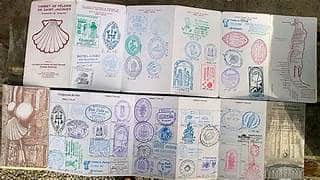
What was once a simple tradition to prove completion of the Camino de Santiago has evolved into one of the most viral and emotional experiences for modern pilgrims. Across the different Camino routes in Spain, the famous pilgrim stamps — known as “sellos” — have transformed from practical travel marks into collectible memories, social media trends and even tourist attractions.
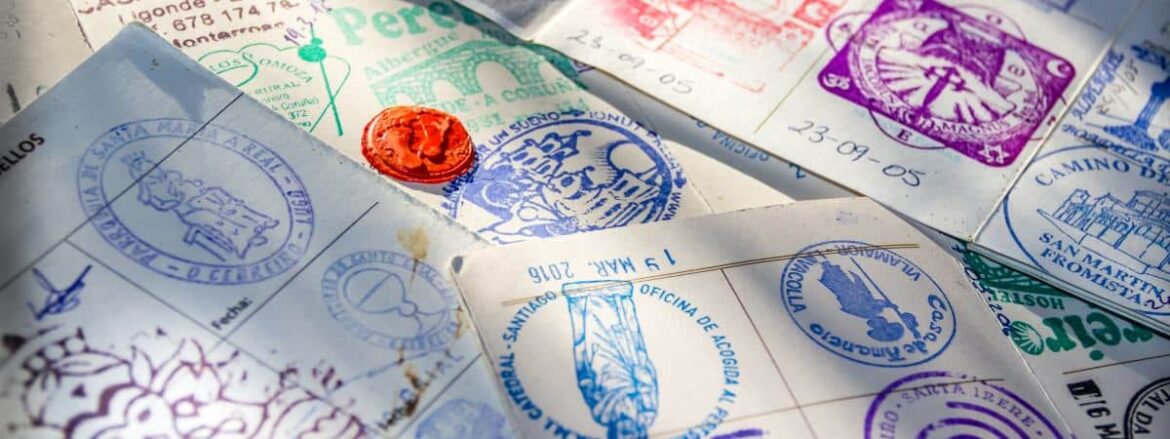
For centuries, pilgrims stamped their credentials to demonstrate they were genuinely walking toward Santiago de Compostela. These official marks were traditionally obtained in churches, monasteries and religious institutions along the route. Today, however, the tradition has expanded far beyond its historical roots. Bars, cafés, hostels, museums, tourism offices and even small local shops now offer their own uniquely designed Camino stamps.
The Camino credential has become a visual diary for thousands of walkers
Modern pilgrims are no longer interested only in obtaining the minimum number of stamps required to receive the famous Compostela certificate in Santiago. Many now actively search for the most artistic, original or unusual stamps they can find during their journey.
Some travelers even organize their daily stages around famous stamp locations that have become popular on TikTok and Instagram. One of the most sought-after examples is a red wax-style stamp featuring footprints and the Camino shell, which has become a viral sensation among walkers sharing their Camino experiences online.
The phenomenon has created what many now call the “stamp effect” of the Camino de Santiago — a mix of tradition, tourism, creativity and digital culture. Two pilgrims can complete exactly the same route yet finish with completely different credentials filled with unique designs and memories.
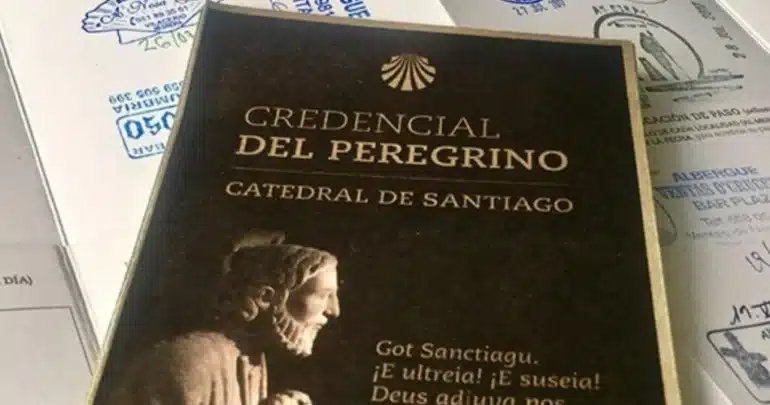
A centuries-old Camino tradition finds new life through social media
Despite the rise of social media trends, the stamp tradition still holds deep emotional and spiritual meaning for many pilgrims. Each stamp represents a stage completed, a conversation shared, a difficult climb conquered or a special moment experienced along the Camino.
For thousands of walkers from around the world, reviewing their credential at the end of the journey becomes almost as emotional as arriving at the Cathedral of Santiago itself. The collection of stamps forms a personal visual diary of the pilgrimage — a tangible memory of one of Europe’s most iconic cultural and spiritual routes.
The growing international popularity of the Camino de Santiago continues to blend ancient traditions with modern digital culture, proving once again that the pilgrimage remains alive, evolving and deeply connected to each new generation of travelers.