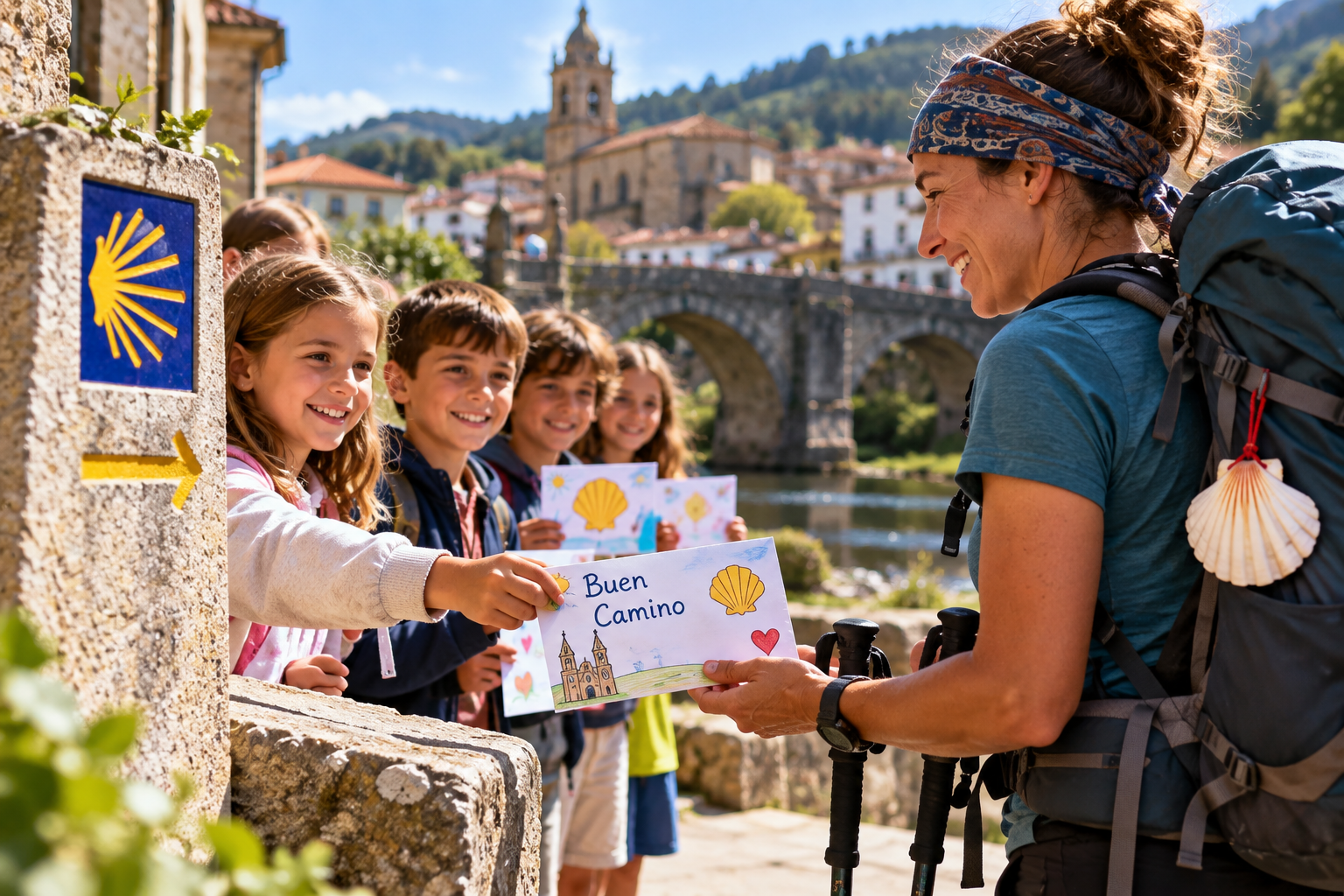













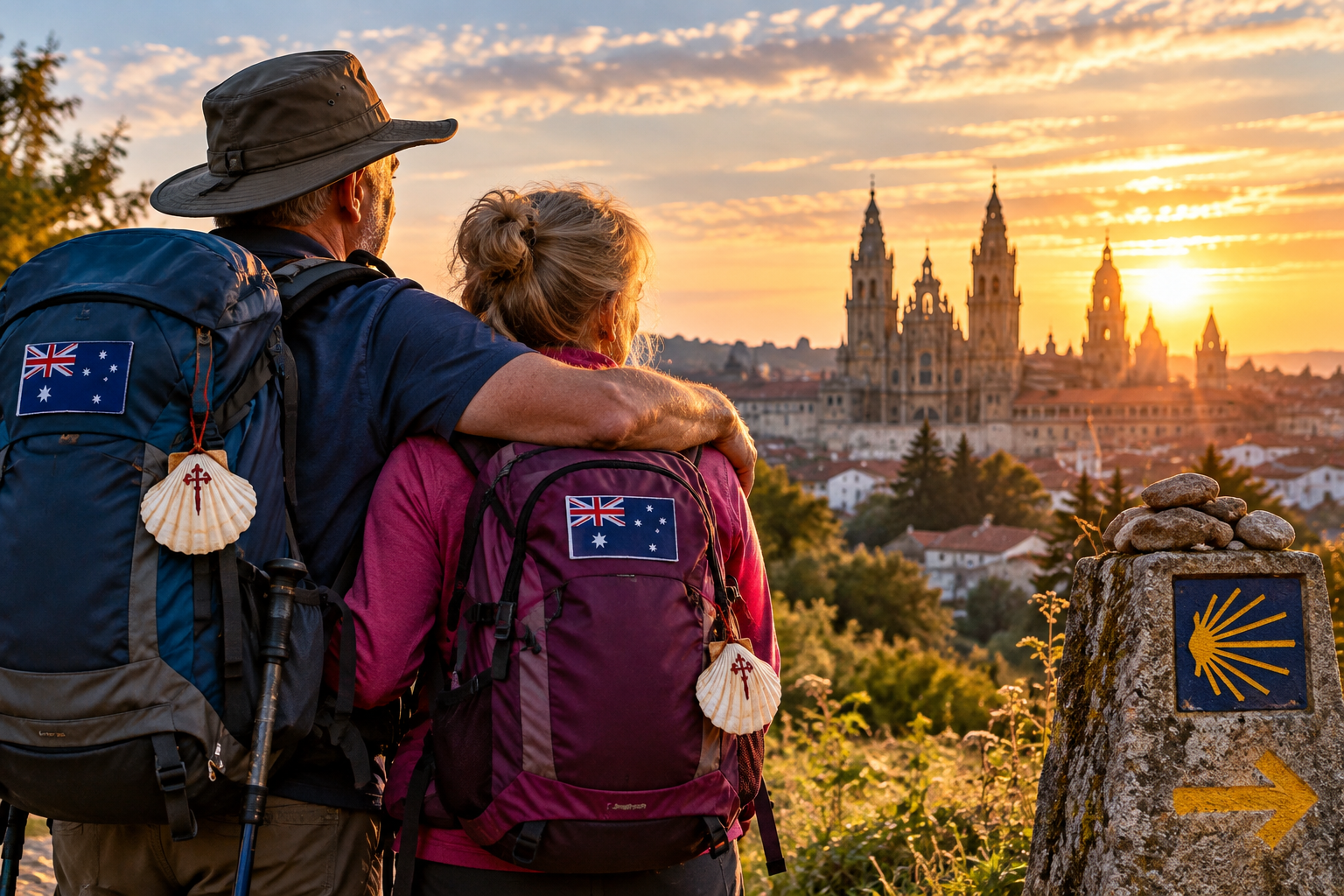
Australian couple Upali and Nina DeSilva are walking the entire Camino Francés, from Saint-Jean-Pied-de-Port to Santiago de Compostela, to raise awareness of miscarriage and support families affected by pregnancy loss.
For many pilgrims, the Camino de Santiago is a journey of endurance, reflection and personal transformation.
For Upali and Nina DeSilva, an Australian couple from Frankston, it is also a way to give visibility to a grief that is often lived in silence.
The couple set out from Saint-Jean-Pied-de-Port on 27 August and plan to reach Santiago de Compostela on 16 October, after walking more than 800 kilometres over 51 days.
Their purpose goes far beyond completing the Camino Francés.
They are using every stage of the pilgrimage to raise awareness of miscarriage and collect funds for Miscarriage Information Support Service, known as MISS, an Australian organisation that provides information, resources, education and support to people affected by pregnancy loss.
Walking for families who often grieve in silence
Nina explained that miscarriage affects many families but is still something people often go through quietly.
That silence was one of the reasons the couple decided to link their Camino with a cause.
They wanted their walk to become a way of talking openly about pregnancy loss and the emotional impact it can have on parents and families.
For them, the Camino felt particularly appropriate.
Its long days, physical effort and reflective character gave the journey a meaning that connected naturally with remembrance, resilience and support.
More than 800 kilometres across Spain
Upali and Nina are both in their seventies.
Their itinerary follows the classic Camino Francés from the French side of the Pyrenees all the way to Santiago.
By the time their story was published in Australia, they had already completed more than 500 kilometres.
The route has taken them through the Pyrenean foothills, small towns and cities across northern Spain.
The physical challenge has been real.
They have spoken openly about exhaustion, aching legs and feet, and those moments when they question whether continuing makes sense.
But they also describe the people they meet and the cause behind the journey as the reason they keep moving forward.
A cause with a very personal connection
The charity they are supporting, MISS, was founded by their neighbour Melissa King.
The organisation provides assistance to people affected by miscarriage through information, awareness, education and support programs.
That personal connection helped make the decision clearer when the couple began thinking about which cause they wanted to support during their Camino.
The goal is not only to raise money.
It is also to make miscarriage more visible and encourage families to feel less isolated when they experience pregnancy loss.
Every kilometre has a meaning
Upali has described each kilometre as a reminder of the families they hope to support.
That gives a very different meaning to the numbers usually associated with the Camino.
Eight hundred kilometres.
Fifty-one days.
Hundreds of towns, climbs and descents.
In this case, the distance is not just a sporting challenge.
Each stage becomes part of a message.
The couple are turning a long-distance pilgrimage into a travelling campaign for awareness.
The Camino as a place for difficult conversations
The Camino de Santiago has always been a space where people talk.
Pilgrims share meals, stories, fears and memories with people they may have met only hours earlier.
That atmosphere can make it easier to speak about subjects that are often difficult in everyday life.
Grief is one of them.
Pregnancy loss is another.
By linking their pilgrimage with miscarriage awareness, Upali and Nina are bringing that conversation into one of the most human environments possible.
A road full of strangers who, for a few days or weeks, often become companions.
Their arrival will come just after a day of remembrance
The couple expect to arrive in Santiago on 16 October.
That date carries additional meaning.
Their planned arrival comes one day after International Pregnancy and Infant Loss Remembrance Day, observed on 15 October.
MISS is also organising a remembrance service in Australia on that day.
The event will include the opening of the Lullaby Fountain, dedicated to people affected by infant, baby or pregnancy loss.
While that service takes place thousands of kilometres away, Upali and Nina will be completing the final part of their Camino.
A human story beyond the statistics
The Camino is often described through numbers.
How many pilgrims arrived.
Which route grew the most.
Which country sent the most walkers.
But stories like this remind us that behind every credential there is a reason.
Some walk for faith.
Some for adventure.
Some after a difficult moment.
Others to remember someone.
Upali and Nina are walking for families they may never meet.
That is what gives their journey its strength.
The finish line is not only Santiago
When they finally arrive in Santiago de Compostela, they will have completed one of Europe’s great pilgrimage routes.
But their real objective will not end at the Cathedral.
The awareness generated by their walk, the conversations it has started and the support raised for families affected by miscarriage are what give the pilgrimage a meaning beyond the final kilometre.
The Camino can be a personal journey.
But sometimes it becomes something larger.
For Upali and Nina DeSilva, every step towards Santiago is also a step towards making grief a little less invisible.