












The Camino de Santiago is often described as a journey of faith, self-discovery, and human kindness. Every year, hundreds of thousands of pilgrims from all over the world walk its ancient routes in search of adventure, spirituality, and unforgettable experiences. Along the way, stories of generosity and honesty frequently emerge, reminding everyone why the Way of St. James is much more than just a hiking trail.
One such remarkable story has recently come to light in Pamplona, where two honest pilgrims have been rewarded for an act of integrity that took place two years ago.
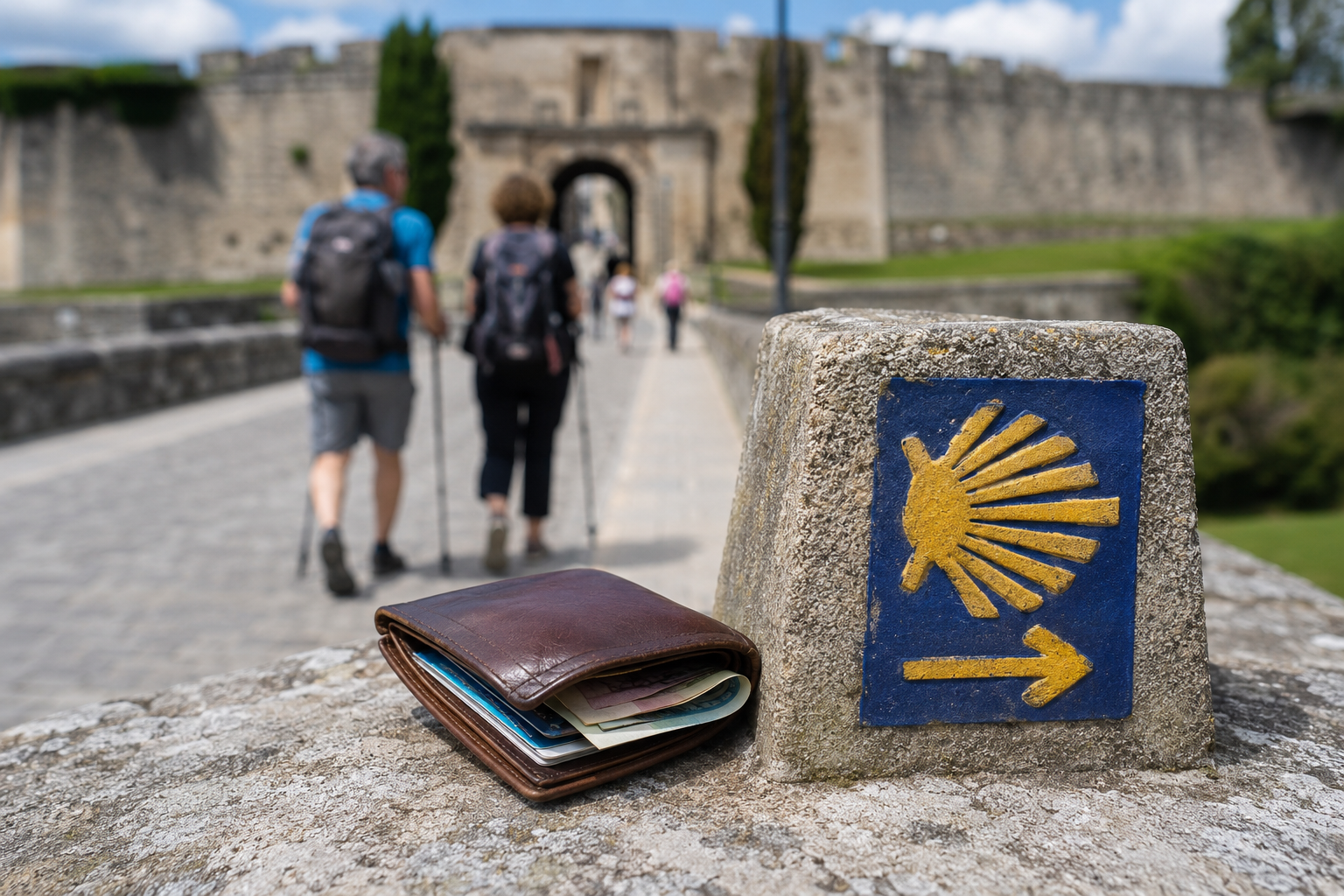
The story began in June 2024, when a father and his daughter were walking the Camino de Santiago through the historic city of Pamplona. While staying at a pilgrim hostel, they came across a wallet that had clearly been lost by another traveler.
Inside the wallet they found identification documents together with €700 in cash. Although many people might have been tempted to keep the money, the pair immediately decided to do the right thing. They took the wallet directly to the Spanish National Police, ensuring that every effort could be made to return it to its rightful owner.
Police officers carefully documented the discovery and began the legal process of locating the owner. Using the identification found inside, authorities attempted to contact the individual through the available channels. Despite these efforts, nobody came forward to claim the wallet.
As required by Spanish law, the wallet and its contents remained safely stored while authorities waited for someone to reclaim the lost property. Months passed, then a full year, and eventually two years without any claim being made.
Under Spanish legislation regarding lost property, if an item remains unclaimed after the legally established period, ownership may be transferred to the person who originally found and handed it over.
After the legal deadline expired in 2026, the honest pilgrim returned to the police station in Pamplona. Officers officially informed him that no one had claimed the wallet and that, according to the law, he was now entitled to receive the €700 that had remained untouched for two years.
The money was formally handed over in an official procedure, bringing an unexpected ending to a story that began with nothing more than an act of kindness.

While the financial reward certainly surprised the father and daughter, many people believe the greatest reward came long before. By choosing honesty over personal gain, they demonstrated the values that have long been associated with the Camino de Santiago: respect, solidarity, trust, and generosity.
The Camino has always been more than a physical route connecting villages, towns, and cities across northern Spain. It is also a place where strangers help one another without expecting anything in return. Pilgrims share food, offer medical assistance, encourage exhausted walkers, and often build lifelong friendships despite speaking different languages.
Stories like this help reinforce the positive image of the Camino de Santiago, showing that its centuries-old traditions of hospitality continue to thrive today.
Every season, thousands of pilgrims accidentally leave behind backpacks, mobile phones, passports, wallets, and valuable personal belongings. In most cases, these items are recovered by fellow pilgrims, hospitaleros, volunteers, or local residents and quickly returned to their owners.
That culture of honesty is one of the reasons why so many international visitors describe the Way of St. James as one of the safest long-distance pilgrimage routes in the world.
Pamplona itself occupies a very special place on the Camino Francés, welcoming thousands of pilgrims each year shortly after they cross the Pyrenees from France. The city is famous not only for the Running of the Bulls during the San Fermín festival but also for its rich medieval heritage and warm reception of Camino travelers.
For many pilgrims, Pamplona represents one of the first major milestones of their journey toward Santiago de Compostela, where the tomb of Saint James has attracted pilgrims for more than a thousand years.
This heartwarming story is another reminder that the Camino is filled with unexpected moments. Sometimes they come in the form of breathtaking landscapes, lifelong friendships, or personal transformation. Other times they arrive through simple acts of honesty that inspire people around the world.
In an age where stories about crime and conflict often dominate the headlines, the example set by these two pilgrims offers a refreshing message. Integrity still matters. Doing the right thing, even when nobody is watching, continues to make a difference.
Their decision to hand over a lost wallet without hesitation eventually brought an unexpected financial reward, but more importantly, it strengthened the enduring reputation of the Camino de Santiago as a place where kindness, trust, and humanity continue to flourish every single day.