








More young people walk in search of meaning beyond travel
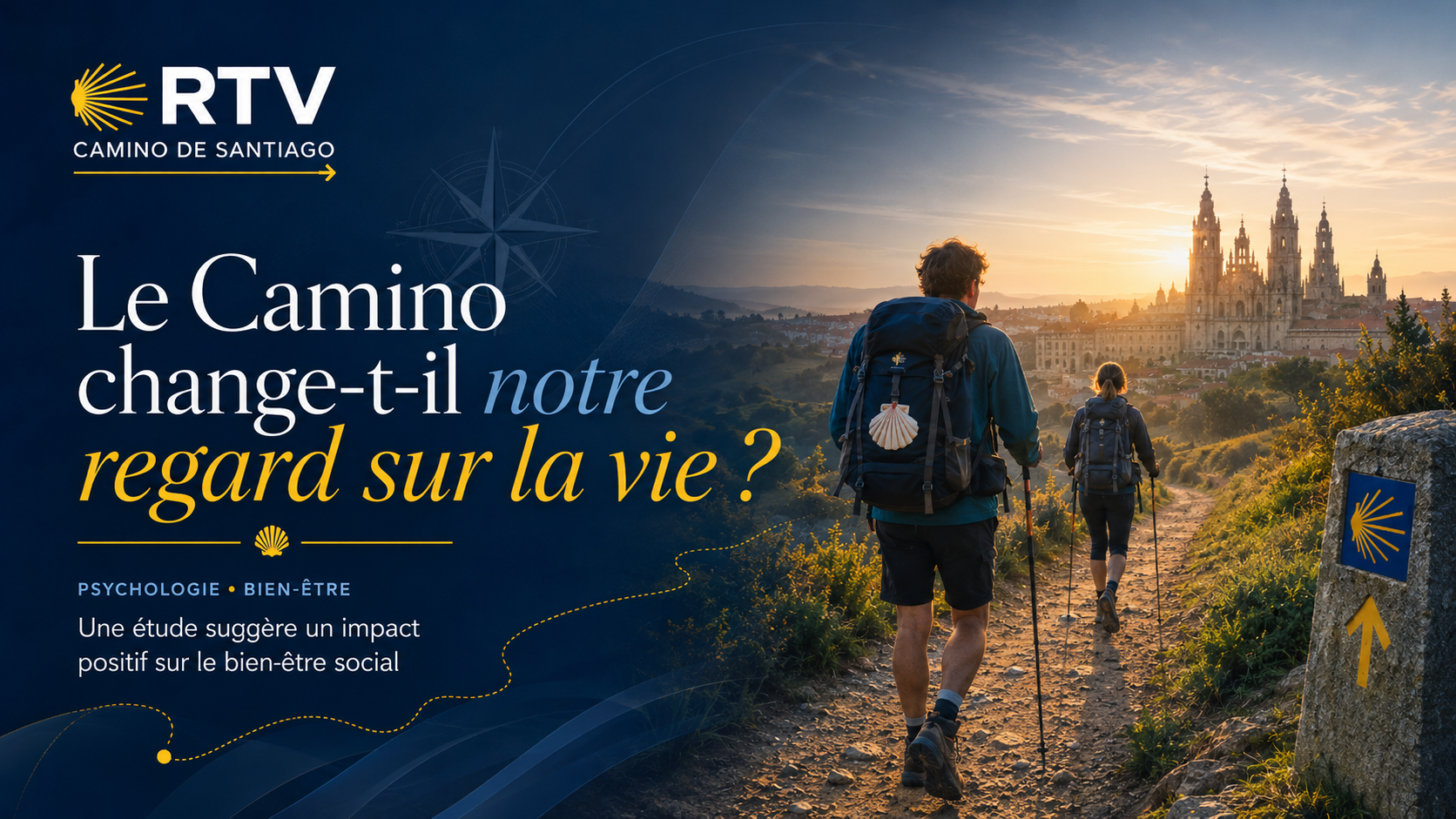
The Camino de Santiago is undergoing a noticeable shift in 2026, as increasing numbers of young pilgrims take to its routes not just for adventure, but for deeper personal reasons. Recent observations and reports indicate that many under the age of 35 are walking the Camino motivated by a desire for reflection, purpose, and spiritual connection.
While the Camino has always combined religious, cultural, and physical motivations, this growing trend among younger generations reflects a broader change in how travel is understood today.
A generation looking for more than tourism
The rise in young pilgrims is not simply about increasing numbers—it reveals a change in mindset.
In recent years, the Camino has seen record participation, with hundreds of thousands of pilgrims arriving in Santiago annually. Within that growth, younger walkers are becoming more visible, often approaching the Camino as a way to step away from fast-paced modern life.
Many describe their motivations as:
- A need to disconnect from constant digital exposure
- A desire to slow down and reflect
- An interest in meaningful, personal experiences
- A search for direction during transitional life stages
This shift shows that the Camino is no longer seen only as a religious route or a hiking challenge, but as a space for introspection.
Spirituality beyond traditional religion
One of the most significant aspects of this trend is how spirituality is being redefined.
For many young pilgrims, the Camino is not necessarily tied to formal religious practice. Instead, it offers a form of spirituality rooted in experience—walking, sharing, and reflecting.
Days on the trail, physical effort, and conversations with strangers create a unique environment where people can process thoughts and emotions.
The Camino becomes:
- A mental reset
- A break from routine
- A space for personal clarity
The role of simplicity and time
Modern life often leaves little room for pause. The Camino, by contrast, is defined by simplicity.
Walking for hours each day, carrying only essential belongings, and following a clear path allows pilgrims to reconnect with basic rhythms.
For young people, this simplicity can be especially powerful.
There are no constant notifications, no deadlines, and no pressure to perform. Instead, there is time—something increasingly rare.
Community and human connection
Another key factor behind the rise in young pilgrims is the sense of community.
Unlike conventional travel, the Camino encourages interaction. Conversations start easily, and connections form quickly among people from different countries and backgrounds.
Many young pilgrims highlight this aspect as one of the most meaningful parts of the journey.
It offers something often missing in modern life: genuine human connection without filters.
Accessibility and cost also play a role
Practical reasons also contribute to the Camino’s popularity.
Compared to traditional holidays, walking the Camino can be relatively affordable. Public hostels, simple meals, and flexible planning make it accessible to a wider audience.
For younger travelers, especially those with limited budgets, this is an important factor.
However, affordability alone does not explain the trend. It is the combination of accessibility and meaning that makes the Camino particularly attractive.
Faith still present, but evolving
Although motivations are changing, faith continues to play a role.
Some young pilgrims walk for religious reasons, while others rediscover faith during the journey. The Camino remains open to both perspectives, allowing each individual to experience it in their own way.
This flexibility is one of its strengths.
A trend likely to continue
Experts suggest that the growing interest among younger generations is not temporary.
As more people seek alternatives to traditional tourism, experiences that combine physical activity, emotional depth, and cultural value are expected to grow.
The Camino de Santiago fits naturally into this shift.
The Camino adapts without losing its essence
For centuries, the Camino has welcomed pilgrims with different motivations.
In 2026, it continues to evolve, reflecting the needs of a new generation while maintaining its core identity.
The route remains the same—but the reasons for walking it are expanding.