













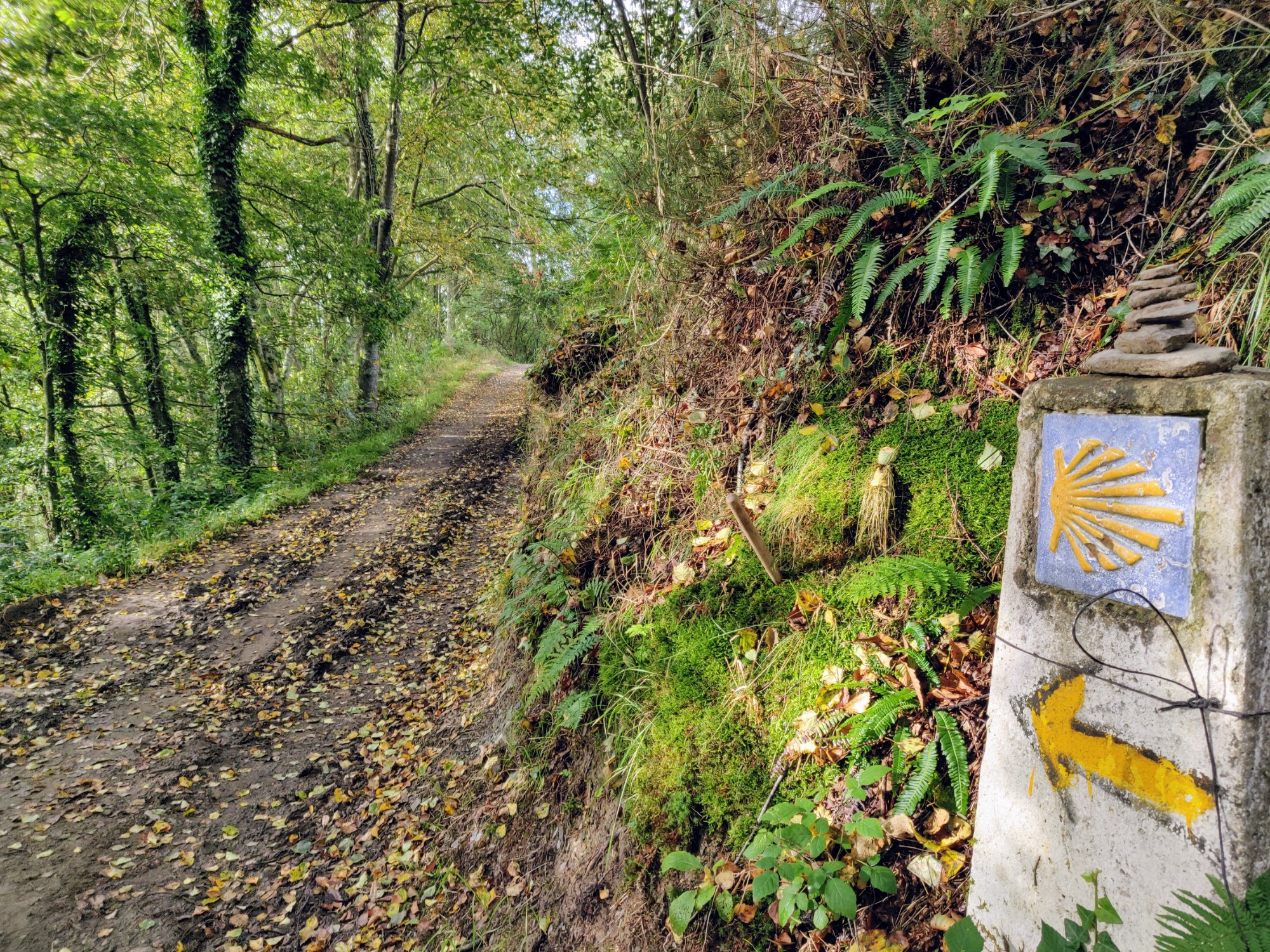
Getting lost on the Camino de Santiago can happen even on well-marked routes. A missed yellow arrow, poor visibility, a confusing crossroads or an outdated GPS track can take a pilgrim away from the official path. Knowing what to do next can turn a stressful moment into a manageable situation.
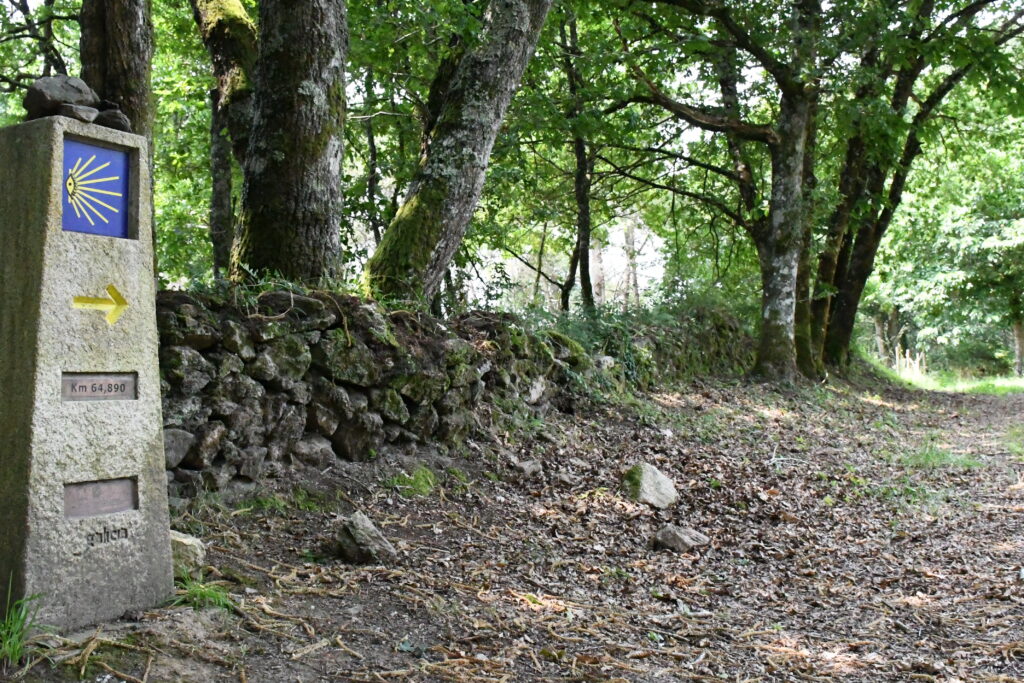
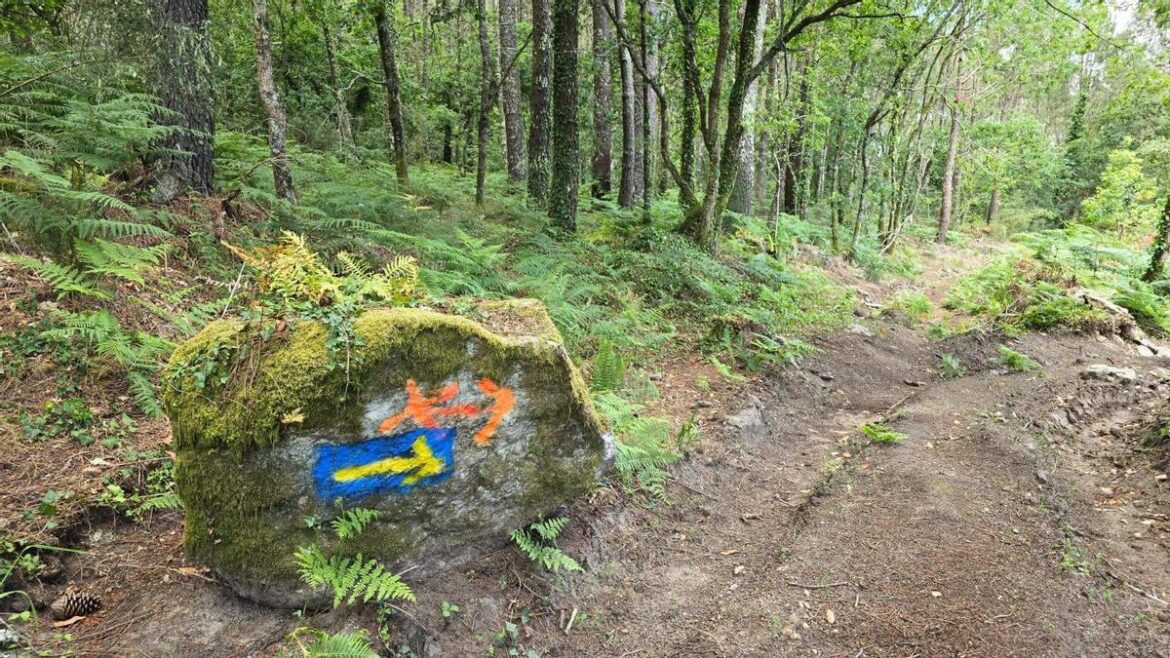
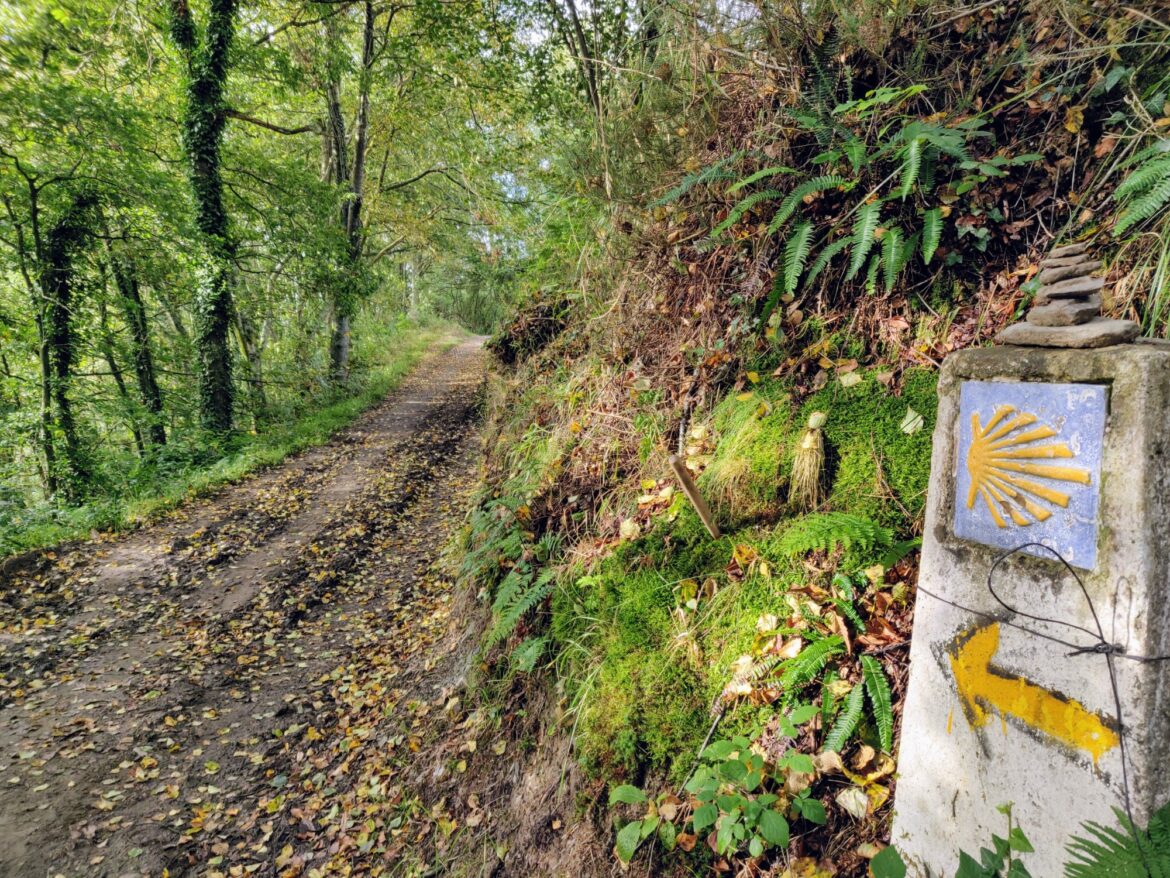
The Camino de Santiago is famous for its yellow arrows, scallop shells and waymarkers, but no route is completely impossible to miss.
A distraction, a conversation, bad weather or simply following another pilgrim in the wrong direction can be enough to leave the official trail.
Most of the time, the problem is solved quickly. The important thing is not to panic and, above all, not to keep walking blindly hoping that the Camino will somehow reappear.
Stop as soon as something feels wrong
One of the most common mistakes is continuing for several kilometres after noticing that there have been no Camino signs for a while.
If you suddenly realise that you have not seen a yellow arrow, scallop shell or waymarker for longer than expected, stop and think about the last confirmed Camino sign you remember.
The earlier you react, the easier it usually is to return to the correct route.
Continuing forward simply because “it must be this way” can turn a small mistake into a much longer detour.
Go back to the last sign you are sure about
If it is safe to do so, retracing your steps is often the simplest solution.
Return to the last junction, village, church, bridge or yellow arrow that you clearly remember.
Once there, look carefully around.
Sometimes the correct marker is on the opposite side of a building, painted low on a wall or positioned in a place that is easy to miss when walking quickly.
The Camino has thousands of signs, but not all of them are equally visible.
Check your phone, but do not trust it blindly
A smartphone can be extremely useful when you are unsure of your position.
Open your map or Camino application and check where you are in relation to the official route. If possible, compare more than one source, particularly if the track you are using was downloaded a long time ago.
Routes can occasionally change because of roadworks, safety improvements or temporary diversions.
This is why an old GPS track should never automatically be considered more reliable than recent official signs on the ground.
Technology is a tool, not a substitute for common sense.
Ask someone nearby
The Camino passes through thousands of villages and rural communities where local people are accustomed to seeing pilgrims.
If you find a house, bar, shop, petrol station or another person, ask.
A simple question can save an hour of unnecessary walking.
Even if there is a language barrier, showing the name of your next village or pointing to your map is usually enough.
Local residents often know exactly where pilgrims take the wrong turn because they have seen it happen many times before.
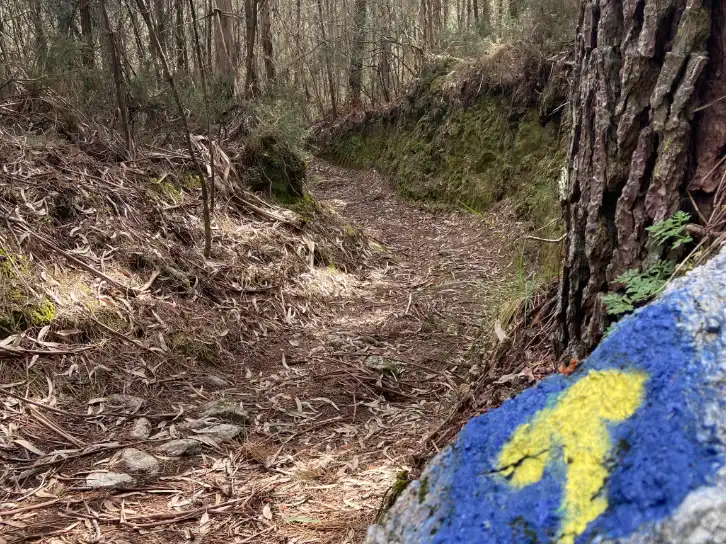
Do not follow another pilgrim just because they look confident
This may be one of the most important lessons on the Camino.
A pilgrim walking confidently in front of you is not necessarily walking in the right direction.
Sometimes several people become lost together because everyone assumes somebody else knows the route.
If the signs disappear, check for yourself.
Ten pilgrims walking in the wrong direction are still lost.
If you are in the mountains, take it more seriously
Getting confused in a town is normally inconvenient.
Getting lost in the mountains can become dangerous.
Routes such as the Pyrenean section towards Roncesvalles, mountain areas of the Camino Primitivo or isolated stretches of other Caminos require additional caution.
Fog can appear quickly, temperatures can fall and mobile coverage may be poor.
If weather conditions are deteriorating, do not leave a recognised trail to search for shortcuts.
Never cross unfamiliar slopes, rivers or woodland simply because your GPS shows the Camino somewhere on the other side.
The safest route is not always the shortest one.
Save your phone battery
If you are genuinely lost in a remote area, your mobile phone becomes an important safety tool.
Reduce screen brightness, close unnecessary applications and avoid wasting battery on photographs, videos or social media.
If coverage is weak, repeatedly trying to load large maps can also drain the battery quickly.
Make sure you have enough power left to call for assistance if necessary.
A small power bank is one of the most useful items a pilgrim can carry.
Share your location
If you are travelling with friends or someone knows your itinerary, send them your location.
Messaging applications usually allow you to share a live or current position.
This can help someone understand where you are and determine whether you are close to the official Camino.
If you need emergency assistance, providing an accurate location can also make it much easier for rescuers to find you.
Know when to call 112
If you are simply uncertain about a junction in a populated area, there is normally no reason to call emergency services.
But the situation changes if you are lost in an isolated place, injured, exhausted, experiencing severe weather or unable to return safely.
In Spain and across the European Union, the emergency number is 112.
Explain that you are a pilgrim on the Camino de Santiago, describe your situation and provide your location as accurately as possible.
If you have coordinates on your phone, they can be particularly useful.
Once emergency services have your position, follow their instructions rather than continuing to move unless they tell you otherwise.
Avoid improvising shortcuts
A map can make two points look surprisingly close.
Reality may be very different.
Between you and the Camino there could be a motorway, railway line, river, cliff, private property or dense vegetation.
Never try to create your own shortcut through unfamiliar terrain.
Returning along a known path may feel frustrating, but it is usually much safer than attempting to reach the Camino in a straight line.
Prevention begins before you start walking
Getting lost is much less likely if you prepare each stage before leaving.
Know the name of your destination, check the approximate distance and identify any particularly confusing sections.
Download offline maps if you expect poor coverage and carry enough battery.
It is also useful to know the names of one or two villages along the stage. If you need help, being able to say where you started and where you are heading makes everything easier.
The Camino is not a race
Sometimes pilgrims become lost because they are walking too quickly, talking, following a group or concentrating more on the kilometres than on the route.
Slow down at junctions.
Look for the signs.
And if something does not feel right, stop.
Losing ten minutes checking your route is much better than spending two hours walking in the wrong direction.
The yellow arrows are there to guide you, but the most important navigation tool is still the pilgrim’s own attention.
If you get lost on the Camino: stop, think, return to the last confirmed marker, check your location and ask for help when necessary.
The Camino will still be there.
You simply need to find the next yellow arrow.