

Elías Valiña, the priest who helped millions of pilgrims find their way
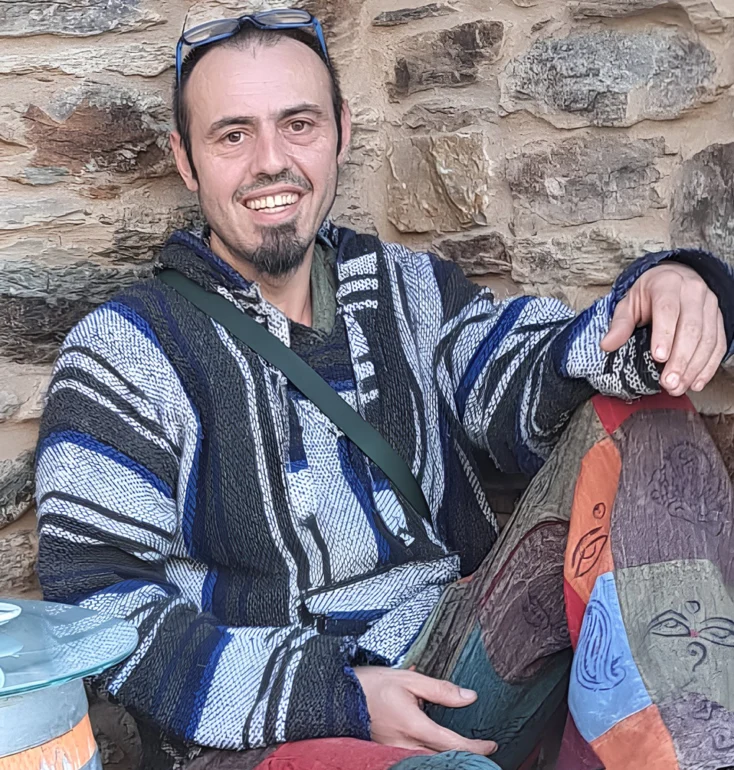
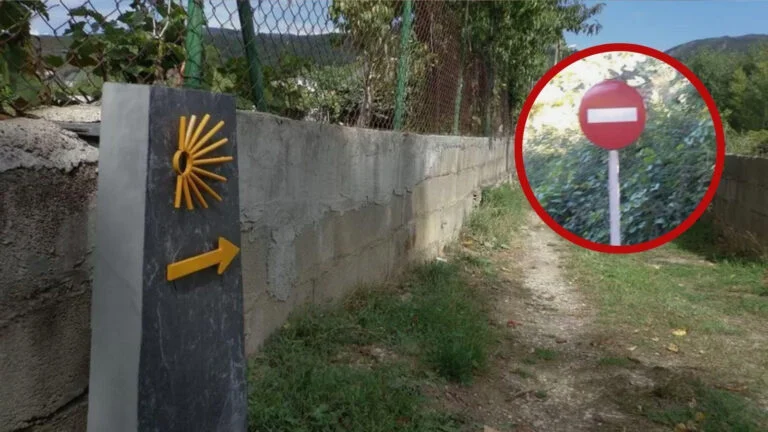
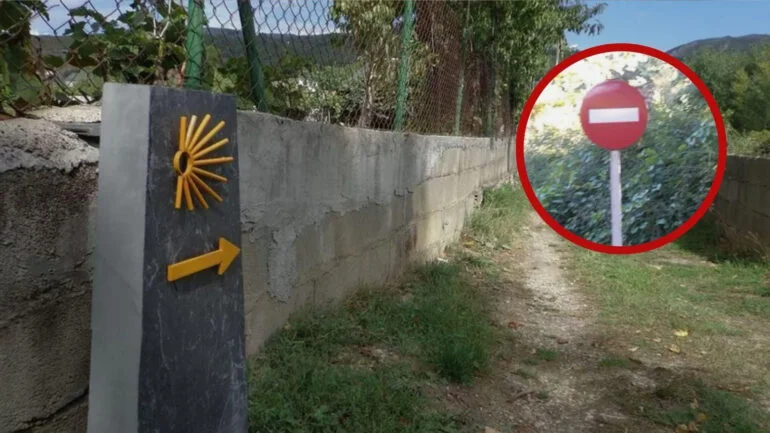
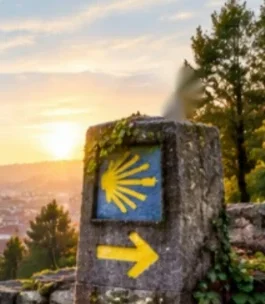
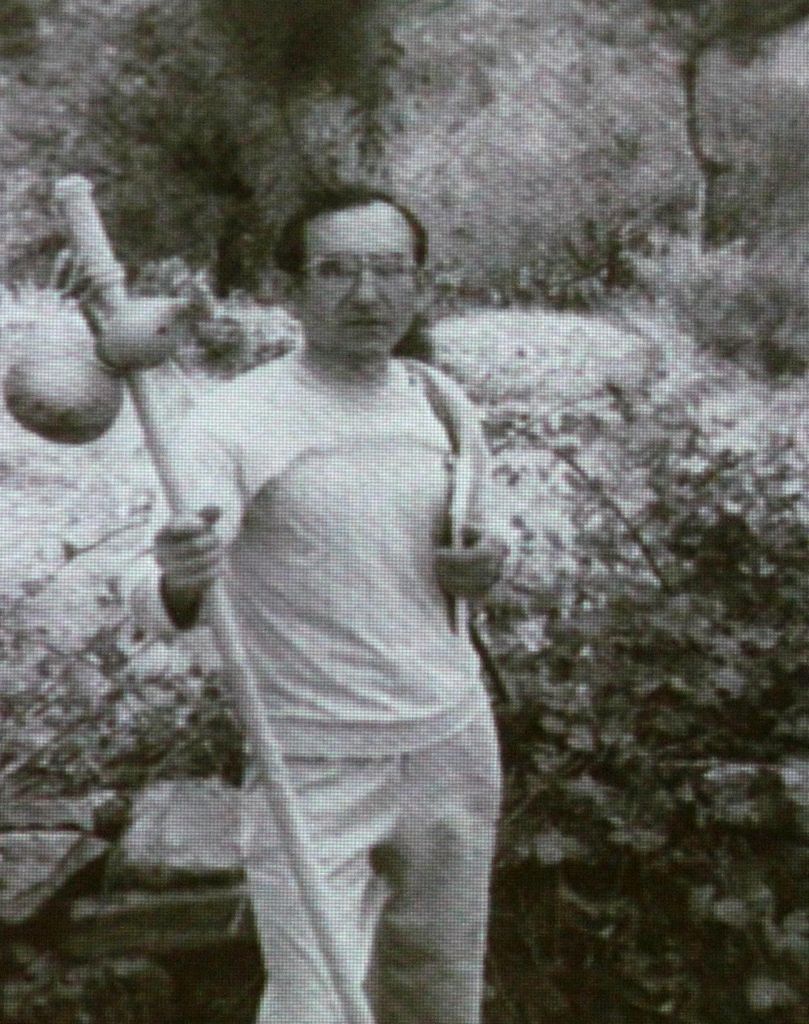
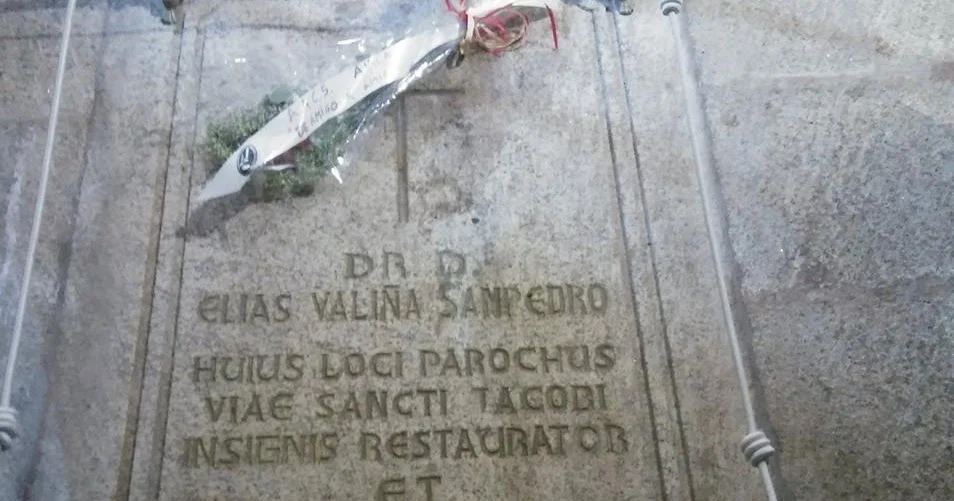
Today, it is impossible to imagine the Camino de Santiago without the iconic yellow arrows that guide pilgrims toward Santiago de Compostela. They appear on stones, walls, roads, trees, buildings, and trail markers across Europe. Yet many people do not know that this universal symbol of the Camino has a creator: Elías Valiña Sampedro, the priest of O Cebreiro who played a key role in reviving the pilgrimage route.
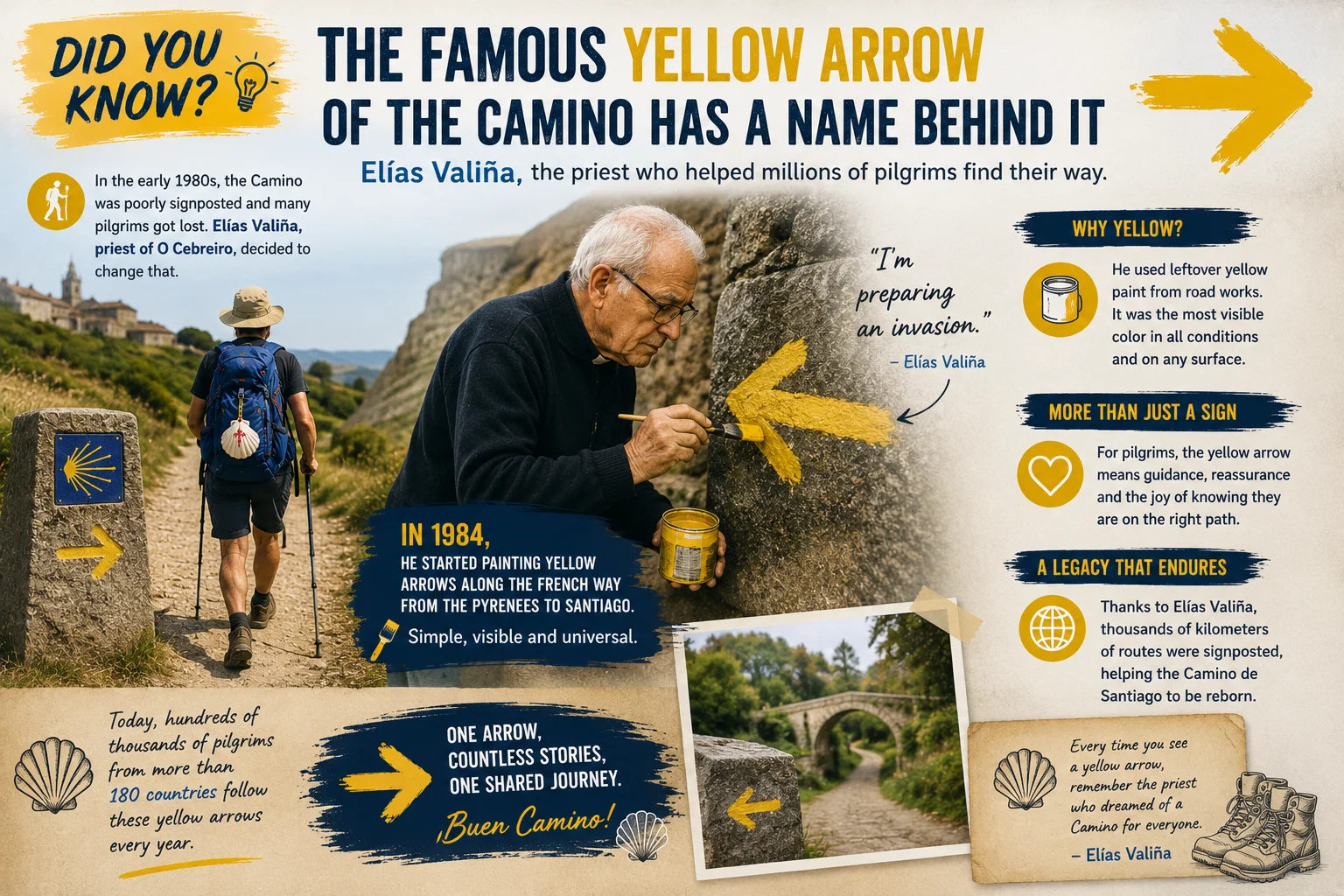
In the early 1980s, long before the Camino became a global phenomenon, many pilgrims frequently got lost due to poor signage. Concerned about the future of the route, Elías Valiña decided to take action. Armed with cans of yellow paint and a deep passion for the Camino, he traveled countless kilometers marking the way for future pilgrims.
A Simple Idea That Changed the Camino Forever
In 1984, Valiña began painting yellow arrows along the Camino Francés, stretching from the Pyrenees to Santiago de Compostela. His goal was straightforward: to create a simple and visible system that would allow pilgrims to follow the route without constantly relying on maps or local directions.
The choice of yellow was no coincidence. According to Camino tradition, he used surplus yellow paint that was originally intended for road markings. The bright color proved highly visible in all weather conditions and on almost every type of surface.
“I’m Preparing an Invasion”
One of the most famous stories associated with Elías Valiña has become part of Camino legend.
As he painted yellow arrows across northern Spain, members of the Civil Guard reportedly stopped him and asked what he was doing.
His answer became unforgettable:
“I’m preparing an invasion.”
At the time, the statement seemed humorous. Decades later, it proved remarkably accurate.
Today, hundreds of thousands of pilgrims from more than 180 countries follow those same yellow arrows every year on their journey to Santiago de Compostela.
More Than Just a Sign
For many pilgrims, the yellow arrow is much more than a directional marker.
After a long day of walking, seeing a yellow arrow often brings reassurance and comfort. It confirms that the route is correct and that Santiago is still within reach. Many pilgrims describe it as a silent companion that accompanies them throughout their journey.
The symbol has become one of the most recognizable icons of the Camino de Santiago and is known around the world by walkers, cyclists, and pilgrims alike.
A Legacy That Still Guides the World
Every time a pilgrim follows a yellow arrow on the Camino, they are following the legacy of Elías Valiña.
His vision helped transform a little-known pilgrimage route into one of the world’s greatest cultural and spiritual journeys. Without modern technology, GPS, or smartphones, he created a simple system that continues to guide millions of people decades later.
The yellow arrow remains one of the greatest symbols of the Camino de Santiago—and one of the most enduring legacies ever left by a single pilgrim.