








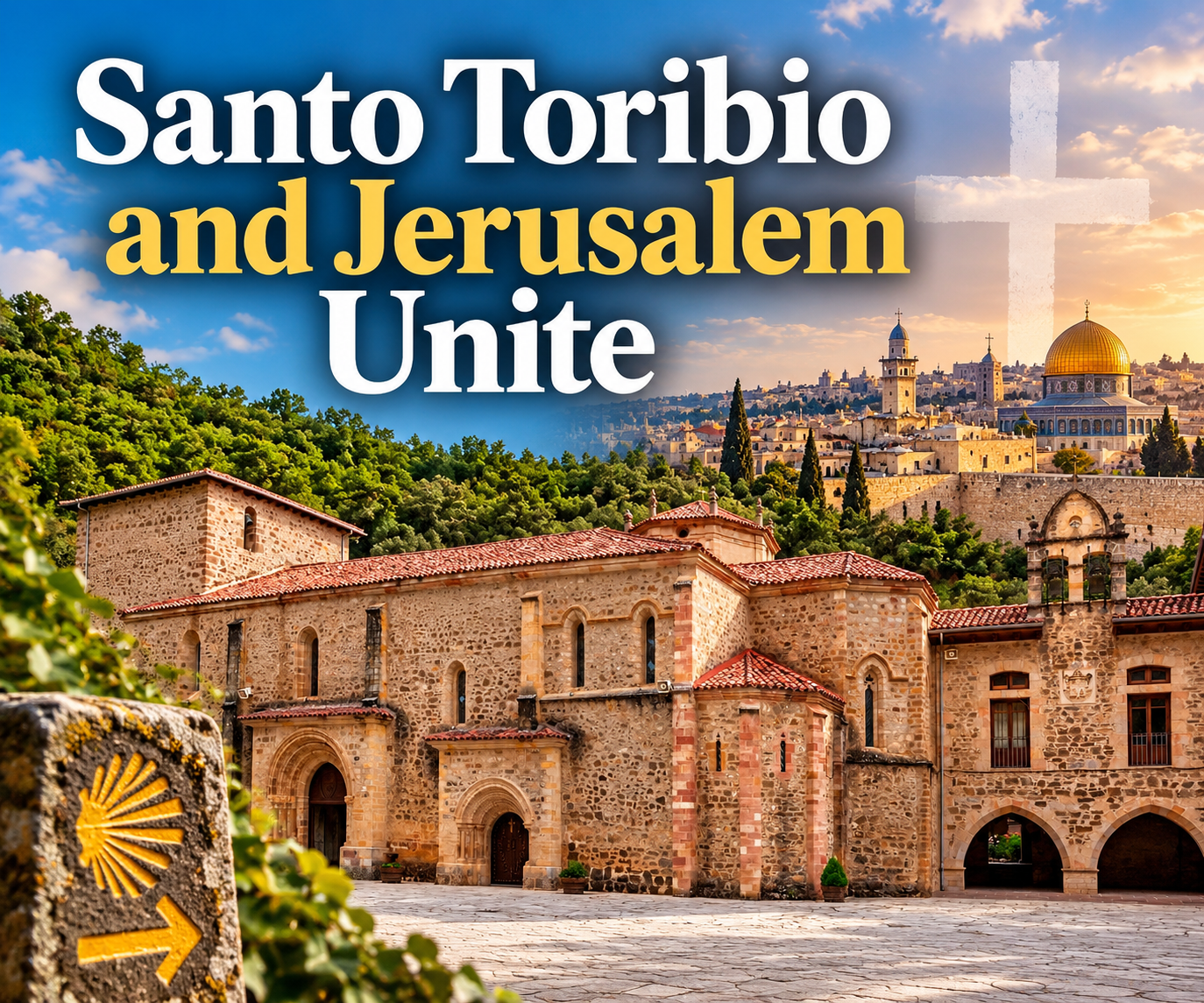
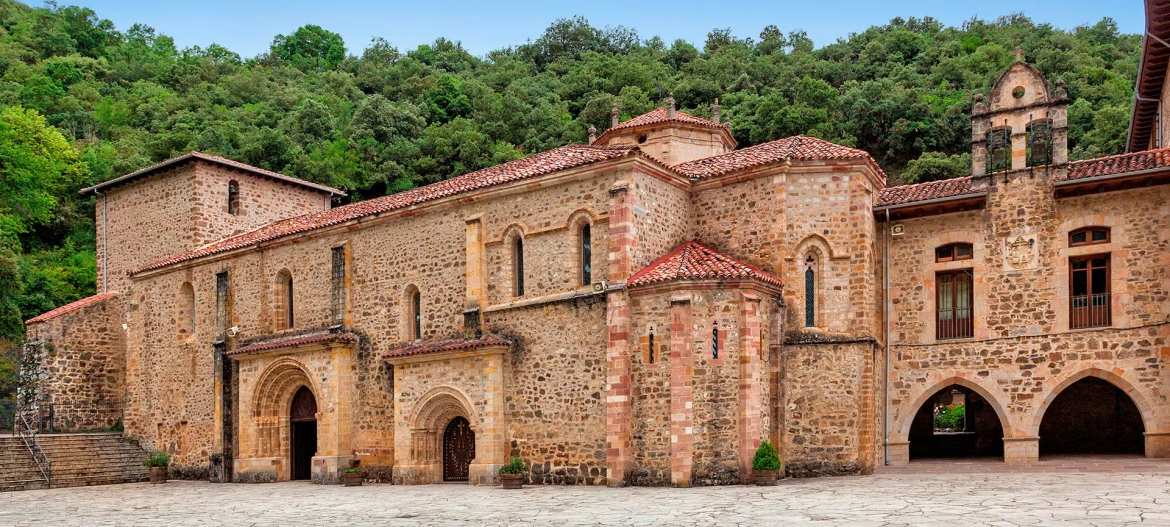
The Monastery of Santo Toribio de Liébana and the Basilica of the Holy Sepulchre in Jerusalem have formalised a historic twinning agreement that strengthens the international dimension of the Camino Lebaniego and creates a lasting spiritual and cultural link between Cantabria and the Holy Land.
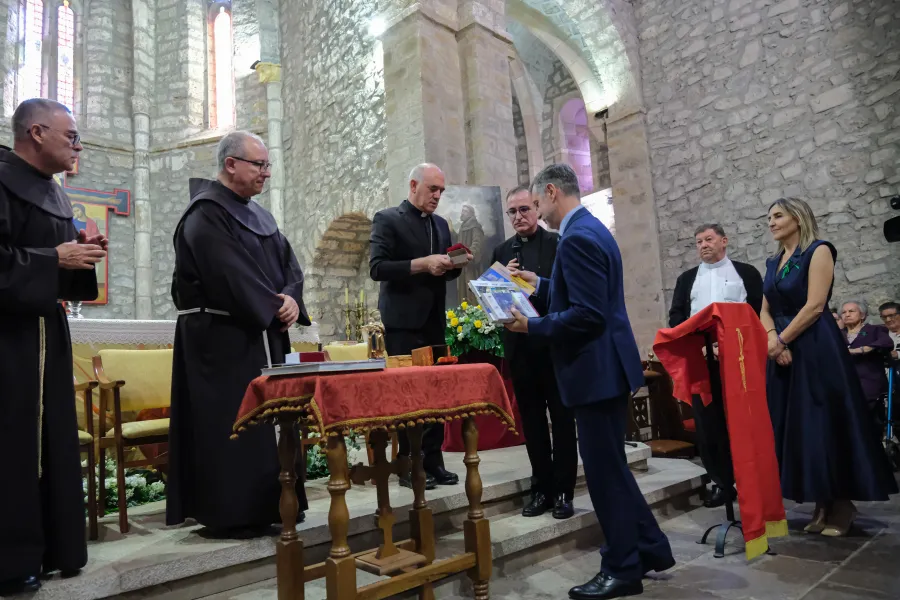
The agreement was celebrated on 14 September, the Feast of the Exaltation of the Holy Cross, before hundreds of faithful, pilgrims and representatives of the institutions involved.
The ceremony brought together two places with a profound connection to Christian pilgrimage: Jerusalem, one of the most important destinations in Christianity, and Santo Toribio de Liébana, home to the Lignum Crucis and the final destination of the Camino Lebaniego.
The agreement had been reached months earlier between the Diocese of Santander and the Custody of the Holy Land and was formally signed by the Bishop of Santander, Arturo Ros, and the Custos of the Holy Land, Father Francesco Ielpo.
A link built around the Cross
The relationship between Santo Toribio and the Holy Sepulchre is centred on the symbolism of the Cross of Christ.
Santo Toribio de Liébana preserves the Lignum Crucis, traditionally considered one of the most important relics associated with the Cross. According to tradition, the relic arrived at the monastery during the Middle Ages together with the remains of Saint Turibius of Astorga.
During the twinning ceremony, Father Francesco Ielpo also presented the monastery with a relic from Calvary.
That relic will now be venerated alongside the Lignum Crucis, making the connection between Liébana and Jerusalem visible to the thousands of pilgrims and visitors who travel to Santo Toribio.
Spiritual, social and hopeful
The Custos of the Holy Land described the twinning as having three dimensions: spiritual, social and one centred on hope.
The spiritual dimension is linked to the veneration of the relics and the unity of believers.
The social dimension aims to encourage greater knowledge of the Holy Land and to promote pilgrimage.
The third dimension is one of solidarity and closeness to Christian communities still living in the Holy Land.
The message is particularly relevant at a time when pilgrimage is increasingly understood not simply as a journey to a destination, but as a bridge between communities and cultures.
More than a symbolic ceremony
The agreement is intended to continue well beyond the initial celebration.
Among the commitments is the celebration of a Via Crucis before the Lignum Crucis every Friday during Lent, connecting the spirituality of Santo Toribio with that of the Holy Places.
The monastery will also promote conferences, meetings and cultural activities aimed at increasing knowledge of the history and biblical significance of the Holy Land.
Another objective is to encourage pilgrimages to Jerusalem among people from the Diocese of Santander, residents of Liébana and pilgrims who reach Santo Toribio.
The agreement also includes an annual financial contribution to support one of the projects developed by the Custody of the Holy Land.
A new international dimension for the Camino Lebaniego
For the Camino Lebaniego, the twinning is particularly significant.
Santo Toribio is not simply another monastery along a pilgrimage route. It is the destination itself.
Pilgrims walk towards Liébana in order to reach the monastery and encounter the Lignum Crucis. Any initiative that increases the international importance of Santo Toribio therefore also strengthens the identity of the Camino leading to it.
The twinning gives the Camino Lebaniego a direct and permanent connection with Jerusalem and the Holy Land.
It creates a narrative that can be understood far beyond Cantabria.
A pilgrim arriving at Santo Toribio is now not only reaching one of Spain’s historic pilgrimage destinations. They are also entering a place formally linked to one of the central sites of Christianity.
Two great pilgrimage destinations connected
Jerusalem and Liébana are separated by thousands of kilometres, but both are shaped by centuries of pilgrimage.
The Holy Sepulchre is one of Christianity’s most important sacred places.
Santo Toribio, meanwhile, has welcomed generations of pilgrims drawn by the Lignum Crucis and the spiritual tradition surrounding the monastery.
The twinning brings those two traditions closer together.
It also reinforces the idea that pilgrimage routes can function as international networks, capable of connecting territories, institutions and communities through shared heritage.
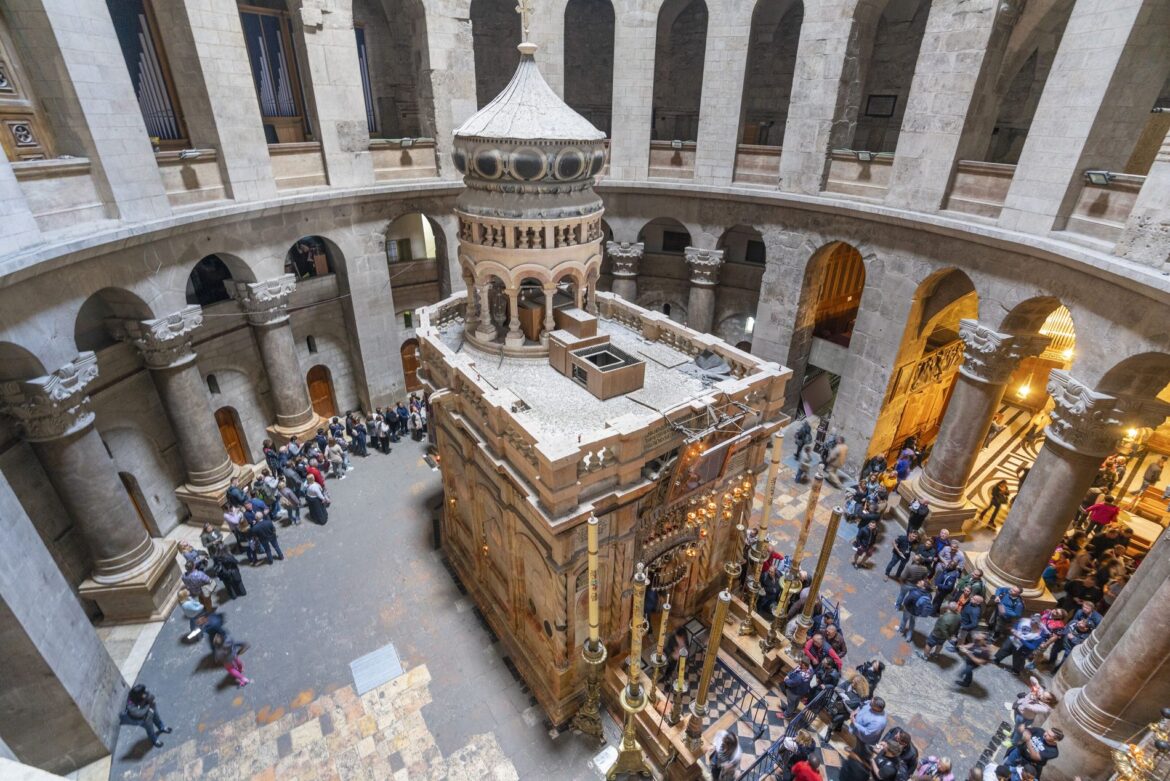
An opportunity for religious tourism
The agreement could also strengthen the international visibility of Liébana as a religious tourism destination.
The Camino Lebaniego already has a distinctive identity within Spain’s network of pilgrimage routes.
Unlike many paths that lead to Santiago de Compostela, its destination is Santo Toribio itself.
The new relationship with the Holy Sepulchre adds another layer of meaning to that journey and could attract pilgrims interested not only in walking, but also in the broader geography of Christian pilgrimage.
This becomes especially relevant as Cantabria prepares for future major religious and pilgrimage events linked to Liébana.
From Cantabria to Jerusalem
The importance of this agreement lies precisely in its ability to look beyond a single ceremony.
It links a monastery in the mountains of Cantabria with Jerusalem.
It connects the Camino Lebaniego with one of the most symbolic destinations in the Christian world.
And it reminds us that pilgrimage has always been about more than kilometres.
Pilgrims connect places.
They connect cultures.
And sometimes, as in this case, they help create relationships that can last for generations.