





Walking the Camino de Santiago is a dream adventure for thousands of Americans every year. You pack your high-tech gear, train for months, and prepare for a spiritual journey. But nothing prepares you for the ultimate challenge: The Spanish lifestyle.
European culture—and specifically Spanish rural culture—is a whole different world. To save you from terminal confusion on day one, here are the 5 biggest culture shocks American pilgrims face, and how to handle them like a pro.
1️⃣ The «Siesta» Ghost Town Phenomenon
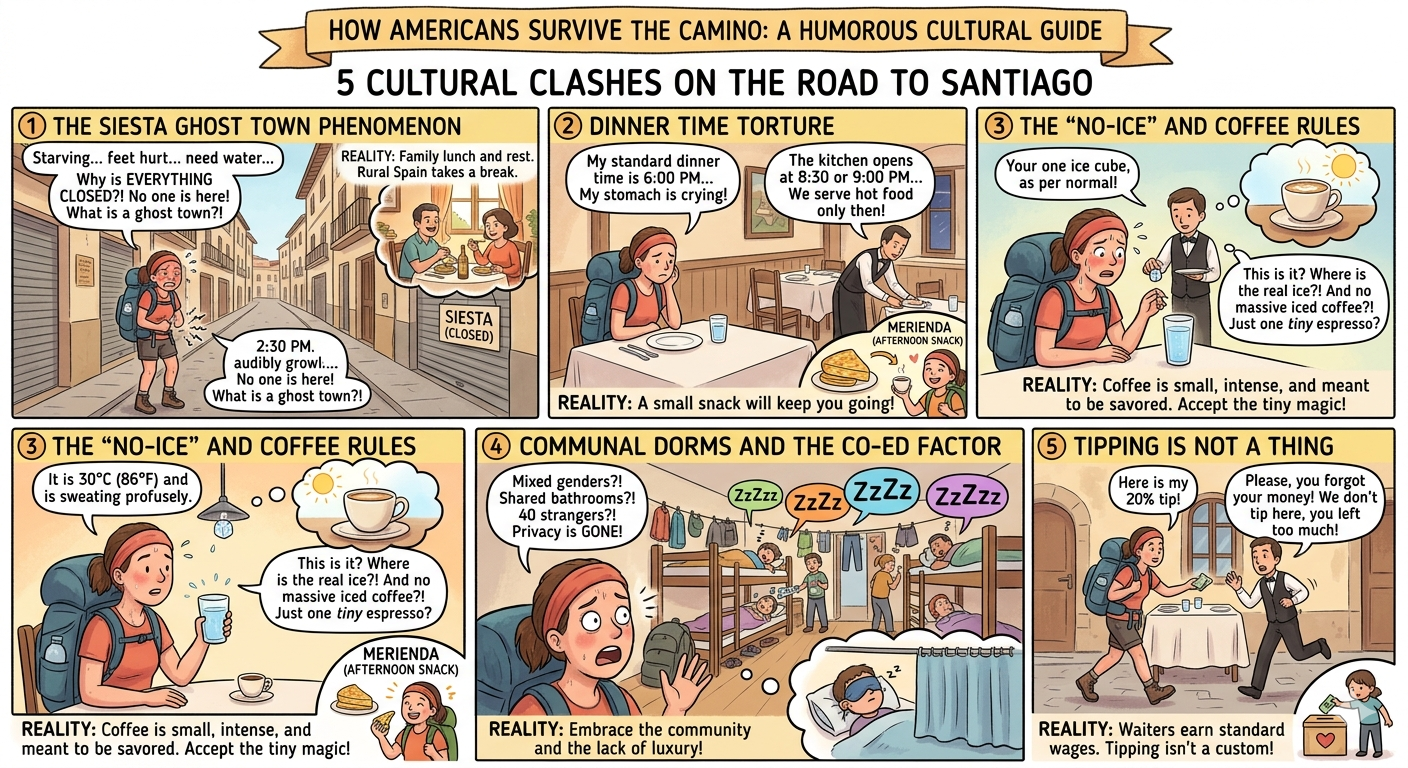
- The Shock: You finish a brutal 15-mile hike at 2:30 PM. You are starving, your feet hurt, and you need a pharmacy for blisters. You walk into the village… and it’s a ghost town. Every single shop, pharmacy, and supermarket is locked shut.
- The Reality: Welcome to the sacred Spanish siesta. In rural Spain, small businesses close from roughly 1:30 PM to 4:30 or 5:00 PM so owners can eat lunch with their families and rest.
- How to survive: Never delay your essential shopping. If you arrive at a town before 1:30 PM, buy your snacks, hydration packets, and blister pads immediately before checking into your albergue.
2️⃣ The Dinner Time Torture (Starving till 9 PM)
- The Shock: Your stomach starts growling at 6:00 PM (normal American dinner time). You go to a local restaurant, ask for a table, and the waiter looks at you like you are crazy. «The kitchen opens at 8:30 or 9:00 PM,» they say.
- The Reality: Spaniards eat dinner incredibly late. No authentic restaurant will serve hot meals at 6:30 PM.
- How to survive: Adapt to the Merienda (afternoon snack). Around 5:00 PM, grab a café con leche and a tortilla de patatas slice at a bar to tie you over until the kitchens open.
3️⃣ The «No-Ice» and Coffee Rules
- The Shock: You order a refreshing soda or water after sweating for 6 hours, and it comes with exactly one ice cube. Also, there are no iced Americanos or giant drip-coffee travel mugs.
- The Reality: Ice is used sparingly in Spain, and coffee is an experience, not fuel on-the-go. You sit down, enjoy a small, intense espresso or café con leche, and move on.
- How to survive: If you want ice, you have to explicitly ask for it («por favor, más hielo»). And accept that your morning coffee will be small but high-quality!
4️⃣ Communal Dorms and the Co-Ed Factor
- The Shock: You check into your first municipal albergue and realize you are sharing a room with 40 strangers—men and women mixed—and the bathrooms are often shared too. Privacy? Gone.
- The Reality: The Camino is about community and letting go of your comfort zone. Everyone is tired, everyone snores, and nobody cares about luxury.
- How to survive: Bring premium earplugs, a good eye mask, and a quick-dry towel you can use to create a «privacy curtain» on your bottom bunk.
5️⃣ Tipping is NOT a Thing
- The Shock: You try to leave a 20% tip at a pilgrim dinner, and the waiter runs after you down the street thinking you forgot your money on the table.
- The Reality: Waiters in Spain earn a standard wage and tipping culture doesn’t exist like it does in the US. Leaving a few coins (round up to the nearest Euro) is appreciated, but a 15-20% tip is totally unnecessary.
- How to survive: Save those extra dollars for your next Albergue donation or a nice bottle of Rioja wine!