





From a traditional Spanish pilgrimage to a global phenomenon attracting more than half a million walkers every year
The Camino de Santiago is experiencing one of the most extraordinary moments in its thousand-year history. What was once a pilgrimage undertaken mainly by Spaniards and a small number of European enthusiasts has become a truly global movement that attracts hundreds of thousands of people from every corner of the planet.
Recent statistics reveal the remarkable scale of this transformation. Since the beginning of the 21st century, the number of pilgrims arriving in Santiago de Compostela has multiplied by ten. In the year 2000, slightly more than 55,000 pilgrims received the Compostela certificate. By 2025, that number had exceeded 530,000, establishing a new historical record and confirming the Camino’s position as one of the most important pilgrimage routes in the world.
A Journey That Continues to Grow
Few cultural or spiritual phenomena in Europe have experienced such sustained growth.
Every year, more people decide to leave behind their daily routines and set off towards Santiago. Some walk for religious reasons. Others seek personal reflection, adventure, physical challenge or simply a break from the pressures of modern life.
The Camino has become much more than a pilgrimage route. It is now a global symbol of personal transformation, slow travel, cultural exchange and human connection.
The appeal of the Camino seems stronger than ever.
From Spain to the World
Perhaps the most striking change has been the internationalization of the pilgrimage.
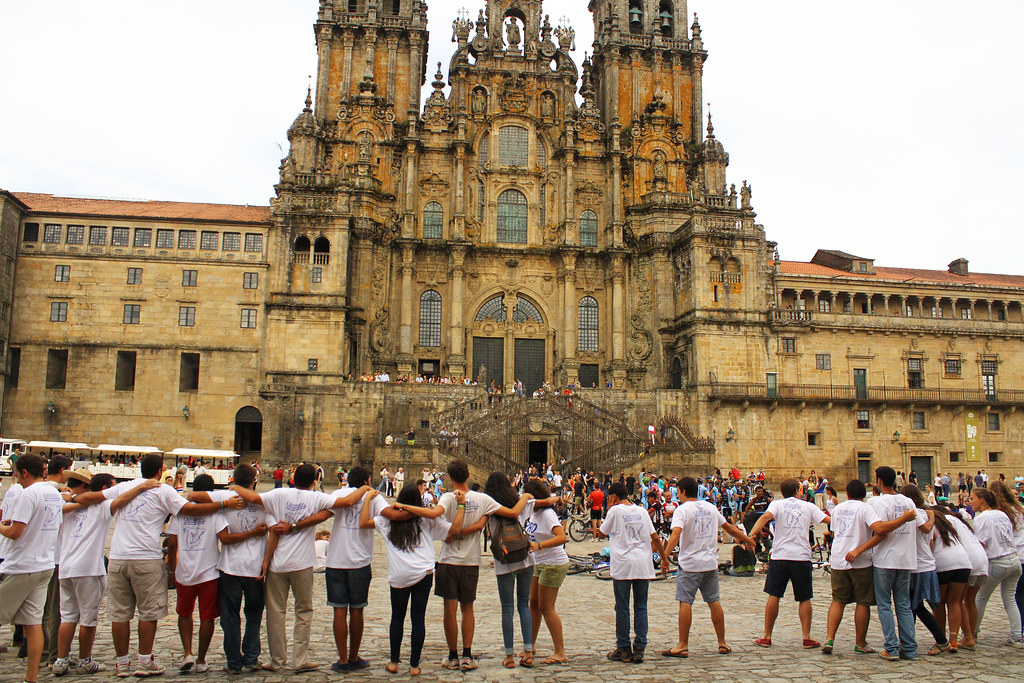
Twenty-five years ago, Spanish pilgrims represented the clear majority of walkers arriving in Santiago. Today, international pilgrims account for most of the arrivals.
People now travel to Spain from the United States, Germany, Italy, Portugal, France, South Korea, Brazil, Australia, Canada and dozens of other countries to experience the Camino.
In many albergues, it is common to hear conversations in five or six different languages around the same dinner table.
This multicultural atmosphere has become one of the defining characteristics of the modern Camino experience.
Why Is the Camino So Popular?
Experts point to several reasons behind the Camino’s extraordinary growth.
The first is accessibility.
Unlike many long-distance adventures, the Camino can be adapted to different ages, fitness levels and budgets. A pilgrim can walk for a week, a month or even several months depending on personal circumstances.
The second factor is authenticity.
In an increasingly digital world, many people are looking for real experiences, meaningful encounters and opportunities to disconnect from technology.
The Camino offers exactly that.
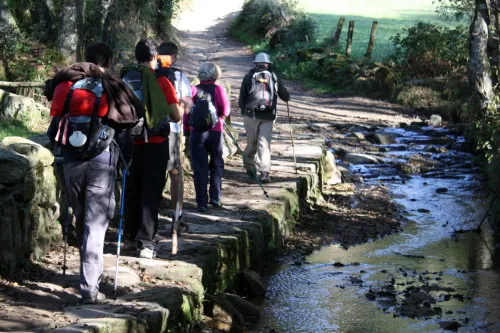
Walking through villages, forests, mountains and historic cities allows pilgrims to reconnect with nature, with other people and often with themselves.
The third reason is visibility.
Books, documentaries, films, social media and personal travel stories have helped introduce the Camino to millions of people who previously knew little about it.
The Final 100 Kilometres: The Most Popular Section
One of the biggest changes in recent years has been the concentration of pilgrims on the final stages leading to Santiago.
Because walking at least 100 kilometres is one of the requirements for obtaining the Compostela certificate, thousands of people begin their journey in Sarria, creating a particularly busy section during peak seasons.
For many first-time pilgrims, these final kilometres represent their first contact with the Camino.
As a result, the last stages have become the most recognizable image of the pilgrimage worldwide.
Some veterans celebrate this growth, while others encourage newcomers to explore longer routes and less crowded alternatives.
Alternative Routes Continue to Rise
Although the Camino Francés remains the most famous route, other paths are experiencing significant growth.
The Portuguese Camino has become one of the fastest-growing routes, especially among international pilgrims.
The Camino del Norte, known for its spectacular coastal scenery, continues to attract walkers seeking a more challenging experience.
The Camino Primitivo, often considered the oldest Camino route, is also becoming increasingly popular among those looking for authenticity and mountain landscapes.
Meanwhile, routes such as the Via de la Plata, the English Way, the Lebaniego Route and the Vadiniense Route are gaining visibility among experienced pilgrims searching for less crowded alternatives.
The Challenges of Success
The rapid growth of the Camino has created new challenges.
Overcrowding in certain areas, pressure on infrastructure, accommodation shortages during peak periods and environmental concerns have become important topics of discussion.
Many associations, hospitaleros and local authorities are working to ensure that growth remains sustainable while preserving the values that have defined the Camino for centuries.
The challenge is not simply to welcome more pilgrims.
It is to ensure that the experience remains meaningful.
More Than Tourism
Although tourism plays an important role in the Camino’s economic impact, many observers believe that reducing the pilgrimage to tourism alone would be a mistake.
The Camino continues to offer something that is increasingly difficult to find in modern society:
Time.
Time to think.
Time to walk.
Time to listen.
Time to reconnect.
That is why so many people describe their Camino not as a holiday, but as a life-changing experience.
Looking Ahead to Xacobeo 2027
The next major milestone on the horizon is Xacobeo 2027, the next Holy Year of Santiago.
Experts predict another significant increase in pilgrim numbers as people from around the world plan their journeys to coincide with this special event.
Preparations are already underway across Galicia and along the various Camino routes.
If current trends continue, the Camino de Santiago may soon welcome more pilgrims than ever before.
A Thousand-Year-Old Journey with a Bright Future
More than a millennium after the first medieval pilgrims began walking towards Compostela, the Camino remains alive and relevant.
Its ability to adapt to changing times while preserving its essential spirit is perhaps the secret of its success.
The numbers continue to grow.
The routes continue to expand.
The stories continue to inspire.
And every day, somewhere in Europe or beyond, another future pilgrim begins dreaming about the moment when they too will follow the yellow arrows towards Santiago.