











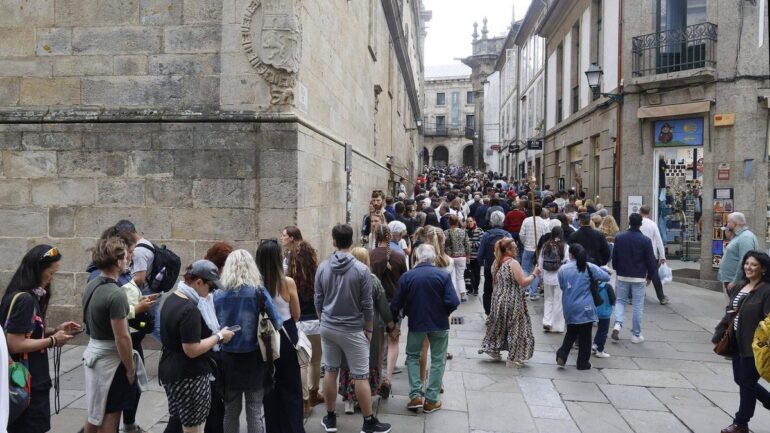
Reaching Santiago de Compostela is supposed to be the final, emotional moment of the Camino. But this weekend, thousands of pilgrims and visitors arriving in the Galician capital found another challenge waiting for them: enormous queues to enter the Cathedral, with some people reporting waits of more than 90 minutes.
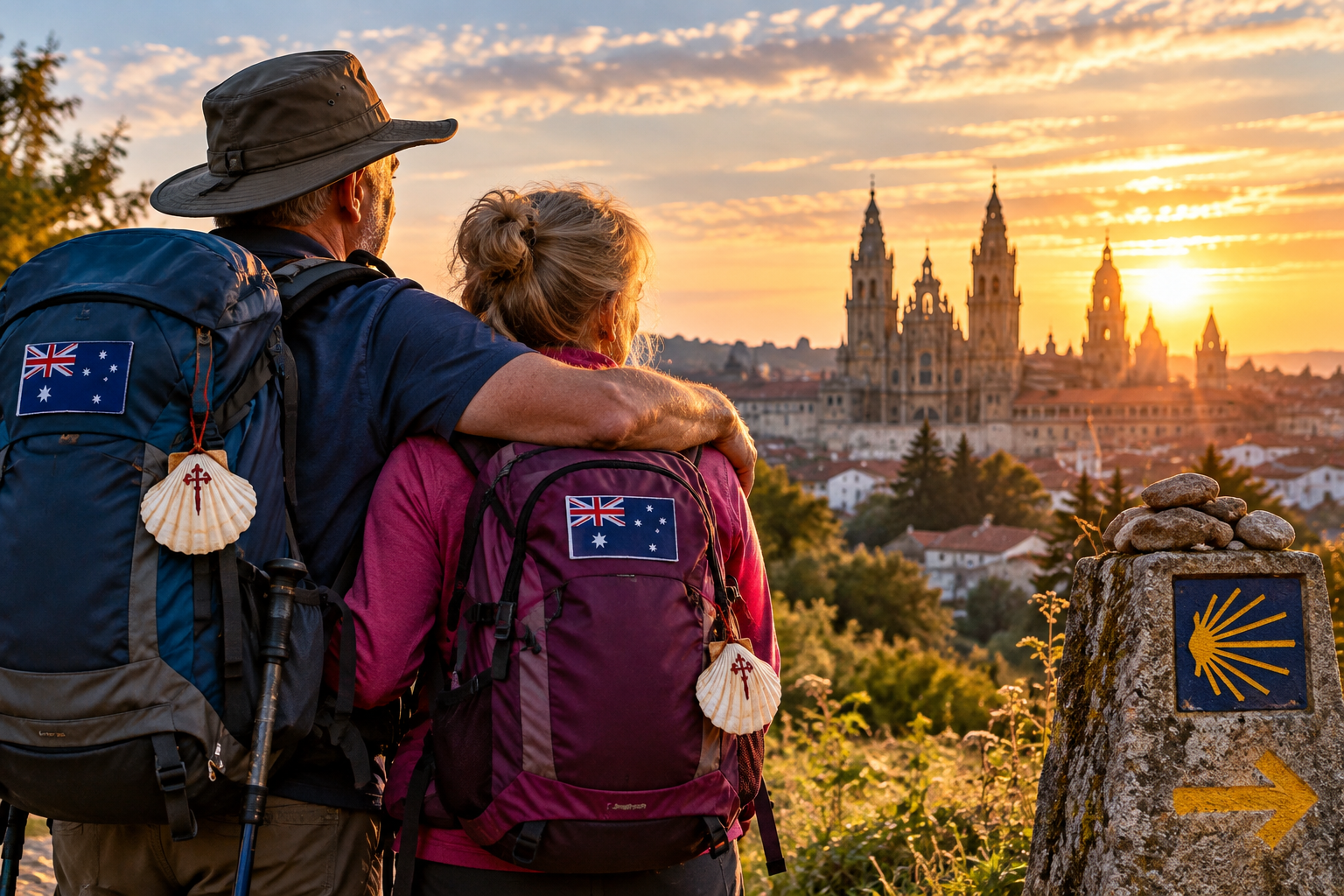
After hundreds — and sometimes more than a thousand — kilometres on foot, the sight of the towers of the Cathedral of Santiago is one of the most anticipated moments of any Camino.
This weekend, however, reaching the Praza do Obradoiro was not necessarily the end of the journey.
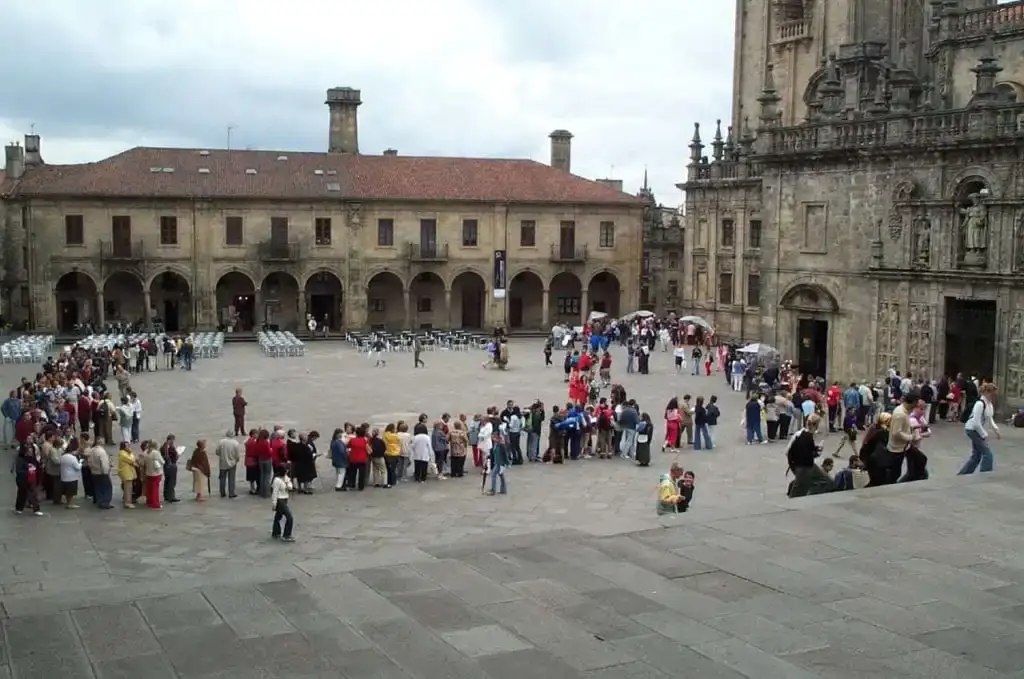
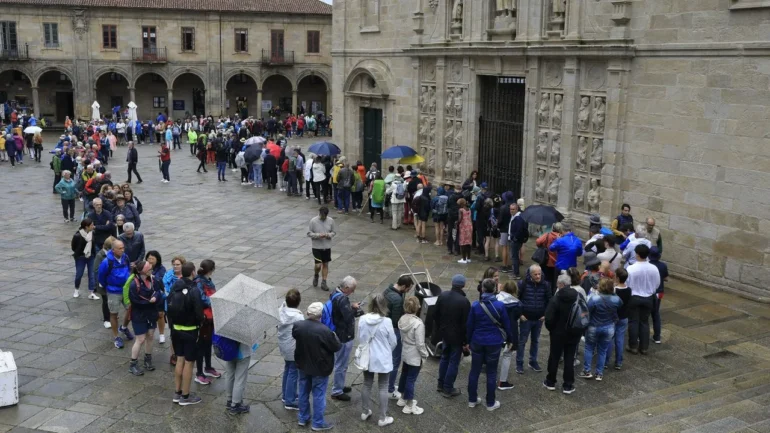
The large number of pilgrims and tourists visiting Santiago during the August 15 holiday weekend created extraordinary pressure around the Cathedral, producing queues that stretched through the historic centre.
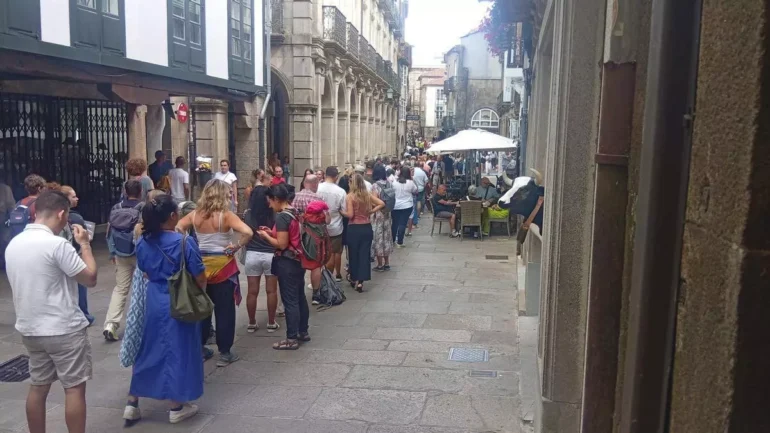
According to reports from Santiago on Saturday, the line to access the Cathedral extended from Praza das Praterías along Rúa do Vilar, one of the best-known streets in the old city.
Some visitors reported having already waited for an hour and a half, with considerably more people still ahead of them.
After the Camino, one final wait
For pilgrims, entering the Cathedral has a meaning that goes far beyond visiting another monument.
For centuries, the destination of the Camino has been the tomb traditionally attributed to the Apostle Saint James.
Modern pilgrims may walk for religious, spiritual, cultural, sporting or deeply personal reasons, but for many of them entering the Cathedral remains one of the symbolic conclusions of their journey.
That makes the current scenes particularly striking.
People who have spent days or weeks crossing Spain are finally reaching Santiago — only to discover that they may need to wait another hour or more before entering the Cathedral.
Why are there so many people in Santiago?
The timing could hardly produce greater demand.
August is already one of the busiest periods of the year on the Camino de Santiago, particularly on the final sections approaching the Galician capital.
Add the August 15 public holiday, summer tourism and visitors travelling specifically to Santiago, and the result is an enormous concentration of people in the historic centre.
There was another attraction this weekend.
August 15 is the Solemnity of the Assumption of the Virgin Mary, and the possibility of seeing the famous Botafumeiro during the religious celebrations increased interest in entering the Cathedral.
The Botafumeiro: another reason for the crowds
The Botafumeiro has become one of the most internationally recognised symbols of Santiago.
The enormous censer weighs approximately 53 kilograms and measures around 1.5 metres, according to the Cathedral itself. When used, it swings dramatically across the transept of the church, operated by the traditional group of eight tiraboleiros.
For pilgrims who have never witnessed it, seeing the Botafumeiro in operation can become another unforgettable moment at the end of their Camino.
That attraction, combined with the holiday weekend, helps explain the extraordinary number of people attempting to enter the Cathedral.
Santiago faces the pressure of its own success
The scenes also raise a broader question about the enormous popularity of the Camino.
Santiago de Compostela must accommodate several different groups simultaneously: pilgrims completing their journey, organised tourist groups, independent visitors, religious travellers and residents going about their everyday lives.
During particularly busy periods, all of them converge on a relatively small medieval historic centre.
And the pressure is especially visible around the Cathedral.
The Camino’s extraordinary international growth is undoubtedly good news for many businesses and communities along the routes, but it also creates challenges involving accommodation, public spaces, visitor management and the experience awaiting pilgrims at the destination.
Should pilgrims change their plans?
There is no reason to avoid Santiago, but pilgrims arriving during exceptionally busy periods should be prepared for crowds.
If entering the Cathedral is an essential part of your Camino, do not assume that you will necessarily be able to walk straight inside immediately after reaching the Obradoiro.
Check the Cathedral’s current opening and liturgical information, allow additional time and remember that security and access conditions can change according to services and visitor numbers.
The Cathedral publishes practical information for pilgrims and visitors through its official channels.
The final kilometres — and then the queue
There is something almost paradoxical about the scenes in Santiago.
For days or weeks, pilgrims count down the kilometres.
100 km.
50 km.
20 km.
5 km.
Then finally, zero.
They enter Santiago, walk through its historic streets and see the Cathedral.
The backpack suddenly feels lighter.
Photographs are taken.
People hug.
Some cry.
And this weekend, many discovered one final test of patience:
the queue.
For those who have already crossed mountains, walked through rain, endured blisters and followed hundreds of yellow arrows, perhaps another 90 minutes will not defeat them.
But it is certainly an ending to the Camino that many did not expect.