











A new controversy in Santiago de Compostela raises an uncomfortable question: when did singing, celebrating and reaching the end of the Camino become a political issue?
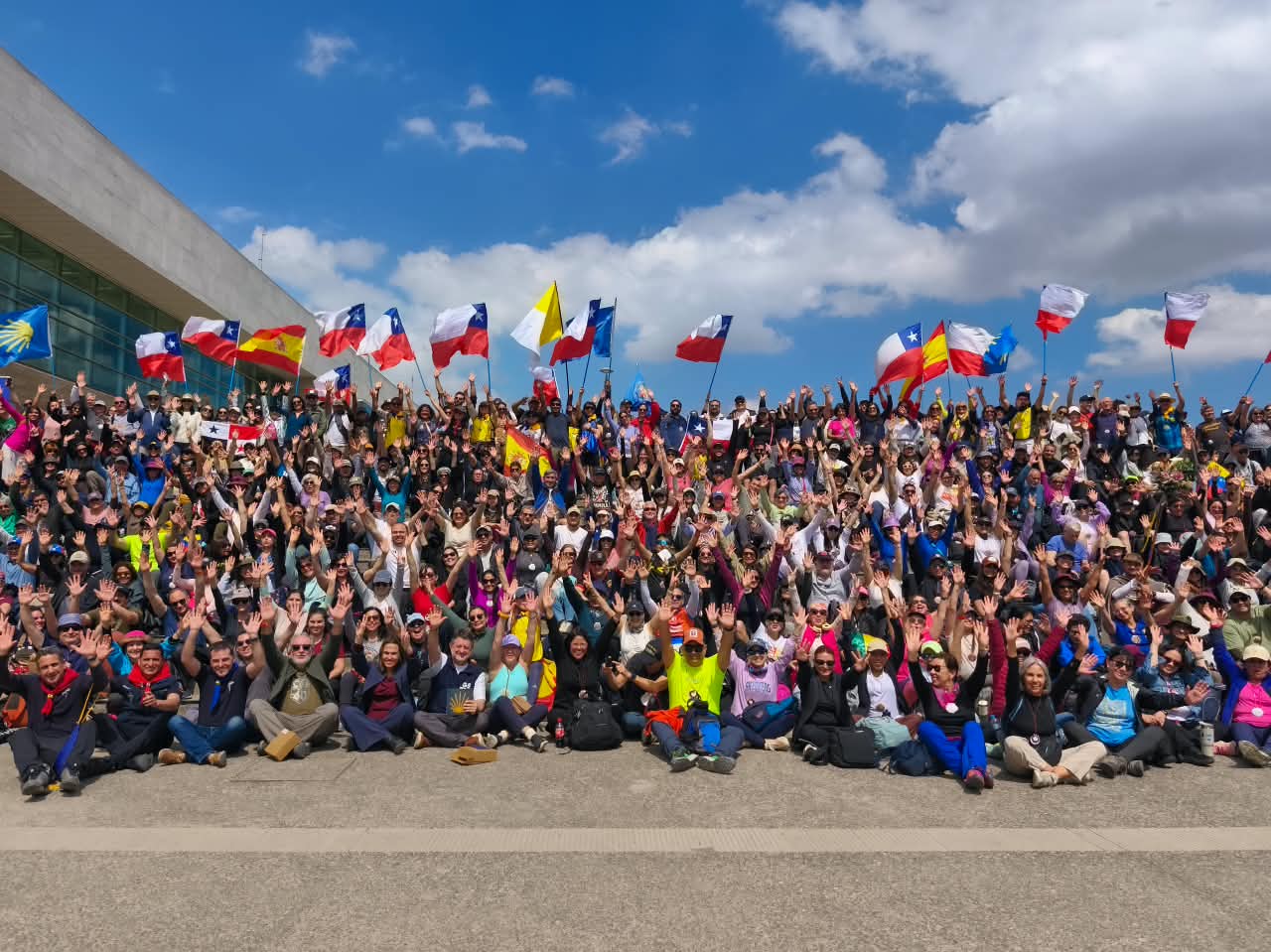
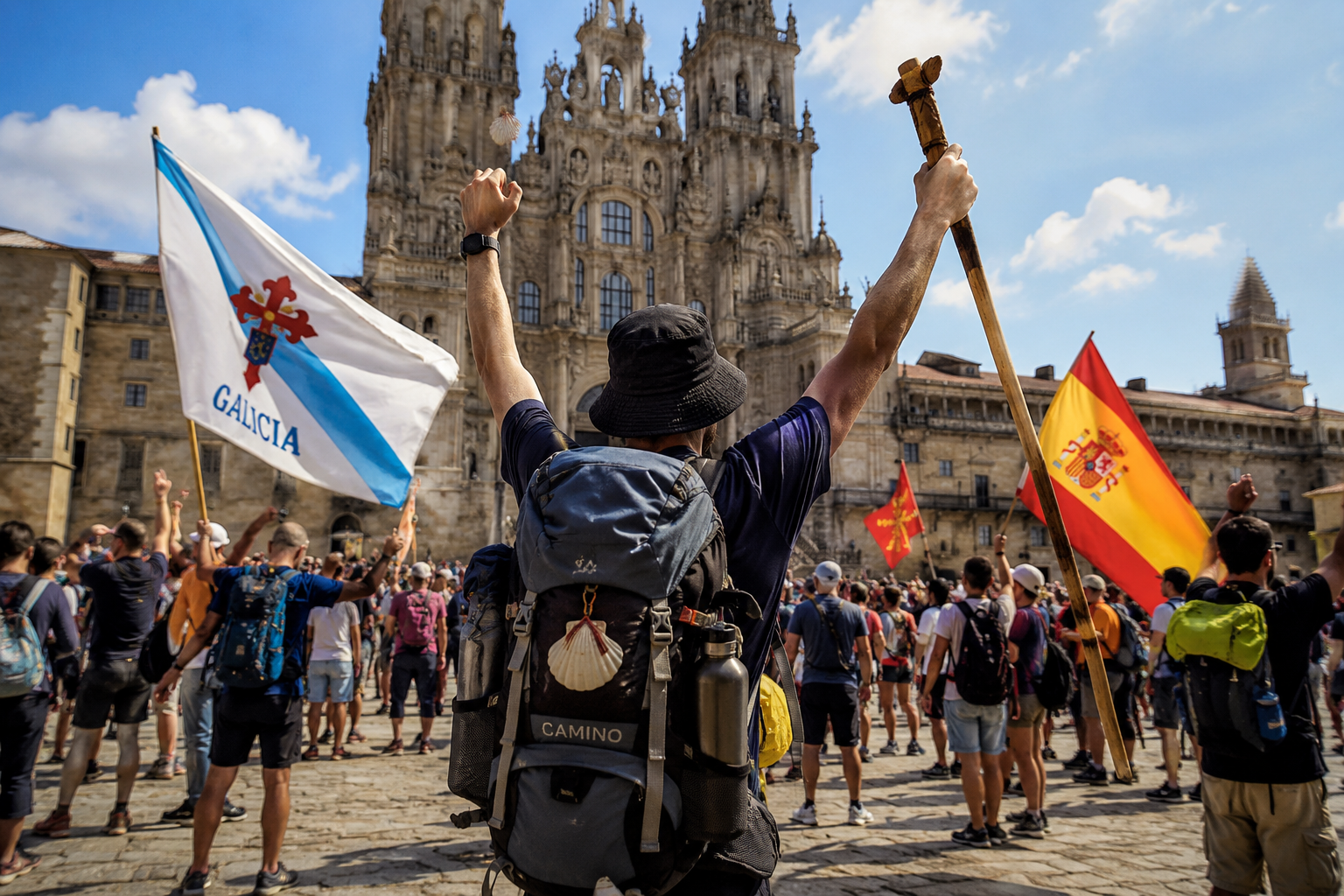
SANTIAGO DE COMPOSTELA — For centuries, pilgrims have arrived in Santiago tired, emotional and often overwhelmed by the moment. Some cry when they first see the Cathedral. Others embrace strangers who became friends along the way. And some celebrate by singing, dancing or raising the flags they carried for hundreds of kilometres.
Normally, these scenes are simply part of the Camino de Santiago.http://Camino de Santiago.
This summer, however, the behaviour of pilgrims in the historic centre of Santiago has become the subject of an increasingly heated public debate.
An opinion article published on Monday by Contando Estrelas has taken that debate into explicitly political territory, accusing sectors of Galician separatism of showing hostility towards peaceful pilgrims while being far less critical of political allies associated with controversial groups. Those are the author’s allegations and political interpretation, rather than established conclusions, but the article highlights a broader debate that is becoming difficult to ignore: who does Santiago belong to, and how should pilgrims behave when they finally arrive?
When celebration becomes controversy
One recent episode involved a group of young pilgrims arriving in Santiago while singing and dancing.
According to the article, criticism circulated online and the arrival was subsequently described in the media as controversial. The author argues that the pilgrims were behaving peacefully and suggests that part of the backlash was connected to their Catholic identity and the Spanish flags visible among the group.
That interpretation is politically disputed.
But underneath the politics lies a much more interesting question for the Camino itself.
How should a pilgrim be allowed to celebrate reaching Santiago?
After walking hundreds of kilometres, hugging your companions, crying, singing or celebrating is hardly a new phenomenon.
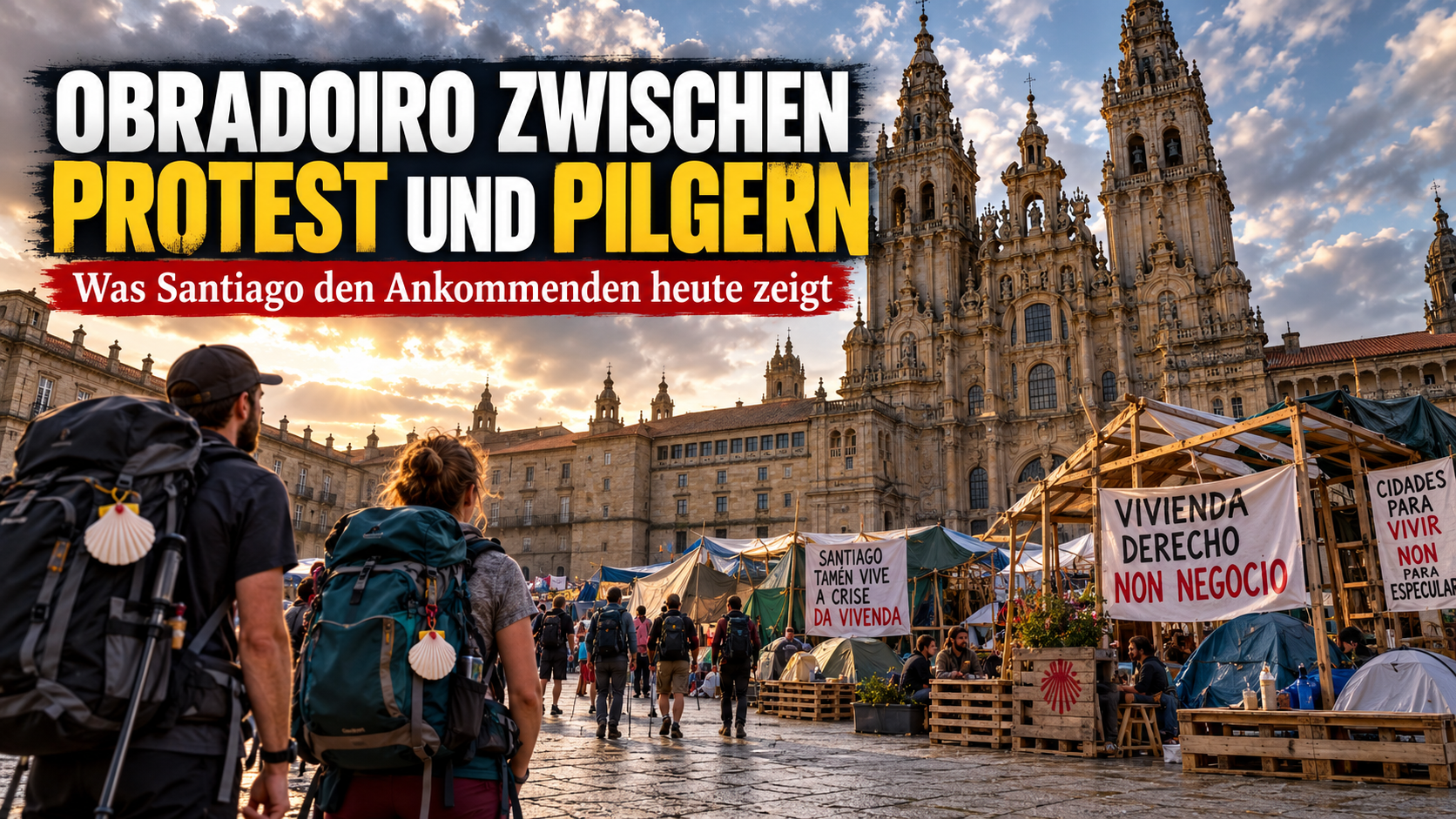
The Obradoiro has witnessed such scenes for generations.
Santiago is also somebody’s home
There is another side to the debate that cannot simply be dismissed.
Santiago de Compostela is not a theme park created for pilgrims.
People live there.
They work there, raise families there and experience every day the consequences of a city receiving enormous numbers of visitors.
Complaints about excessive noise, inappropriate behaviour, overcrowding or disrespect for public spaces deserve to be heard.
Being a pilgrim does not provide a licence to behave however one wants.
Respect must work both ways.
But there is also an important difference between legitimate criticism of bad behaviour and portraying the presence of pilgrims itself as a problem.
A pilgrim singing peacefully is not the same as a visitor damaging heritage, leaving rubbish behind or disturbing residents late at night.
That distinction matters.
The Camino should not become another political battlefield
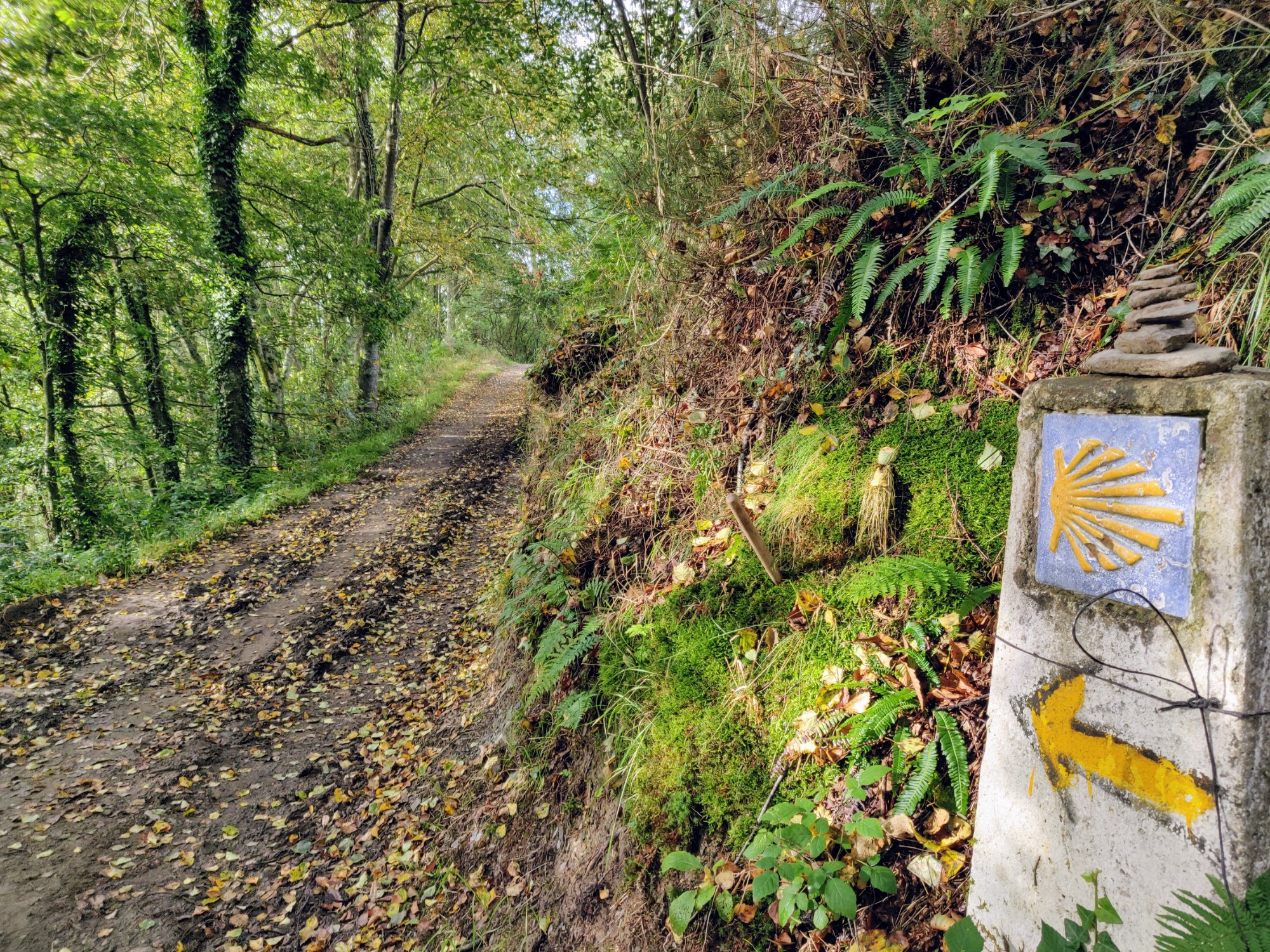
The Camino de Santiago has survived wars, borders, ideological conflicts and enormous social changes.
One of its greatest achievements is precisely that people who would probably never meet anywhere else walk together.
Catholics walk alongside atheists.
Conservatives alongside progressives.
Spaniards alongside Koreans.
Americans alongside Germans.
Young people alongside pensioners.
For a few days or weeks, labels become less important.
The question is no longer who you vote for.
It is simply:
How are your feet today?
That simplicity is worth protecting.
A serious allegation requires context
The original commentary goes considerably further, contrasting criticism of pilgrims with the presence in Santiago of representatives linked to the Popular Front for the Liberation of Palestine (PFLP) at political events associated with the Galician nationalist BNG. The author argues that media coverage has applied a double standard.
This is where it is especially important to separate reporting from opinion.
The original piece presents a strongly ideological interpretation of events and makes broad claims about separatists, the media and political motivations. Those claims should not automatically be treated as representing Galicia, Santiago residents or even every supporter of Galician nationalism.
Indeed, reducing an entire community to the behaviour or statements of its most vocal members would reproduce exactly the kind of simplification that makes these debates so toxic.
Most Galicians continue to welcome pilgrims
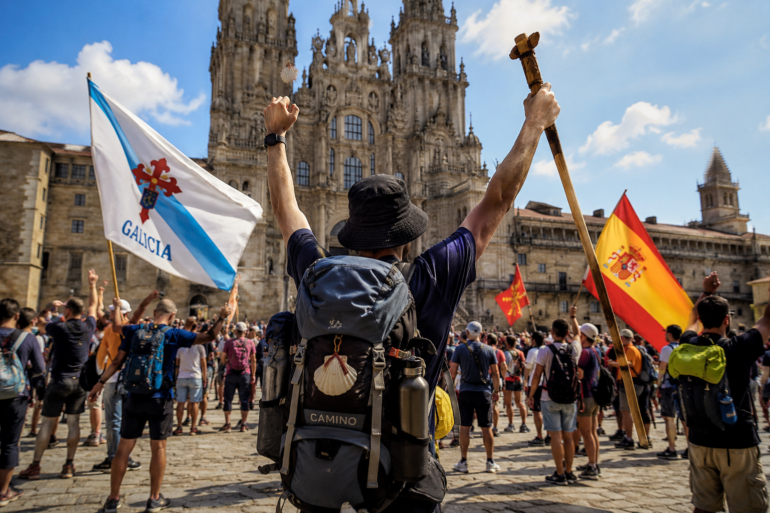
The relationship between Galicia and the Camino is far deeper than the latest social-media controversy.
For generations, families have opened their doors to strangers.
Hospitaleros have provided beds.
Restaurant owners have fed exhausted walkers.
Villagers have filled water bottles.
Police and emergency services have searched for missing pilgrims and assisted injured walkers.
Thousands of ordinary Galicians make the Camino possible every single day.
That reality should not disappear behind a political argument.
Pilgrims also have responsibilities
Defending pilgrims does not mean defending everything a pilgrim does.
Arriving in Santiago should be a moment of celebration, but also of respect.
The Cathedral, the historic centre and the Plaza del Obradoiro are extraordinary heritage spaces.
Celebrating is understandable.
Damaging property is not.
Singing is one thing.
Preventing residents from sleeping is another.
Taking an emotional photograph is normal.
Treating the historic centre like a private party venue is not.
The Camino has always been based on hospitality, but hospitality carries an unwritten rule:
respect the home of the person welcoming you.
Santiago should remain a place of encounter
Perhaps that is the most important lesson behind this controversy.
The Camino should not belong to the left or the right.
It should not belong to nationalists or unionists.
It should not belong exclusively to believers or non-believers.
For more than a thousand years, its extraordinary power has come from something much simpler.
Everybody walks the same road.
When pilgrims finally enter Santiago, they bring different languages, flags, beliefs and stories.
They should respect the city receiving them.
And Santiago should never lose the extraordinary tradition of welcoming those who arrive peacefully after a long journey.
There are already enough places in the world where politics divides people.
The Camino de Santiago should remain one of the places where people still learn to walk together.