A noves controversies a Santiago de Compostel·la raises tenen un confortable qüestió: quan doneu cintura, celebració i reducció del camí de la política issue?
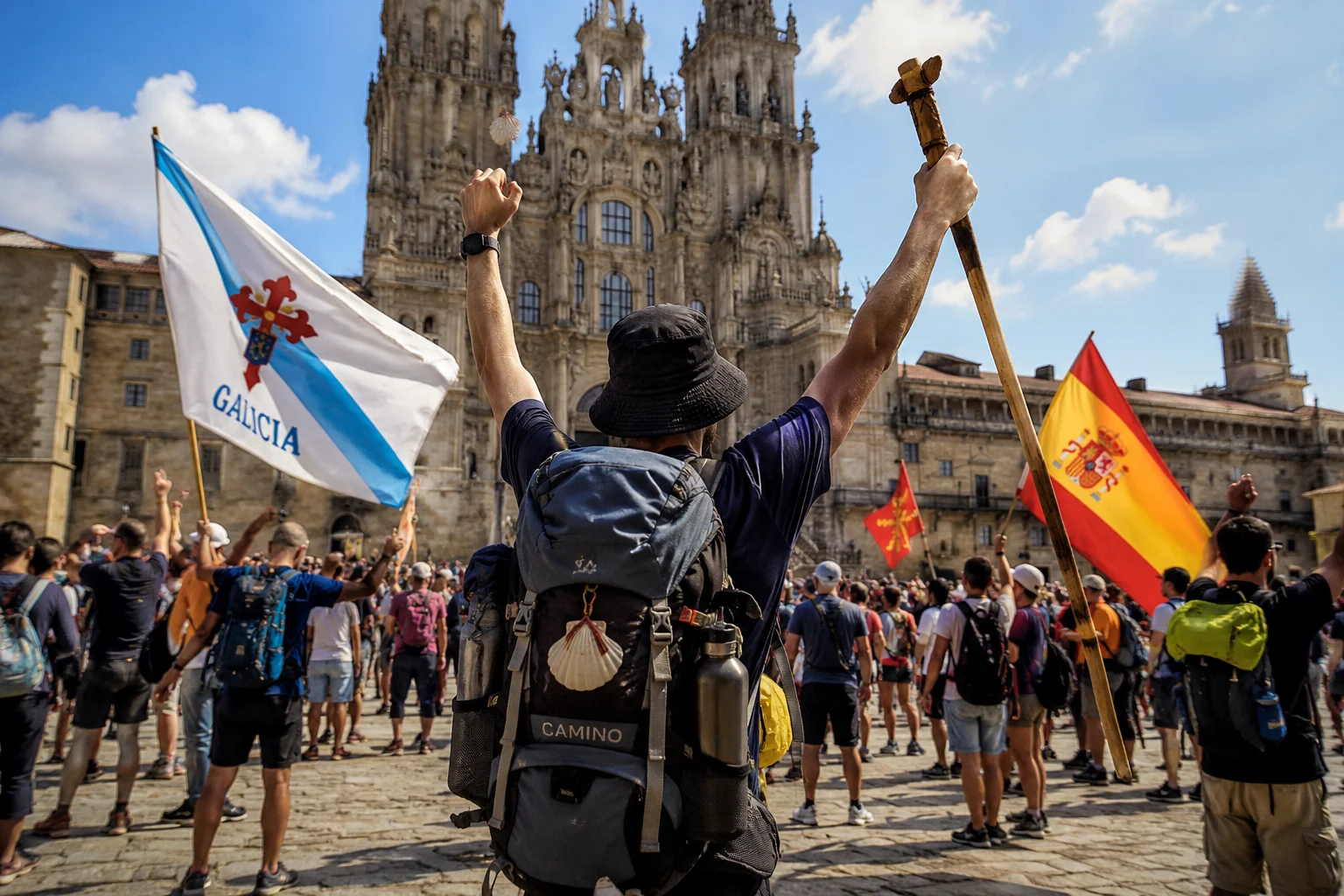
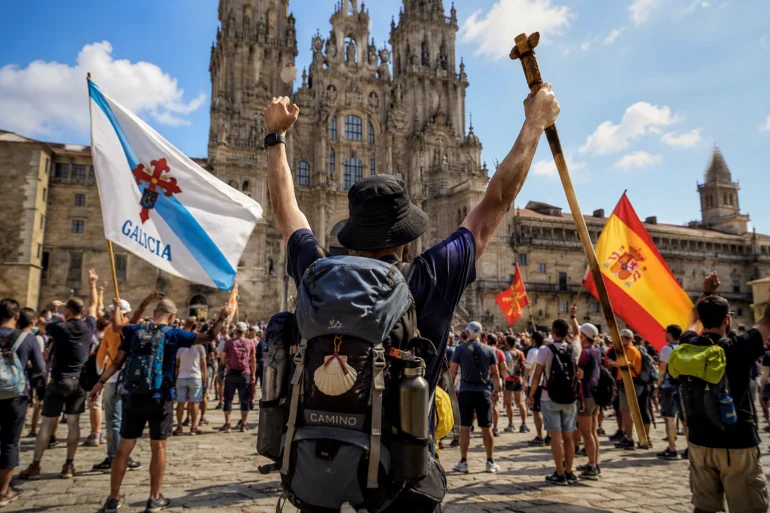
SANTIAGO DE COMPOSTEL·LA — Per centuries, pilgrims havien arribat a Santiago tired, emocionant i often overwhelmed by the moment. Some cry when they first see the Cathedral. Altres embraça strangers who became friends along the way. And some celebrate by singing, dancing or raising les flags thes carried for hundreds of kilometres.
Normally, these scenes are simply part of the Camí de Sant Jaume.http://Camí de Santiago.
Aquest summer, however, behaviour de pilgrims a l'històric centre de Santiago ha fet el tema d'un increasingly heated public debat.
An opinion article published on Monday by Comptant Estrelles has fet que aquest debat sigui explicitly políticament territori, accusing sectors de Galician separatisme de showing hostility towards peaceful pilgrims while being far les critical political allies associated with controversial groups. Tothom és l'author d'al·legacions i la política d'interpretació, aleshores no s'estableixen conclusions, però l'article highlights a broader debat that is becoming difficult to ignore: who does Santiago belong to, and how should pilgrims behave when they finally arrive?
When celebration becomes controversy
One recent episode involved a group of young pilgrims arriving in Santiago while singing and dancing.
According a l'article, criticism circulat en línia i arrival les subsequently descriuen in the media as controversial. Els authors argues que les pilgrims eren behaving peacefully i suggests que part de la backlash està connectat a les catholic identity ia les flags espanyoles visibles among the group.
That interpretation is politically disputed.
Però underneath the politics lies a molt more interesting question for the Camino itself.
How should a pilgrim be allowed to celebrate reaching Santiago?
After walking hundreds of kilometres, hugging your companions, crying, singing or celebrating és hardly a new phenomenon.
The Obradoiro has witnessed such scenes for generations.
Santiago is also somebody's home
Aquest és el mateix debat per al debat que el cànon simplement es dismet.
Santiago de Compostel·la és un tema creat per pilgrims.
People live there.
The work there, raise families there and experience every day the consequences of a city receiving enormous numbers of visitors.
Complaints sobre excessive noise, inappropriate behaviour, overcrowding or disrespect per public spaces deserve to be heard.
Being a pilgrim does no provide a llicència to behave however one wants.
Respect must work both ways.
Però és també una important diferència entre la legitimació de la crítica de la manca de behavior i portar la presència de pilgrims i el problema.
A pilgrim singing peacefully és not the same as visitor damaging heritage, leaving rubbish behind or disturbing residents batega at night.
That distinction matters.
The Camino should not become another political battlefield
The Camí de Sant Jaume has survived wars, borders, ideological conflicts and enormous social changes.
One dels seus greatest achievements és necessàriament que el que és probable que pugui nevar aquest any quan els volen tot.
Catholics walk alongside atheists.
Conservatives alongside progressives.
Spaniards alongside Koreans.
Americans alongside Germans.
Young people alongside pensioners.
Per few days or weeks, labels become less important.
Question is no longer who you vote for.
It is simply:
How are your feet today?
That simplicity is worth protecting.
A serious allegation requires context
L'original comentari goes considerable further, contrasting criticism de pilgrims with la presència en Santiago Popular Front per la Liberació de Palestina (PFLP) at political events associated with the Galician nationalist BNG. The author argues that media coverage has aplicat a double standard.
Aquest és el que és especialment important per a la separació de reporting.
L'original piece presents a strongly ideological interpretació d'events and makes broad claims sobre separatists, the media i political motivations. Those claims should no automatically be treated as representing Galícia, Santiago residents or even every supporter of Galician nationalism.
Indeed, reduint a entire community to behaviour or statements of its most vocal members would reprodueix exactly el indret simplificació que makes these debats so toxic.
Most Galicians continue to welcome pilgrims
The relationship between Galícia and the Camino és fer deeper than the latest social-mèdia controversy.
For generations, families have opened their doors to strangers.
Hospitalers have provided beds.
Restaurant owners have fed exhausted walkers.
Villagers have filled water bottles.
Police and emergency services have searched for missing pilgrims and assisted injured walkers.
Thousands of ordinary Galicians make the Camino possible every single day.
That reality should no dissappear behind a political argument.
Pilgrims also have responsibilities
Defending pilgrims does not mean defensaing everything a pilgrim does.
Arriving in Santiago should be a moment of celebration, però també respect.
El Cathedral, l'històric centre i la Plaça de l'Obradoiro són extraordinaris heritage spaces.
Celebrating és understandable.
Damaging property is not.
Singing is one thing.
Preventing residents from sleeping is another.
Taking an emotional photograph is normal.
Treating the historic centre like a private party venue is not.
The Camino has always been based on hospitality, però hospitality carries an unwritten rule:
respecte el home de la persona welcoming you.
Santiago should remain a place of encounter
Perhaps that is the most important lesson behind this controversy.
El camí s'ha de no perdurar a l'hora o al costat.
It should no belong to nationalists or unionists.
It should not belong exclusively to believers or non-believers.
Per more than a thousand years, its extraordinary power has menjat from something molt simpler.
Everybody walks the same road.
When pilgrims finalment enter Santiago, they bring different languages, flags, beliefs and stories.
They should respect the city receiving them.
And Santiago should never llosa l'extraordinari tradition of welcoming those who arriba peacefully after a long journey.
There are already enough places in the world where politics divideix people.
El Camí de Sant Jaume should remain one of the places where people still learn to walk together.