


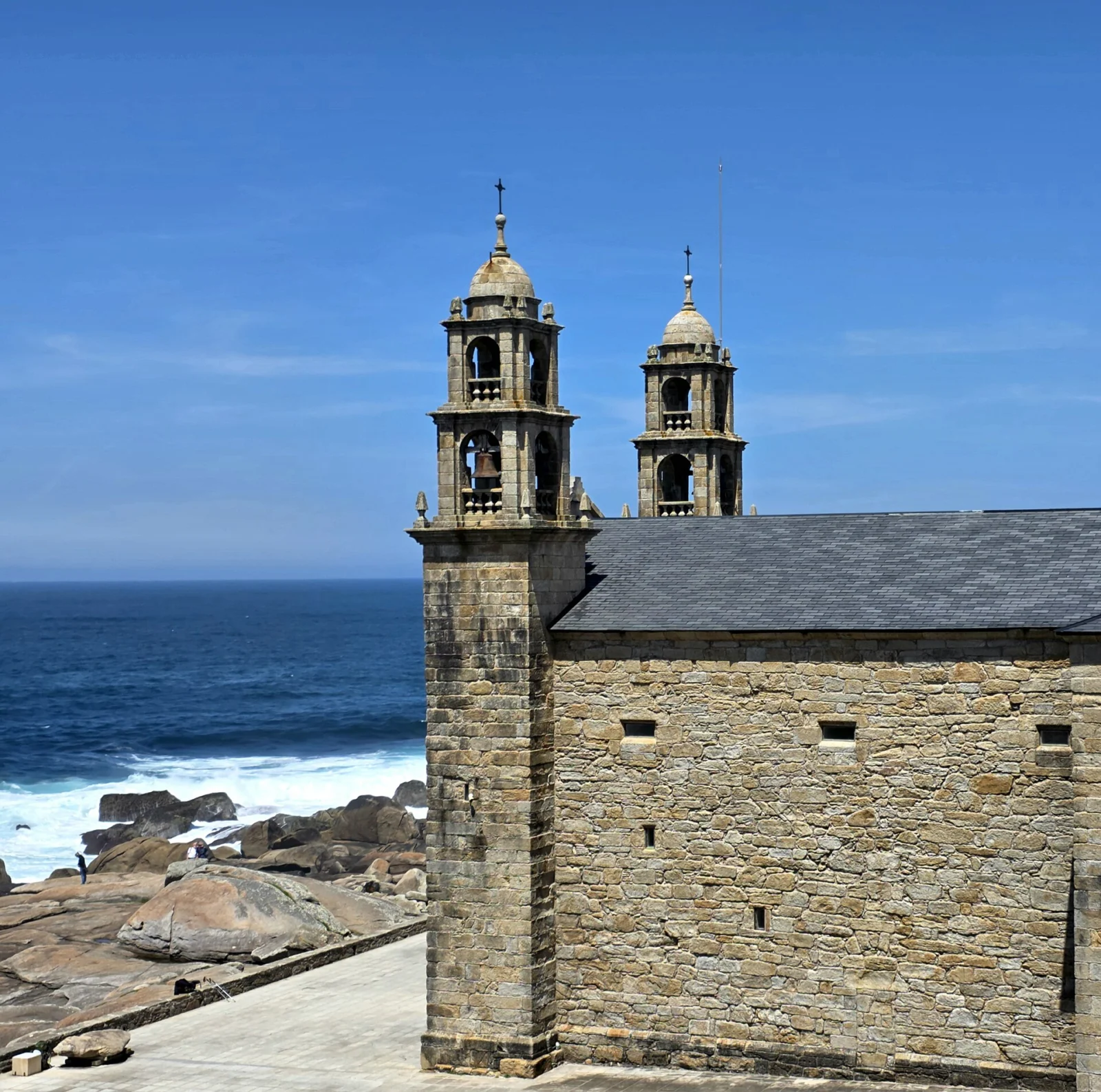
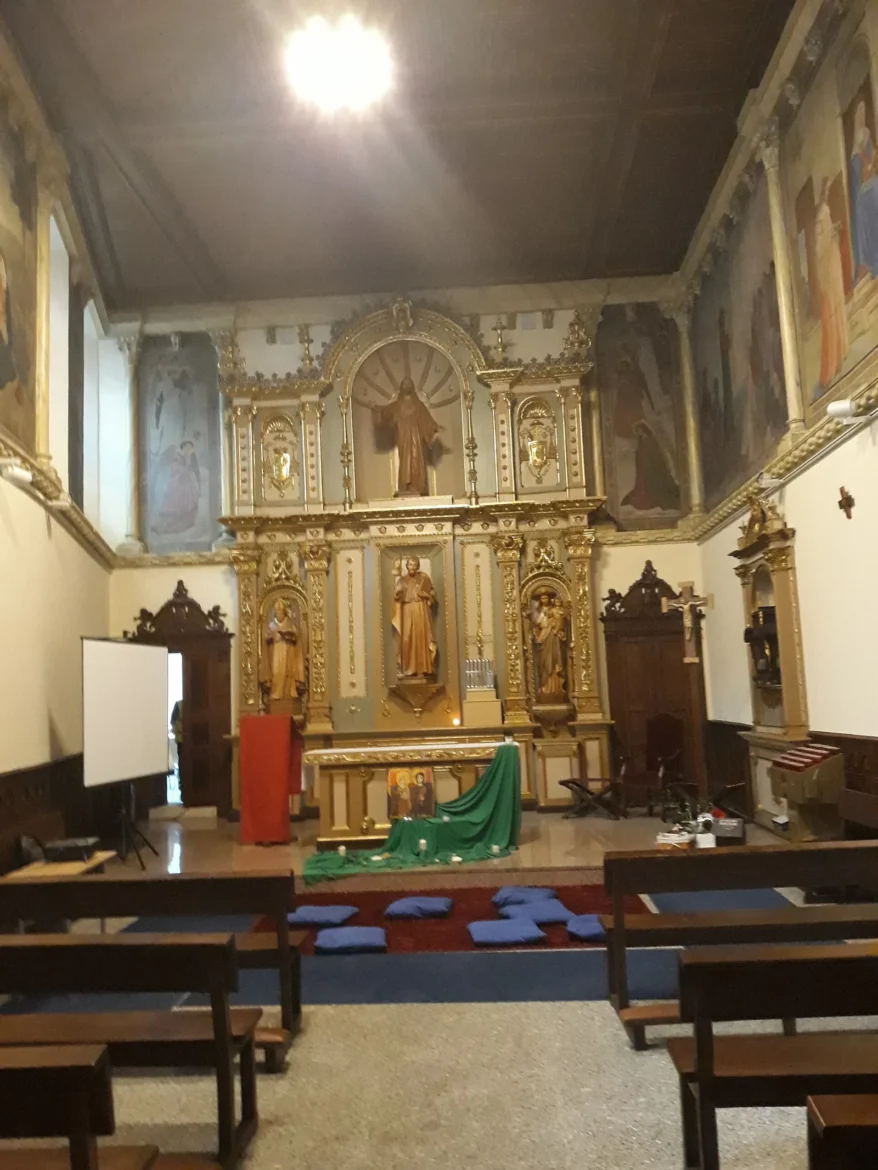
Canadian sculptor Timothy Schmalz visited the Virxe da Barca sanctuary in Muxía on 24 November, a day after presenting his bronze sculpture Sheltering at the Pilgrim Reception Office in Santiago de Compostela. The Archdiocese of Santiago, which reported the visit on 25 November, said the artist took an interest in the restoration of the sanctuary's main altarpiece.
Daniel Turnes Rey, the sanctuary's rector, accompanied Schmalz and showed him the work undertaken to preserve the building and its furnishings. According to the Archdiocese, the sculptor was interested in the sanctuary's recent history and said its surroundings could inspire future work.
A visit to Muxía, where many pilgrims end their Camino
On the rocky coast of Galicia, the Virxe da Barca sanctuary stands beside the Atlantic. It is a landmark for pilgrims who continue walking after reaching Santiago. For those arriving on foot, the sanctuary on Muxía's headland marks the transition from the inland trail to the open coast.
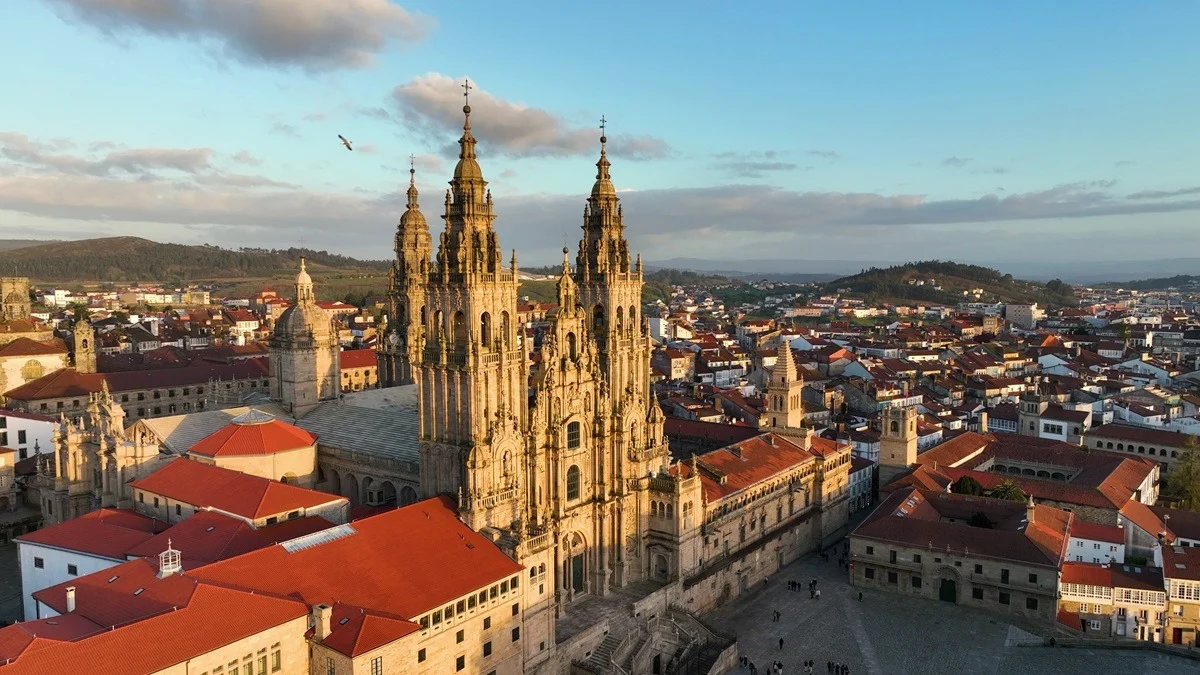
Schmalz had already visited the Cathedral in Santiago. In Muxía, his attention turned to the care of a historic place and the work needed to keep its heritage accessible. The Archdiocese highlighted the restoration of the main altarpiece among the projects discussed during his visit.
Pilgrims considering this extension can consult RTV 's guide to the Camino de Fisterra and Muxía. Both coastal towns are destinations on the route from Santiago, and Muxía gives walkers a chance to visit the sanctuary that Schmalz toured.
What pilgrims will see at the reception office in Santiago
in Sheltering, a dove draws a blanket over a life-size human figure. The Cathedral says the dove represents the Holy Spirit and the work drawn on chapter 58 of Isaiah, which connects faith with practical acts such as feeding people who are hungry and giving shelter to those who have nowhere to live. The bronze was presented on 23 November during a meeting between Schmalz and Archbishop Francisco José Prieto Fernández.
Schmalz created the piece for the 13 Houses Campaign, a Vincentian initiative that works to tackle homelessness. Mike and Carol Ritchie sponsored their installation in Santiago. The Cathedral says the sculptor saw the reception office as a fitting setting for a work about shelter, given the city's long association with welcoming travelers.
The new bronze joins another work by Schmalz, Homeless Jesus, which has stood in the office's fountain courtyard since July 2025. Its figure lies on a bench beneath a covering, the face hidden. The wounds visible on the feet identify the figure as Jesus. The Cathedral links that work to Matthew 25, in which acts of care for vulnerable people are treated as acts of care for Christ.
Two stops for pilgrims interested in art and hospitality
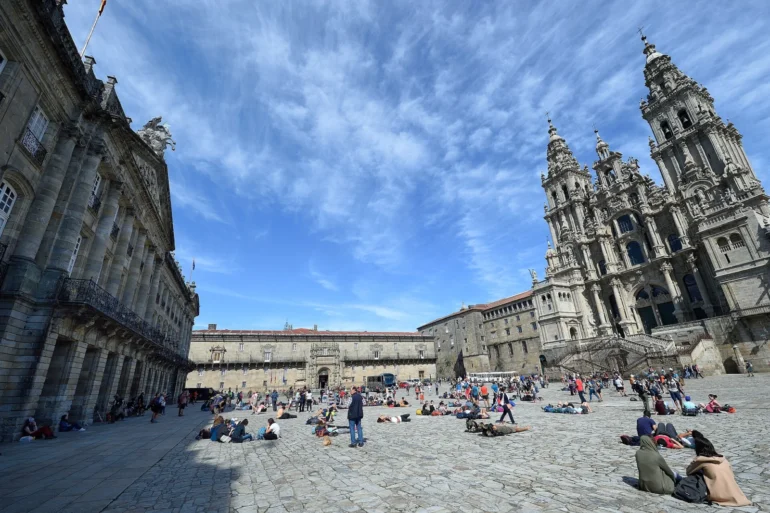
The Pilgrim Reception Office is at Rúa das Carretas 33, a short walk from Santiago Cathedral. Many pilgrims go there to request their Compostela. The new installation gives them one more reason to look around the building, and the fountain courtyard is where they can see Schmalz's earlier work.
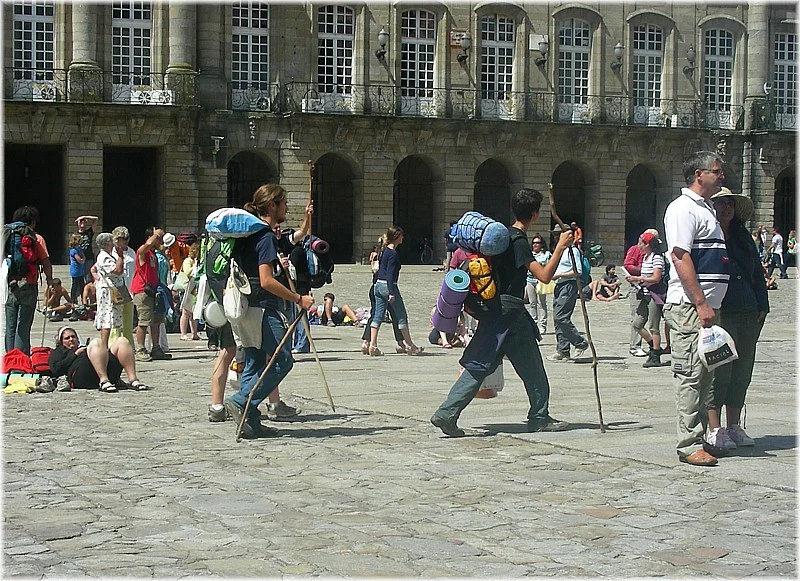
In Muxía, the sanctuary offers a chance to see a different relationship between art and pilgrimage. The focus of the visit there was the preservation of existing heritage, including the carved altarpiece. In Santiago, the occasion was the addition of a contemporary bronze to a place that welcomes pilgrims every day.
Schmalz's two days in Galicia give pilgrims two places to look more closely: the reception office where his bronze is now on display and the sanctuary he visited at the Atlantic end of the Camino.
Sources: Archdiocese of Santiago, Muxía visit · Santiago Cathedral, installation of Sheltering · Pilgrim Reception Office.
Images: Photo: Simon Burchell · CC BY-SA 4.0 · Wikimedia Commons | Photo: Jose Luis Cernadas Iglesias · CC BY 2.0 · Wikimedia Commons.
Cover photo: JensKunstfreund · CC BY-SA 4.0 · Wikimedia Commons