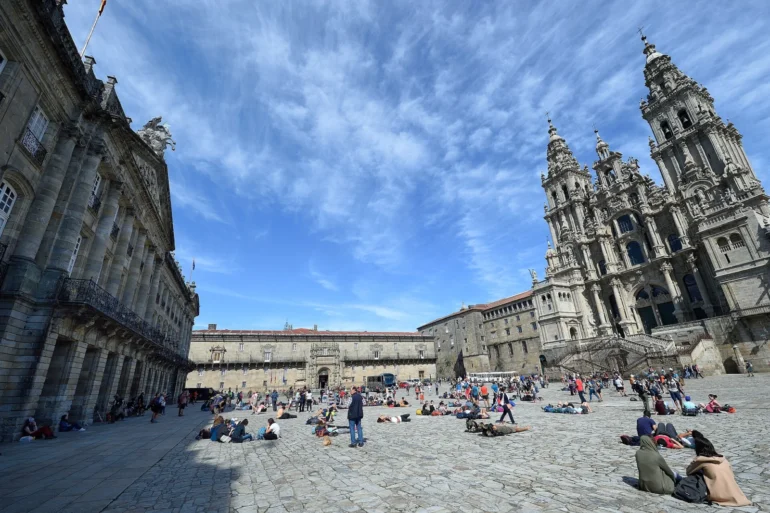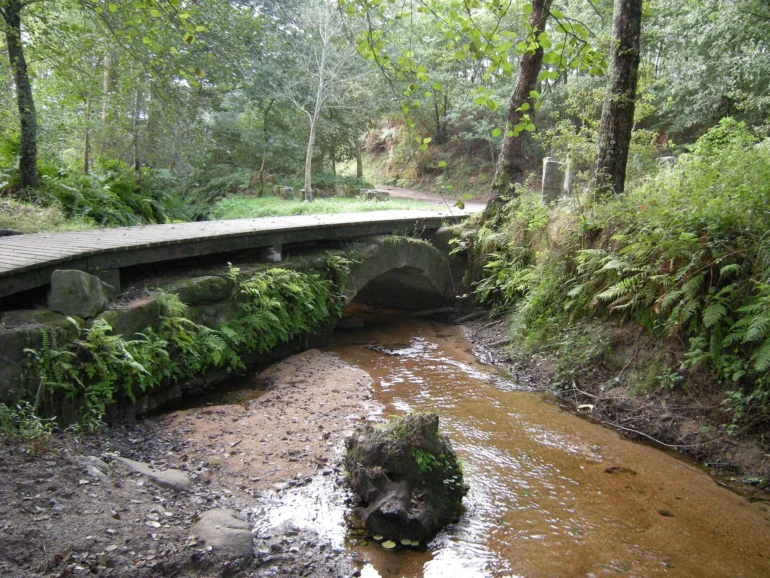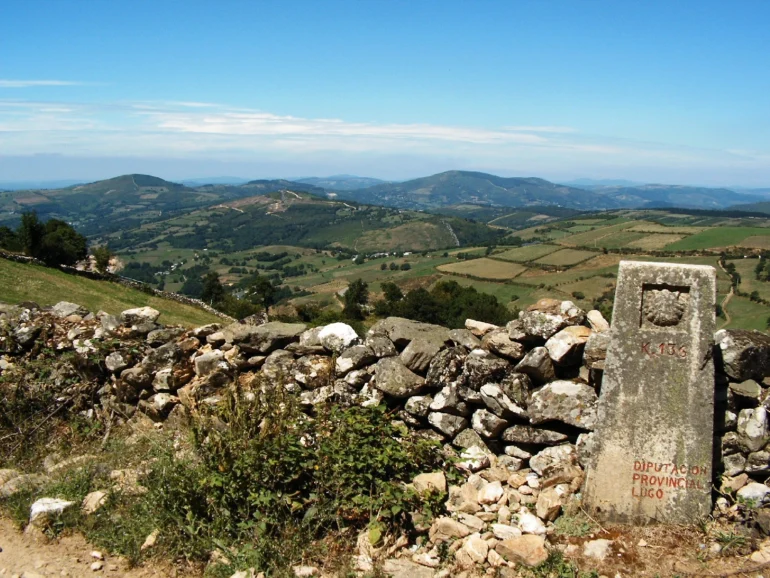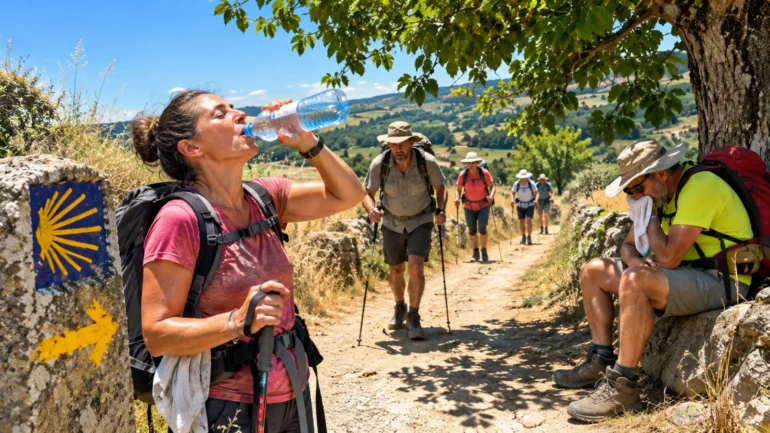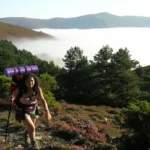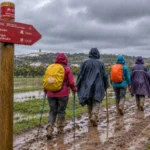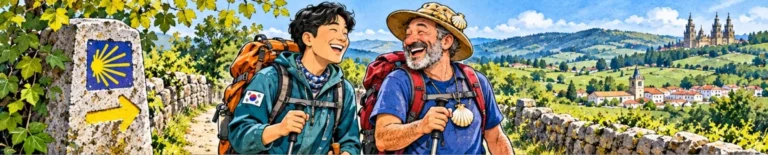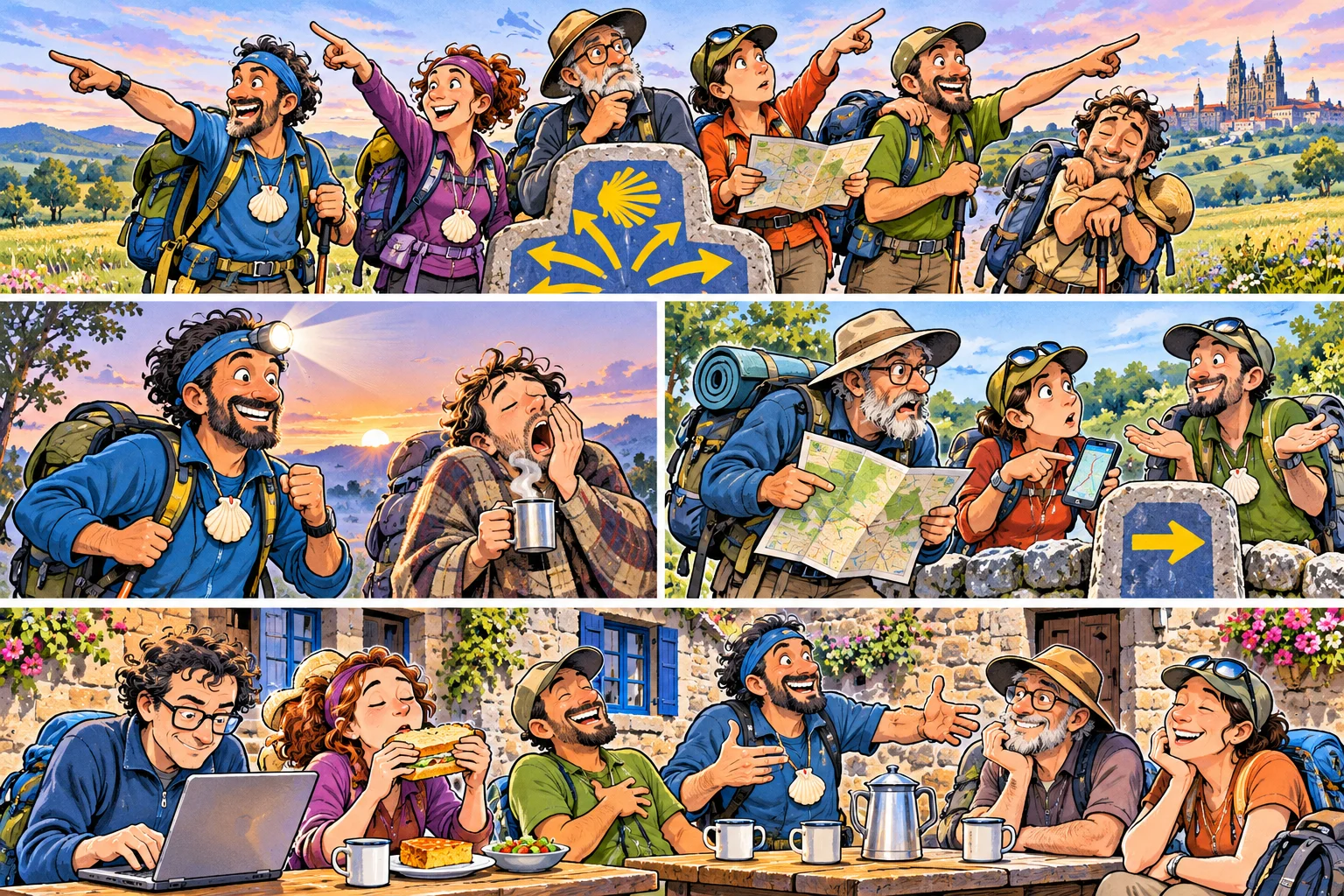
Six friends decided to do the Camino de Santiago together. It was a great idea: sharing kilometers, conversations and memories. The only small drawback was that none of them wanted to do the same Camino. One planned to leave at five, another at ten; one dreamed of thirty kilometers a day and another had researched where they served the best tortilla of each stage. Still, the six were convinced that the problem was the rest.
First meeting: six pilgrims, seven itineraries
The organization began three months before, in a WhatsApp group called "Buen Camino, team." Within five minutes there were already 184 messages. Clara, the organizer, shared a spreadsheet with schedules, shelters, slopes, fountains and an incidents section. Nobody opened the document.
Julián, the athlete, wrote: "I have calculated that we can do thirty-five kilometers a day." Paco, the gourmet, responded: "And what time do we eat?" "About two." "Then you have to make twenty." It was the first serious negotiation of the expedition.
Rosa, who wanted to walk slowly, asked if they could stop in the towns. "Of course," Clara replied. "I have three seven-minute stops scheduled." Rosa left the group for eight hours.
And then there was Mario, the improviser, who had been repeating for weeks: "The Camino will provide." He said it with admirable calm for someone who still didn't know in which city they were starting.
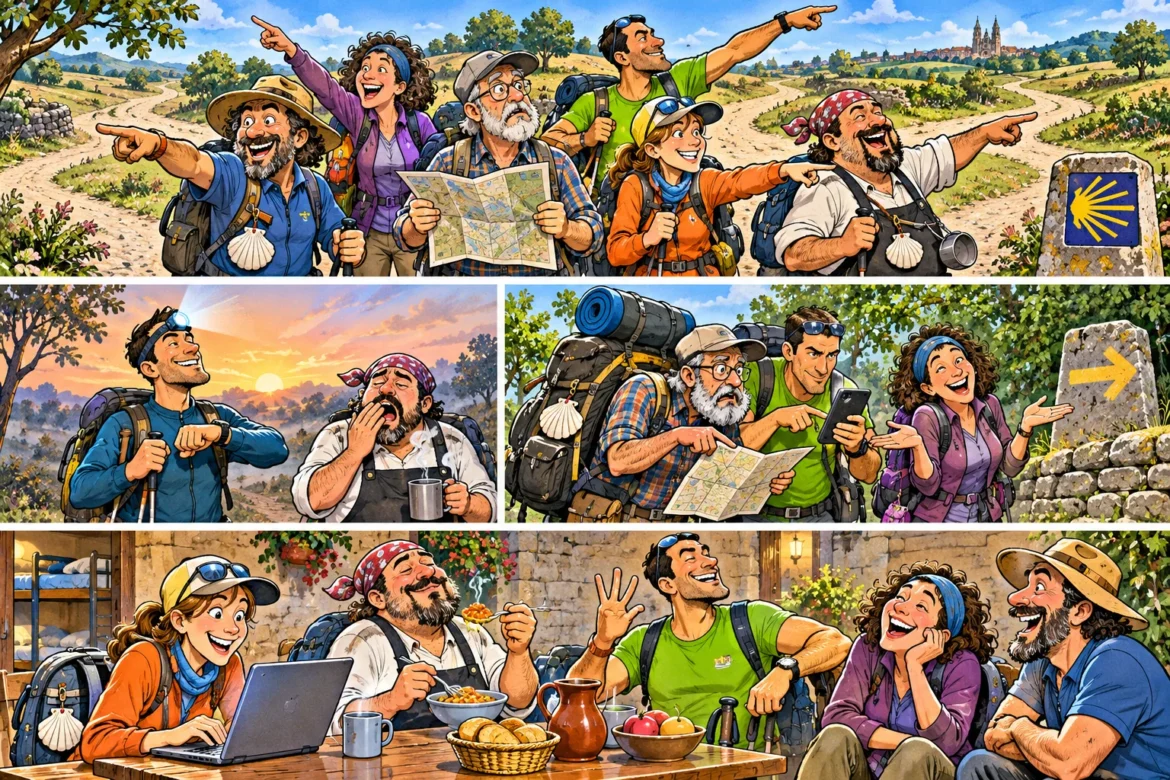
Five in the morning: first international conflict
On the day of departure, Tomás, the early riser, turned on his headlamp at half past four. He had gotten up before the rooster, who looked at him from the pen with obvious disapproval.
"Up, the Camino does not wait!" he announced. From the upper bunk came Paco's voice: «The Camino has been there for a thousand years. "It can wait until breakfast."
Clara wanted to leave at six o'clock sharp. Julián had been stretching and was jumping by the door. Rosa was looking for her glasses. Mario couldn't find a boot. Paco was investigating if the town bakery opened at eight.
They left at eight twenty. Tomás assured that they had lost three hours of light. Paco reminded him that they had won two coffees and a sandwich. Nobody knew how to refute that argument.
The yellow arrow against the GPS
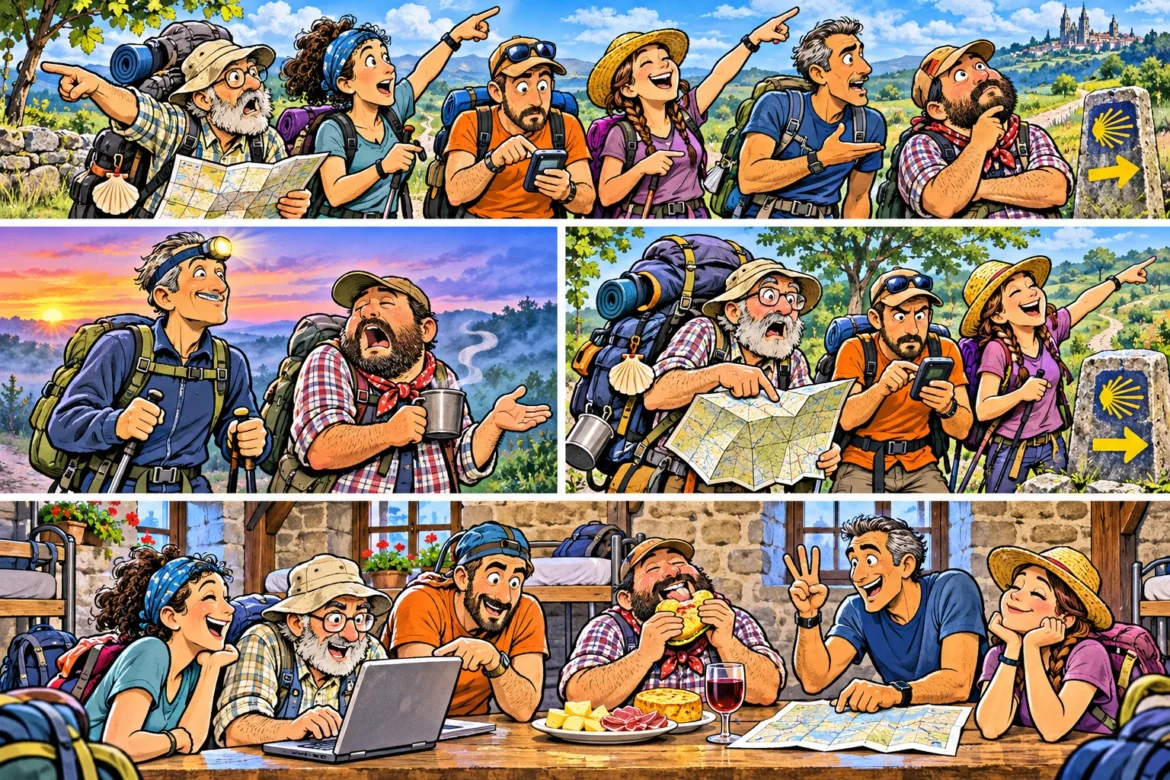
At the exit of the town a fork appeared. A yellow arrow pointed to the right. Mario looked at his phone and announced, "My app says it's on the left." Clara unfolded the map. Julián pointed to a path that went up a hill. "That's where four kilometers are cut."
"But you climb two hundred more meters," Rosa observed. "Perfect for the legs," Julián replied. "My legs already have enough personality," Paco replied.
For ten minutes they argued in front of the sign. Two pilgrims passed by, followed the arrow and disappeared quietly. Our six protagonists decided to vote. The result was two to two, with one abstention and one vote in favor of returning to the bar.
Finally they followed the yellow arrow. Mario stated that his GPS had recalculated the route. The phone, which had been without coverage for half an hour, neither confirmed nor denied anything.
The hostel: the democracy of bunk beds
Upon arriving at the shelter, Clara wanted to distribute the beds in order of registration. Tomás asked for the one closest to the door to leave early. Rosa wanted one by the window. Julián asked if there was room to do sit-ups. Mario lay down in the first free lane. Paco only had one question: "What time is dinner?"
At the common table, after taking a shower and taking off his boots, peace finally came. They talked about the landscapes, about a woman who had told them where to refill their canteens, and about that dog that had accompanied them for a few meters. They also acknowledged, albeit quietly, that walking together had been fun.
Then Clara brought up the next day's program. "Tomorrow it's twenty-seven kilometers and we have to leave at six." Tomás proposed five. Julián asked for thirty-five. Rosa suggested stopping to visit a church. Mario said they would see. Paco asked where they had breakfast.
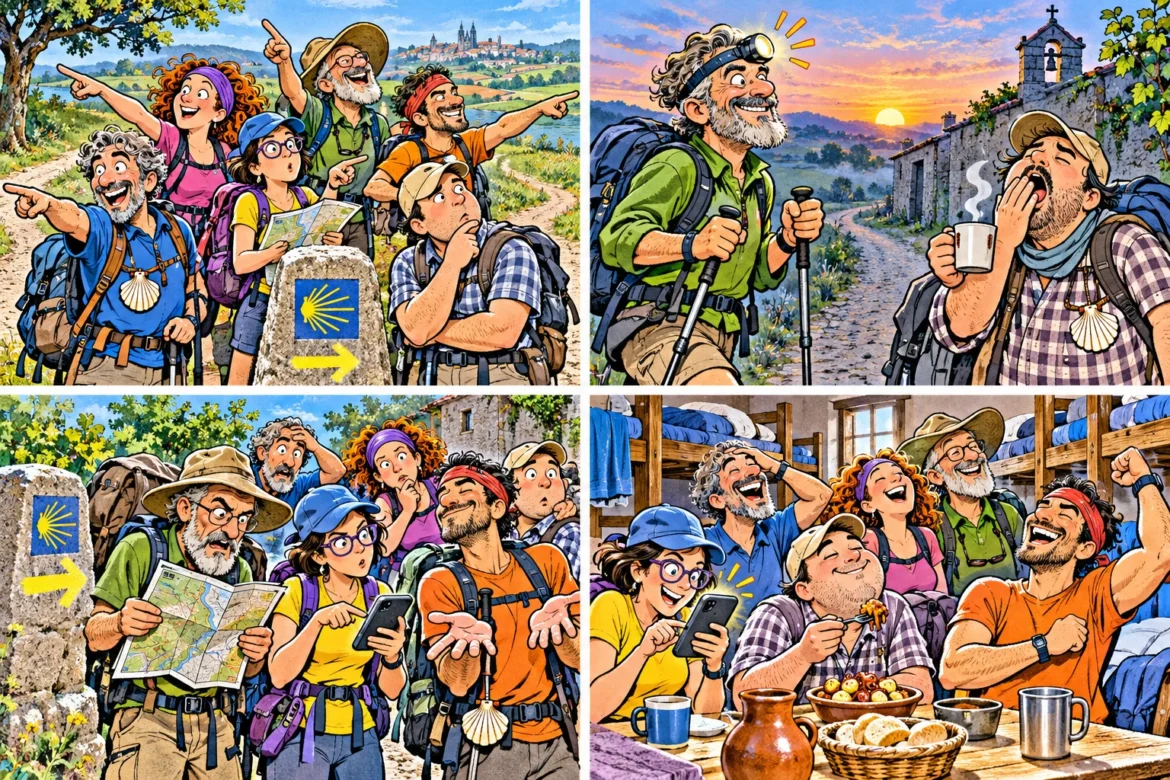
There was silence. Then they started laughing. Because, in the end, each one carried their own Camino in their backpack, and for some reason they had all decided to share it.
The next day they argued again about the departure time. But this time they already knew something important: friendship is not about always walking at the same pace, but about waiting for someone who has stopped to buy an empanada.
Humorous fictional story. Invented characters and situations. Original illustrations created for RTV Camino de Santiago.