









Ireland has installed its first official Camino de Santiago marker in Drogheda, reviving a centuries-old pilgrimage connection between the Irish coast and Galicia. The new milestone points pilgrims towards A Coruña, 1,251 kilometres away, and strengthens an Atlantic route that once carried Irish pilgrims by sea towards Santiago de Compostela.
The Camino de Santiago has gained a new starting point far beyond the Spanish border.
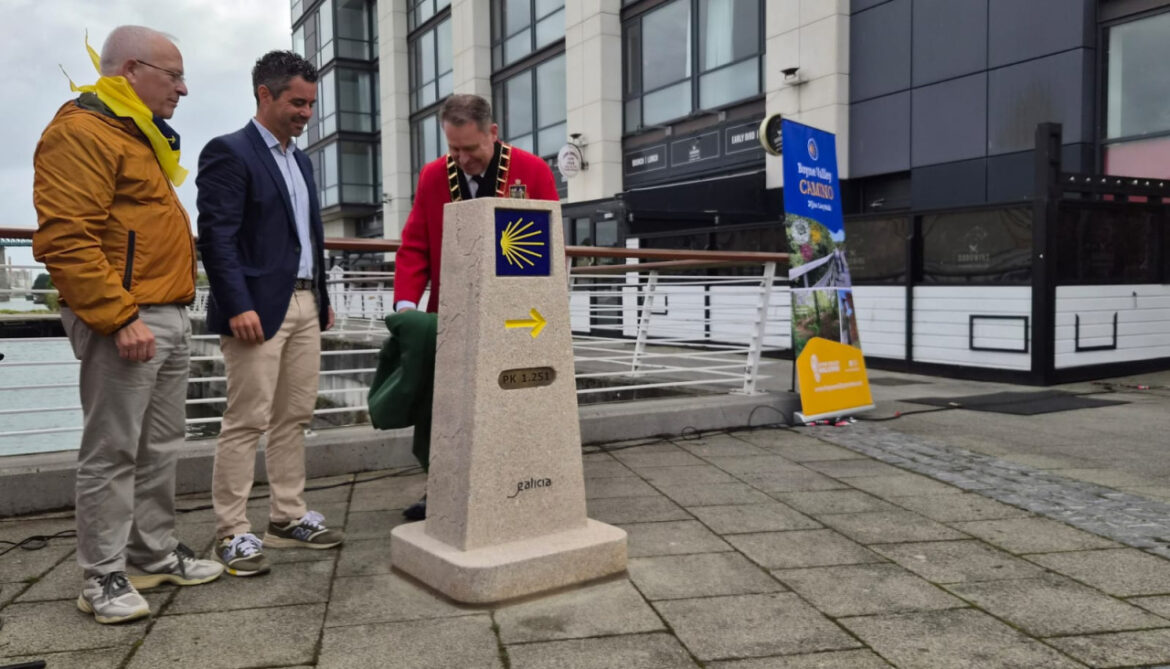
The Irish town of Drogheda has unveiled the first official Camino de Santiago marker ever installed in the Republic of Ireland, creating a visible link between an old medieval pilgrimage tradition and the modern network of routes leading to Santiago.
The marker has been placed near Scotch Hall, in an area historically connected with the port from which pilgrims once sailed towards Galicia. Local historical research indicates that during the Middle Ages, pilgrims from north-eastern and central Ireland travelled to Drogheda before boarding ships bound for A Coruña.
1,251 kilometres to A Coruña
One of the most striking details of the new marker is the distance engraved on it.
A Coruña: 1,251 kilometres.
For today’s pilgrim, the figure immediately shows just how international the Camino has become. But the marker is also a reminder that the relationship between Ireland and Santiago is not a recent tourism project.
Centuries ago, sea travel formed an important part of pilgrimage. Irish and British pilgrims could reach the Galician coast by boat and then continue on foot towards Santiago de Compostela.
The new marker reconnects that forgotten maritime dimension with the Camino of the 21st century.
Drogheda and its old pilgrimage tradition
Drogheda was not chosen by chance.
Its position on Ireland’s eastern coast made it an important commercial port and a natural departure point for travellers heading towards continental Europe.
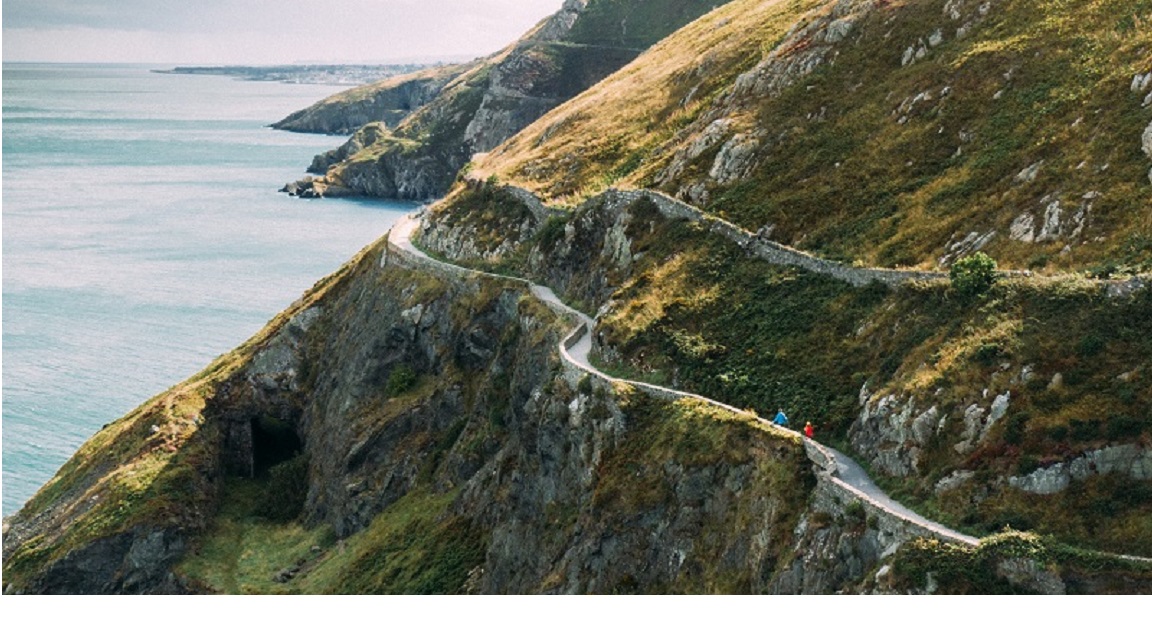
Today the town is also home to the Boyne Valley Camino, a circular walking route of approximately 25 kilometres.
The route has its own pilgrim credential and stamps, allowing walkers to experience a Camino in Ireland before continuing their pilgrimage in Galicia.
This creates something particularly interesting for international pilgrims: the Camino does not have to begin only after arriving in Spain.
It can begin in Ireland.
From Ireland to A Coruña, then Santiago
The historical connection with A Coruña is especially important.
The Galician city was one of the major arrival ports for pilgrims travelling by sea from northern Europe. From there, travellers continued towards Santiago along what is now recognised as the Camino Inglés, or English Way.
The modern initiative allows the kilometres walked on the Boyne Valley Camino to be combined with the approximately 75 kilometres between A Coruña and Santiago, creating a pilgrimage experience that reaches the traditional 100-kilometre requirement associated with obtaining the Compostela. El Ideal Gallego
It is a fascinating combination.
Twenty-five kilometres in Ireland.
A journey across the sea.
Then seventy-five kilometres through Galicia.
A modern pilgrimage built around a route that echoes journeys made centuries ago.
A project promoted from Ireland
The installation of the marker originated with the Camino de Santiago Society in Ireland, which requested the milestone from the Xunta de Galicia in November 2025.
The aim was to place it on the Boyne Valley Camino and give greater visibility to Ireland’s historical links with the pilgrimage to Santiago.
The inauguration was attended by Marcos Gómez Román, commissioner for Xacobeo 2027, together with local representatives and organisations involved in preserving the Irish Camino tradition.
The marker is also part of a wider effort to recognise and promote historic Camino connections outside Spain.
The Camino Inglés is becoming increasingly international
The initiative arrives at a time when the Camino Inglés is experiencing continued growth.
More than 24,000 pilgrims had already received the Compostela after walking this route during 2026 by the time the marker was inaugurated, representing an increase compared with the previous year.
The route remains much smaller than the Camino Francés or the Portuguese routes, but its history gives it a distinctive identity.
Ferrol and A Coruña are today its principal Galician starting points, yet its real historical story begins much further away.
England.
Ireland.
Scotland.
Northern Europe.
The sea was once part of the Camino too.
A yellow arrow across the Atlantic
Perhaps that is what makes the new Drogheda marker so interesting.
It is only a stone marker.
It does not create a new medieval history.
It simply makes an old one visible again.
For centuries, pilgrims reached Galicia using every means available to them. Some crossed mountains, others followed Roman roads and many from northern Europe arrived by ship.
The Camino has never been a single road.
It has always been a network.
The new Irish milestone reminds us of that.
Ireland is now physically part of the Camino story
For Irish pilgrims, seeing a Camino marker at home changes the perception of where the pilgrimage begins.
Santiago suddenly feels connected to their own landscape.
The first yellow arrow does not need to appear in Galicia.
It can appear beside the River Boyne.
From there, the pilgrim can begin walking with the same destination that has attracted travellers for more than a thousand years.
The route may involve a plane or ferry before continuing from A Coruña, but the symbolic journey has already started.
And perhaps this is the most powerful message behind Ireland’s first Camino marker:
Santiago may be 1,251 kilometres away, but the Camino can begin much closer to home.