The French Way can now also be walked around a table.
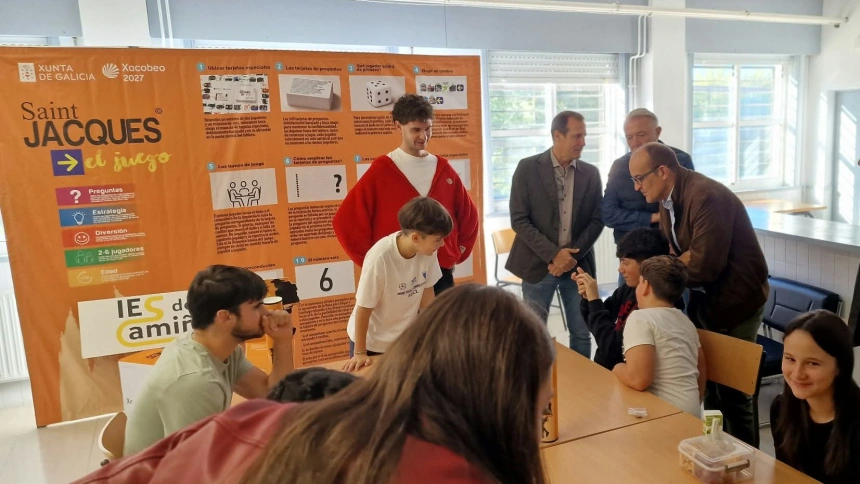
The students of the IES do Camiño de Palas de Rei have been one of the first to try Saint Jacques, a new board game inspired by the Jacobean route that combines culture, dissemination and entertainment with a mechanic reminiscent of the traditional Goose Game.
The proposal turns the Camino de Santiago into a route of 90 squares in which players have to advance by passing questions and tests until they reach Compostela.
But it is not enough to reach the goal.
To win you must pass a final phase and correctly answer five questions posed by the other participants.
The Camino turned into a board
Saint Jacques is designed for games of between two and six players and is recommended for ages 16 and up.
Its great appeal is in the amount of content it incorporates.
The game brings together 4,500 questions distributed in five different categories: Camino de Santiago, general culture, science, cinema and shows and sports.
This allows it to not only be a game for Jacobean experts.
Whoever knows the Camino well will have an advantage in some parts, but will also need general culture and knowledge of other areas to reach Santiago first.
The combination seeks precisely that: to turn learning about the Camino into something competitive, fun and accessible.
From box to box until Compostela
The board has 90 squares and takes as a reference the structure of the Goose Game.
Participants advance by correctly answering the questions on the cards and symbolically traveling through different points of the French Way.
The goal is in Compostela.
The concept is especially curious because the Goose Game has been related for decades, at least in the popular imagination, to the Camino de Santiago.
There are numerous theories that compare its squares, bridges, inns, prisons and other elements with places and difficulties that a pilgrim once encountered during his journey.
Saint Jacques recovers that idea and transforms it into a contemporary product.
Rei's Palas also appears in the game
The board is not limited to using the Camino as decoration.
It includes specific references to different municipalities and heritage elements located along the French Way.
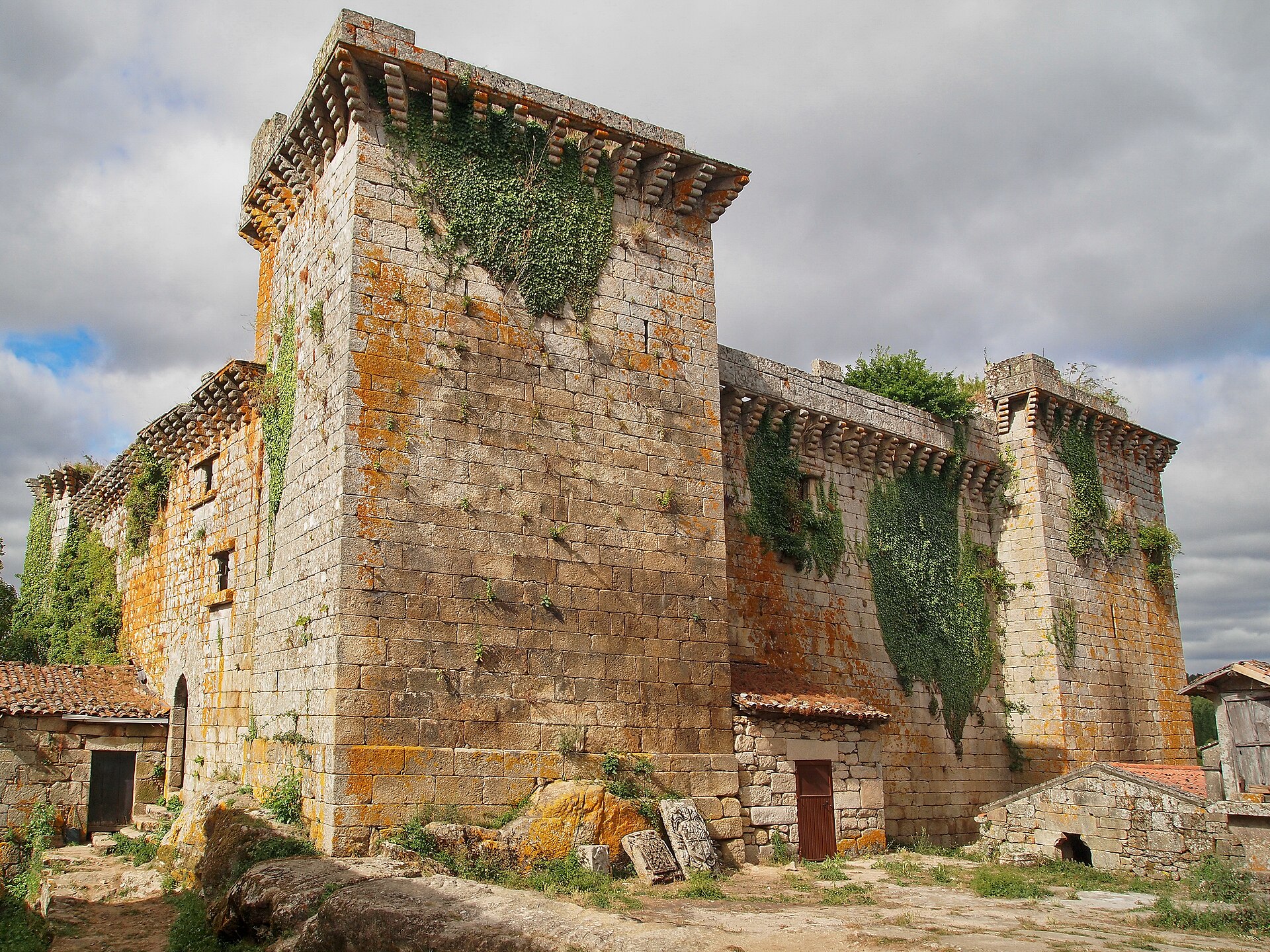
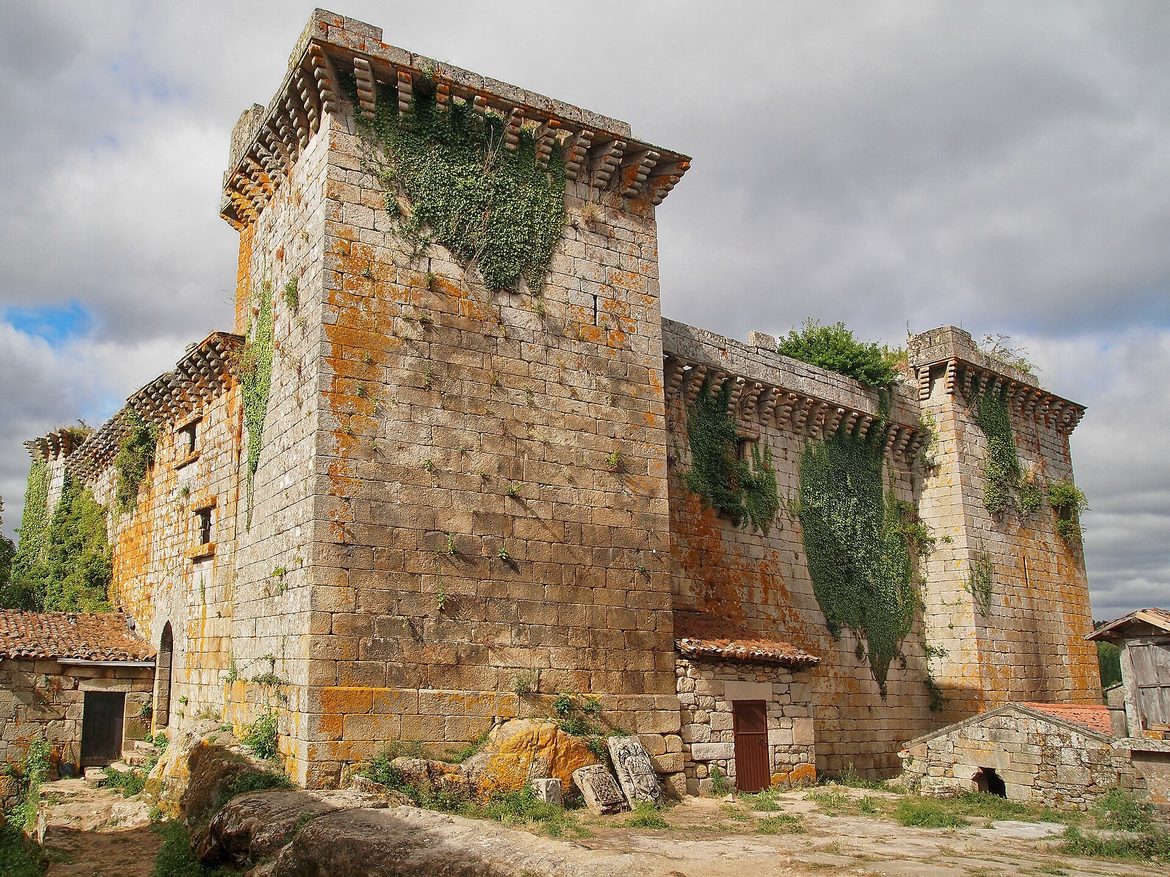
In the case of Palas de Rei, places such as the Pambre Castle and the church of Vilar de Donas, two of the great heritage elements of the Lugo municipality.
In this way, the game also works as a dissemination tool.
A person can discover a monument while playing and, later, recognize it when they walk the Camino in real life.
From the classroom to the Road
The presentation held in Palas de Rei also has an educational component.
The game was presented to the students of IES do Camiño with the participation of municipal representatives and the regional administration.
The initiative is promoted by Brinco Soluciones Integrales and has support through the O Teu Xacobeo program.
The intention is not to stay only in Palas de Rei.
It is planned that the game will also reach other places linked to the French Way, with activities in Portomarín and Triacastela.
This will allow the proposal to be tested precisely in some of the municipalities that see thousands of pilgrims pass through daily during the season.
Another way to tell the Camino
For years, Jacobean dissemination has relied mainly on books, guides, exhibitions, documentaries and conferences.
The emergence of game-based projects introduces a different way of transmitting heritage.
Especially among the youngest.
A board can teach where Palas de Rei is, how important the Pambre Castle is or which towns are part of the French Way without having to convert that learning into a traditional class.
And that opens an interesting avenue for the future.
The Camino can be told by walking it.
You can learn about it by reading its story.
It can be discovered through videos, podcasts or virtual reality.
And now it can also be explored by rolling a dice and answering questions.
Of course: as on the Camino Real, getting to Santiago does not seem easy either.
Because in Saint Jacques you have to overcome 4,500 questions before becoming the first to reach Compostela.