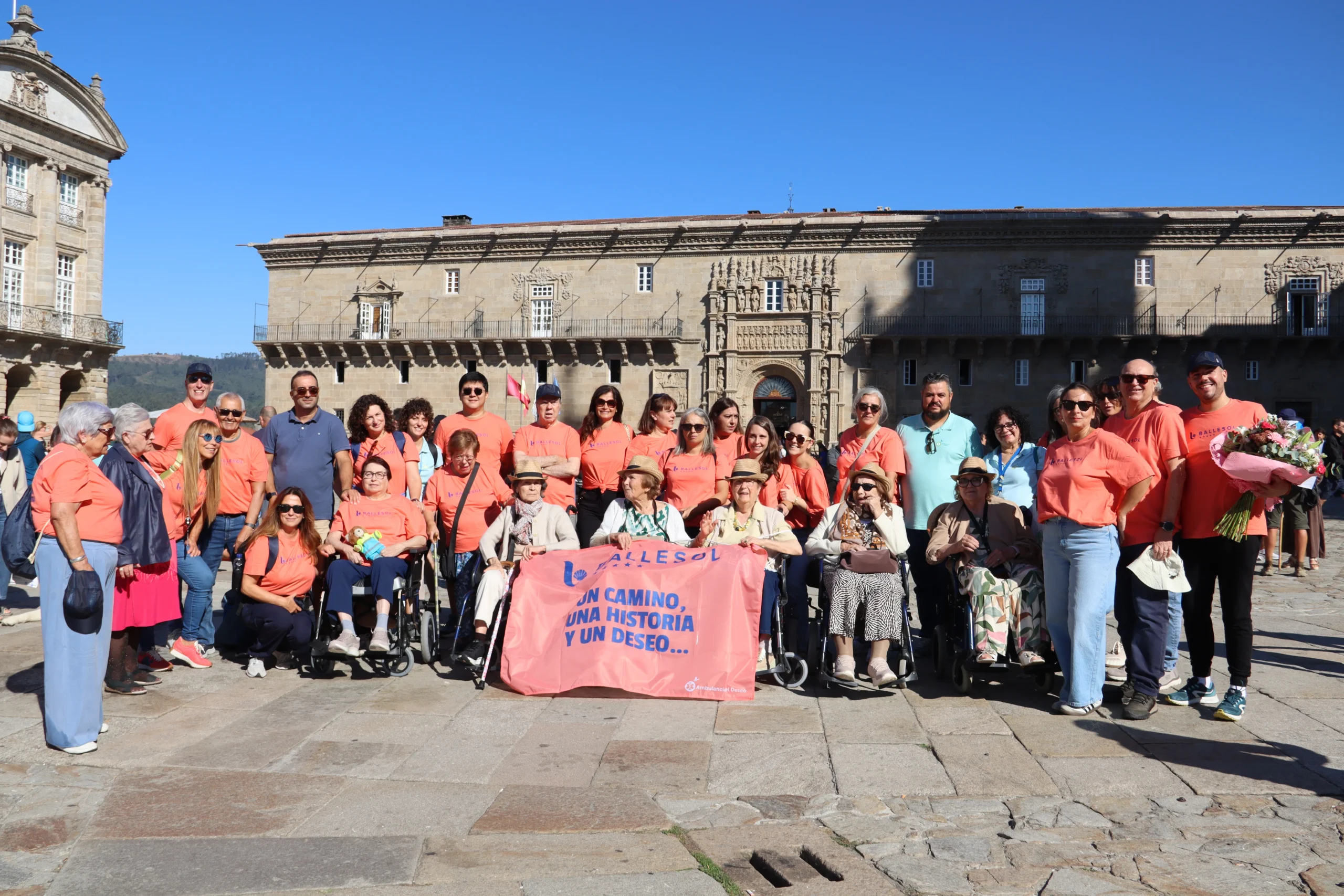
For almost twenty years, Alegría Bernardino Sánchez was on the other side.
It was she who accompanied people with disabilities or reduced mobility so that they could fulfill their dream of pilgrimage. The Camino de Santiago, Fátima or Lourdes were some of those destinations in which he helped others to continue moving forward when doing it alone was difficult.
This time the roles changed.
With reduced mobility and going through a complicated personal situation after being diagnosed with cancer, Alegría had one wish: to return to the Camino de Santiago.
And this time it was others who walked through it.
Five kilometers that are worth much more
Alegría traveled from Murcia to Galicia thanks to the Ambulance of Wish Foundation, an organization dedicated to making especially important wishes possible for people who are going through delicate situations.
The goal was not to travel hundreds of kilometers.
It wasn't necessary.
The last five kilometers of the Camino Frances were enough to close a story that had begun many years before.
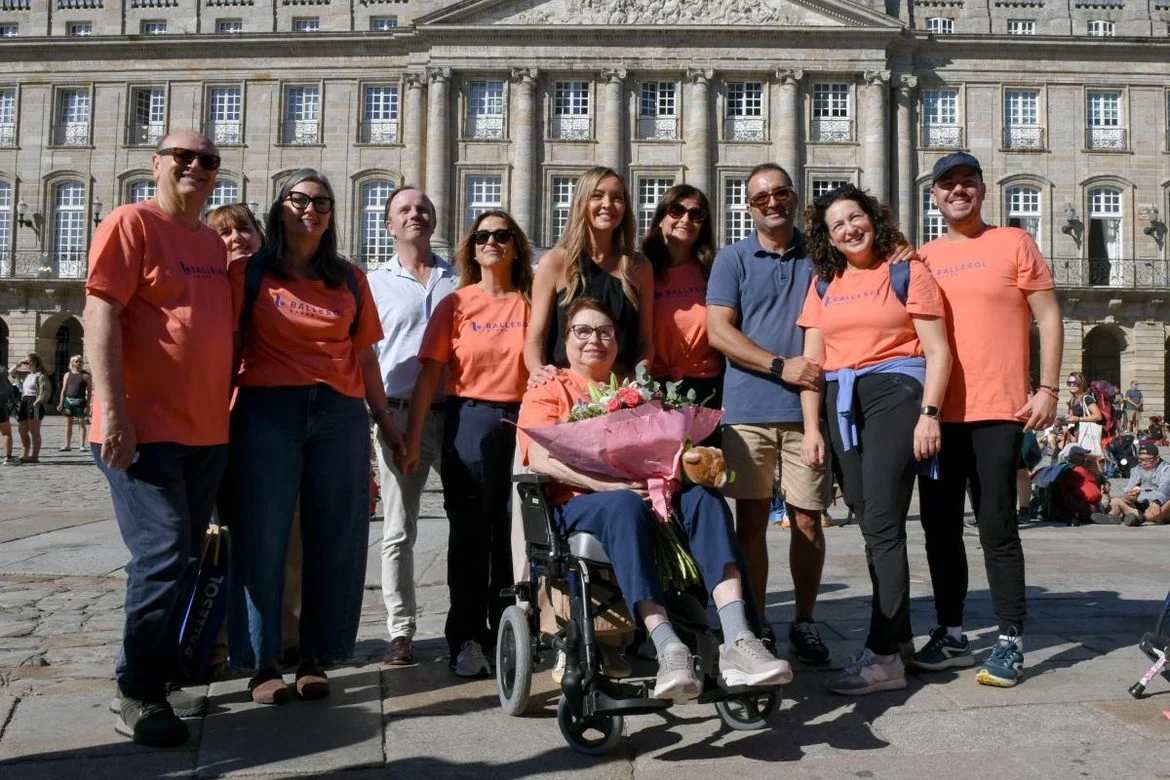
Alegría completed that section accompanied by family members, professionals from the Ballesol Altorreal residence, representatives of the group and volunteers from the Ambulance of Desire Foundation.
Each meter had a special meaning.
For years she had been the one who helped other pilgrims overcome their limitations to reach Santiago.
Now it was Joy who needed someone to be by her side.
From accompanying to being accompanied
The idea of giving back part of everything he had done for other people arose after Sergio Moreno, a psychologist at the residence where he lives, learned more about his relationship with the Camino.
Moreno himself had made the pilgrimage and understood how important Santiago continued to be for her.
From there the trip began to take shape.
It was not simply about organizing an excursion to Galicia.
It was about returning Alegría to one of the places that had marked her life.
For almost two decades he dedicated part of his time to accompanying the sick and people with mobility difficulties on different pilgrimages.
This time someone had to do the same for her.
Return to Santiago
The arrival in Compostela brought together those who made the trip possible and turned the last kilometers into something very different from a conventional stage.
For any pilgrim, reaching Santiago can be one of the most intense moments of the Camino.
But there are times when the distance traveled matters little.
Five kilometers can mean more than five hundred.
In the case of Alegría, returning to the Camino meant rediscovering an important part of her own history.
The same route where for years she looked out for others now became the place where others could take care of her.
The Camino can also be this
Stories like Alegría's remind us of a dimension of the Camino that is sometimes hidden behind the numbers of pilgrims, annual records or arrival statistics.
The pilgrimage is also made up of people pushing a chair, waiting for someone who walks slower, adapting a stage or simply staying next to someone who needs help.
Not everyone walks the Camino in the same way.
Not everyone can do it by walking.
Inclusion has been gaining ground in recent years thanks to the work of associations, volunteers and projects that try to ensure that physical limitations do not turn Santiago into an impossible goal.
Alegría knew that job very well.
He was part of it for years.
A round trip
Maybe that's why his return has something of a closed circle.
First it was she who helped others arrive.
Many years later, when his own circumstances caused him to need help, he found people willing to return that gesture.
The Camino changed.
It also changed the way it travels.
But Santiago was still at the end.
And this time Alegría didn't have to worry about helping anyone.
He just had to let himself be accompanied.