



Agés: The Little Great Treasure of the Camino de Santiago, Where History, Battle and Hospitality Come Together
A few kilometers from Burgos, this town with roots from the 10th century offers pilgrims an immersion in the history of kings, battles, bandits and a human warmth that makes it an unforgettable refuge.
Agés, Burgos – Just 22 kilometers from the capital of Burgos, emerges Agés, a modest but fascinating town that breathes history in each of its cobbled streets. Born from the Christian repopulations and documented for the first time in the year 944, its destiny was intrinsically linked to the Camino de Santiago thanks to a real decision.
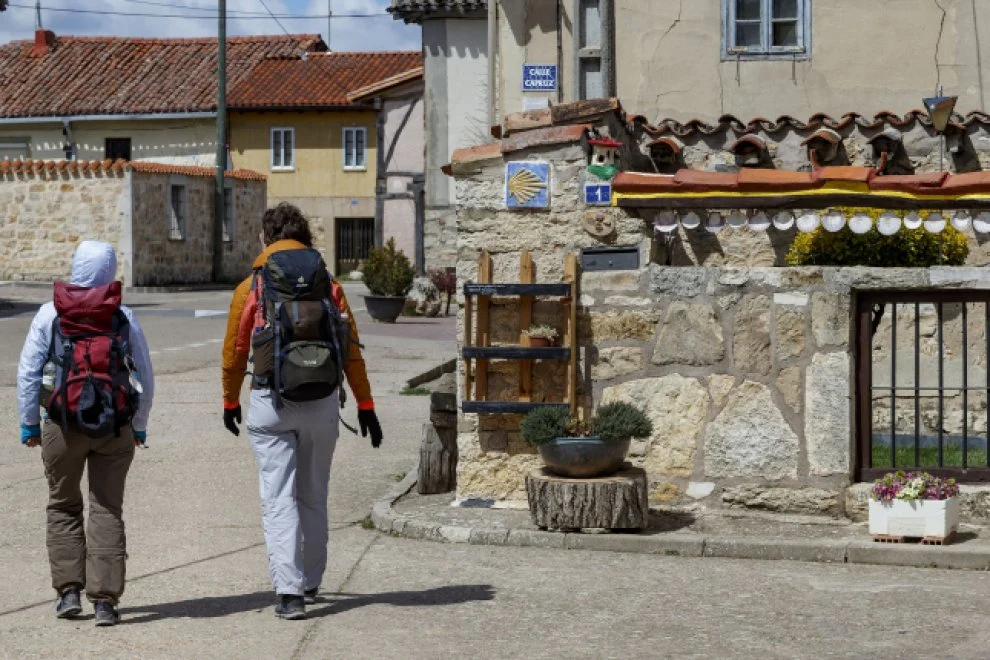
It was the year 1054, when the Atapuerca War He faced the brothers García of Navarra and Fernando I of Castile for control of La Bureba and Oca. After the Castilian victory and the death of the Navarrese king, 80 years later, Alfonso VII made a momentous decision: open the Valdefuentes-San Juan de Ortega-Agés-Atapuerca-Burgos road. This measure not only provided shelter and security to the pilgrims, but also transformed the life of Agés, significantly increasing the flow of walkers and turning it into a key point on the Jacobean route.
Of Wars and Bandits: A Turbulent and Heroic Past
The history of Agés has not always been one of peace. In times of conflict, such as War of Independence, its roads were traveled by troops and guerrillas. The 18th and 19th centuries saw the area stalked by bandits who attacked travelers and pilgrims. However, the community of Agés was not intimidated; the neighbors organized night rounds to protect their people and, above all, the pilgrims, to whom they owed much of their sustenance and dynamism.
The Church of Santa Eulalia: Guardians of Secrets and Traditions
In the heart of Agés stands the Church of Santa Eulalia de Mérida, a 16th century construction that fuses late Gothic with Renaissance. A deep-rooted local tradition ensures that the insides of the King Garcia of Navarre, died in the Battle of Atapuerca. Although the church has undergone renovations, such as the reconstruction of its belfry tower in the 18th century, its essence and mystery endure. Under its altarpiece, it is said that a sealed crypt or pit It still houses the remains of important people, including, perhaps, those of the unfortunate king.
The belfry, the bell tower element, not only called for mass, but was the vital alarm system for fires or attacks by bandits, a reflection of life in times past.
Bridge, Architecture and Art: Traces of Time and the Pilgrim
Agés also boasts of his medieval bridge on the Vena River, attributed to Juan José Ortega. With a single semicircular arch and a base that could date from Roman or medieval times, this bridge is a landmark for pilgrims. In one of its corners, a small chrismon (Christian symbol) engraving invites walkers to touch it, seeking protection on their journey.
The architecture of the town keeps the Castilian and mountain tradition alive, with stone and half-timbered houses, as well as the characteristic mountain glories and chimneys.
Authentic Hospitality and Living Curiosities
Beyond its heritage, Agés is famous among pilgrims for being one of the towns most welcoming on the Camino. The kindness of its people, willing to help even out of high season, leaves an indelible mark on those who pass through it.
The patron saint festivities in honor of Santa Eulalia (December 10 and 12) and the commemoration of the historic battle between Navarra and Castile (August 23) with the Medieval Market and Dinners, show the cultural vitality of the town.
Between Agés and Atapuerca, a two meter high menhir, known as the “King's End Cairn”, marks the exact place of the Battle of Atapuerca, with the inscription «End of Rey García de Nájera. 1054”, a stone reminder of its royal past.
Art also finds its place in Agés, not only in the modern murals and paintings that adorn its corners, but in the painted stones, shells and objects that pilgrims leave on the bridge or next to the church as a reminder of their journey. However, the true canvas of Agés is its fields, which are dyed yellow and green, adapting to the seasons, offering a natural spectacle that lifts the spirit.
Agés is, without a doubt, a pleasant surprise on the Camino de Santiago, a place where history is felt, nature is admired and hospitality endures.
Hashtags:
- #AgesBurgos
- #CaminoDeSantiago
- #JacobeanHistory
- #CharmingTowns
- #Mudejar Romanesque
- #AtapuercaWar
- #PilgrimHospitality
- #SantaEulaliaAges
- #BurgosEsCamino
- #RuralHeritage
- #MojónFinDeRey
- #CulturalJourney

















