




«The paths of spirituality»
“A tool to further increase the value of the pilgrimage.” The paths, This is how Monsignor Rino Fisichella, pro-prefect of the Dicastery for Evangelization, describes the Memorandum of Collaboration between the Lazio Region and the Autonomous Community of Galicia signed today, February 6, titled “The paths of spirituality – Via Francigena and the Camino de Santiago de Compostela.” An initiative launched within the framework of the Jubilee. The ceremony took place this morning at the Borromeo Palace, headquarters of the Italian Embassy to the Holy See in Rome with the presence of the secretary general of Macei and ambassador Riccardo Guariglia. The interventions were led by Alfonso Rueda, president of the Council of the Autonomous Community of Galicia, and Monsignor Fisichella, who, on the sidelines of the event, offered the Vatican media some insights into this memorandum which, he said, "is much more than a simple act of collaboration."
Monsignor Fisichella, what does this Memorandum between the Camino de Santiago and the Via Francigena signed in Jubilee 2025 mean?
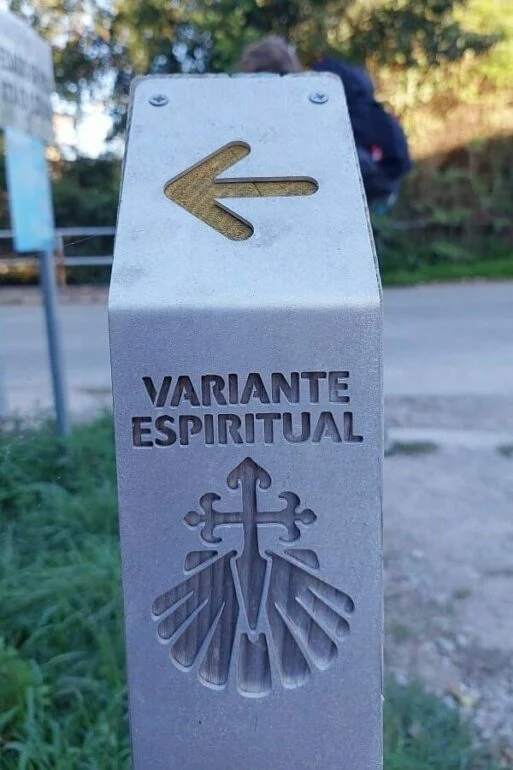
This is, without a doubt, a sign of important collaboration between two regions, Galicia and Lazio, which possess what are the “treasures” of pilgrims' destinations. Lazio has the tomb of Peter and Paul in Rome and Galicia has the tomb of Santiago. I believe, however, that this goes far beyond a simple act of collaboration, because it becomes a tool to further increase the value of the pilgrimage. Pilgrimage along the paths means giving voice to that dimension of spirituality, which is a search that today's man and woman feel deeply. Here, the journey that is inevitably a symbol of life helps us rediscover not only who we are, but also that we need God.
Why is it important to do the pilgrimage on foot, not arrive by plane or bus and walk, for example, five meters to pass through the Holy Door?
Because walking is demanding, walking is tiring. Walking allows you to meet people who walk with you. Walking helps to establish interpersonal relationships, but, above all, it helps to contemplate the beauty of nature and, therefore, inevitably, when one undertakes a walk, one knows that one is going on an adventure that is to rediscover, in a word, the beauty: of relationships, of the world, of nature, of creation and, above all, the beauty of living a unique experience.
What is the last Camino you have done and what is the pilgrimage you would like to do?
Just two Sundays ago, together with 600 people and the government commissioner, we walked a section of the Francigena to Mons Gaudii and from Mons Gaudii (the Monte della Gioia, in the Montemario area of Rome). Then I led these people who arrived at the Holy Gate and the Tomb of Peter. A small trip, then, which, however, in a period like this, in which there are many commitments, allows us to maintain the great desire. Naturally, undertaking the Via Francigena or the Camino de Santiago requires a lot of time and, at the moment, I confess, I have very little.
FOUNTAIN: VATICAN NEWS

















