



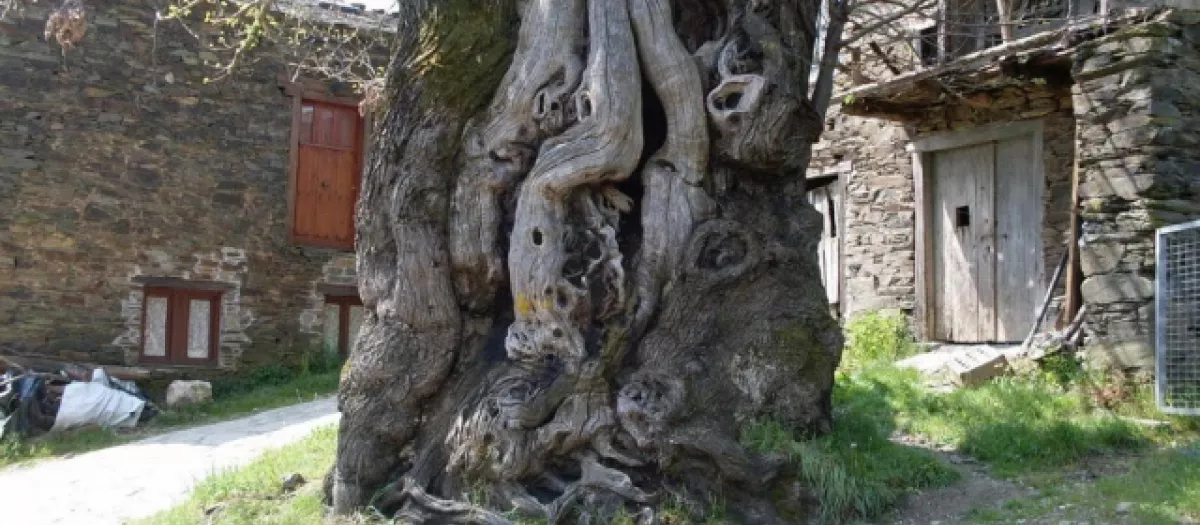
The centenary chestnut tree of Ramil, the oldest inhabitant of the Camino de Santiago that many pilgrims are unaware of
In the heart of French Way, just after the demanding climb to O Cebreiro and before reaching Triacastela, is a silent witness to centuries of history: the centenary chestnut tree of Ramil. This emblematic tree, with more than 800 years of life, has seen thousands of pilgrims pass through it over the generations, and yet, it continues to be one of the great unknowns for those who travel the Jacobean route.
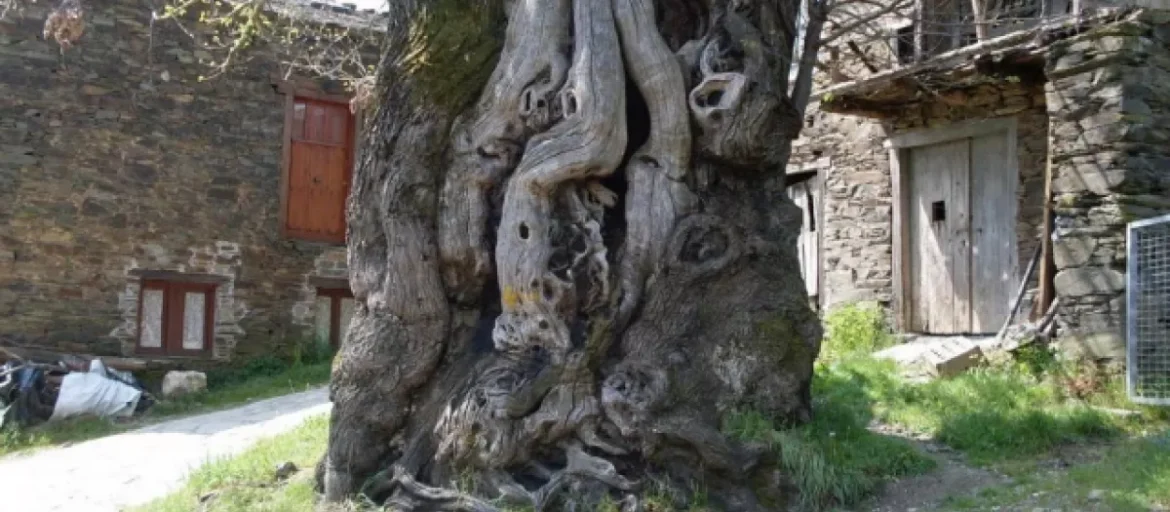
The Ramil chestnut is much more than an ancient tree. Its trunk of spectacular dimensions, furrowed by gaps and molded by time, rises above the path like a natural guardian. Its wide crown offers rewarding shade on hot days and a resting point for those who advance with their backpack on their backs, tired but with their eyes set on Santiago de Compostela.
Located in the village of Ramil, this copy of Castanea sativa It appears in the catalog of Singular Trees of Galicia, a distinction that recognizes its natural and cultural value. At first glance it may seem like just another point on the landscape, but those who stop under its shadow immediately feel the force of its presence. Some brush it with their hand before resuming their walk, as if they wanted to take a fragment of that ancient history with them.
Although its history goes back many centuries, its status as a witness to the passage of pilgrims makes it a living symbol of the Camino. It is not unusual to imagine medieval walkers, with their capes and canes, crossing the same path that travelers from all over the world travel today. This shared journey between past and present is what makes places like the Ramil chestnut tree take on a special meaning: they connect generations and experiences under the same light.
Despite its importance, not all pilgrims know it. It is easy to pass by if you do not pay attention to your surroundings or if each day's goal completely absorbs the attention of the person walking. But for those who do discover it, the chestnut tree becomes an endearing landmark, a point of reflection and a reminder that the Camino is also a journey through time.
The next time you take the Jacobean route, remember to look up from the path and observe calmly. Perhaps, under the generous shade of the Ramil chestnut tree, you will find not only rest, but a deeper connection with what this path represents: a living history that continues to beat step by step.

















