



The Ribeira Sacra inspires a new literary look at the Camino de Santiago de Caballeros
The Ribeira Sacra once again becomes the setting and soul of a story linked to Camino de Santiago, this time from literature. The writer María José Tardáguila debuts in narrative with a novel that places the Camino de Santiago de Caballeros as the central axis of a story where history, identity, territory and memory are intertwined.
The work, set on a lesser-known Camino and loaded with symbolism, recovers the medieval dimension of the pilgrimage and links it to inland Galicia, moving away from the most traveled itineraries to focus on historical routes that crossed lands of monasteries, rivers and mountains. In this context, the Ribeira Sacra is not just a setting, but one more character in the narrative.
A different path, loaded with history
He Camino de Santiago de Caballeros, protagonist of the novel, refers to a pilgrimage marked by nobility, codes of honor and transit through strategic territories of the Galician interior. The author builds her story from deep historical documentation, combined with an accessible narrative that brings the reader closer to a less visible Way, but essential to understanding the Jacobean past.

The novel rescues values such as the inner journey, loyalty, the search for meaning and the relationship between human beings and the territory, elements that connect with the original essence of the Camino de Santiago.
The Ribeira Sacra as the heart of the story
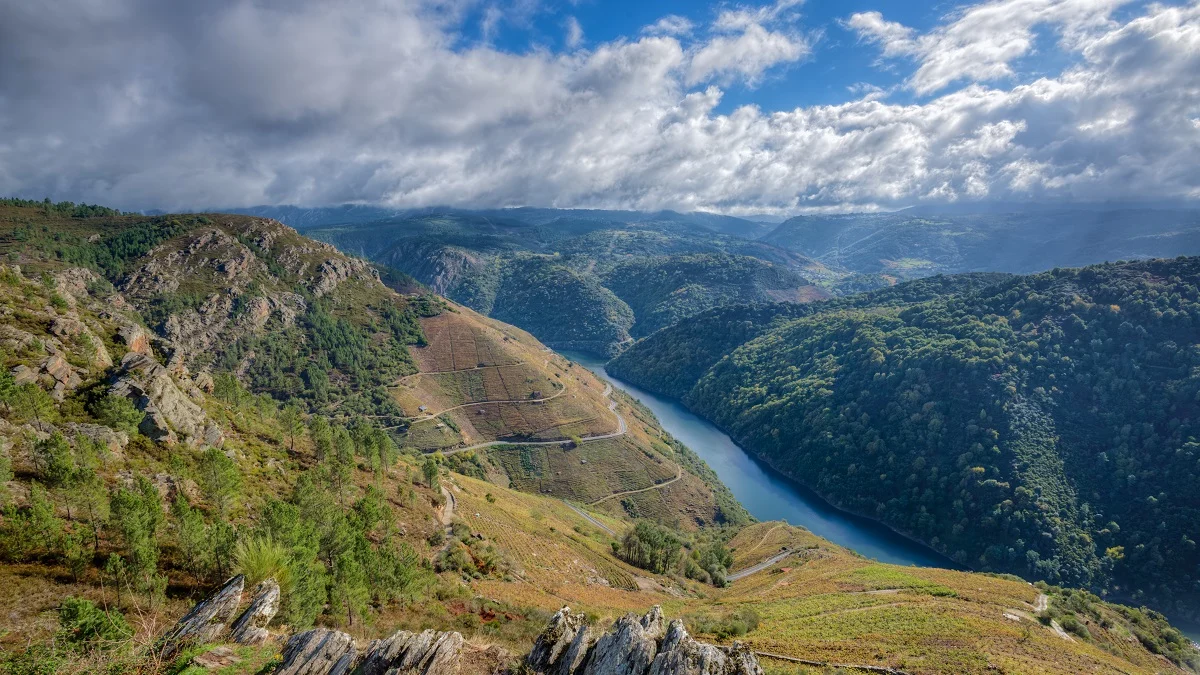
The landscapes of the Ribeira Sacra, with its canyons, terraced vineyards and ancient monasteries, add a powerful atmosphere to the story. The author manages to transport the reader to a space where time seems to stop and where the Camino is lived through introspection and connection with the land.
This approach reinforces the literary and cultural value of a region that continues to inspire artistic creations and is consolidated as a reference for Galician heritage.
Literature to rediscover the Camino
María José Tardáguila's novel is not only a fictional story, but also an invitation to rediscover the Camino de Santiago from a different perspective, more intimate and less crowded. Through its pages, the reader travels forgotten routes, relives historical episodes and immerses himself in a journey that goes beyond the final destination.
The publication also represents a relevant contribution to the literary panorama linked to the Camino, expanding the Jacobean imaginary and reinforcing the role of Galicia as an inexhaustible source of stories.

















