







Lithuania will become a meeting point for pilgrimage, heritage and religious tourism professionals on 1–2 October 2026, when the International Religious Tourism Forum (IRTF) takes place in Raseiniai and Šiluva. The two-day event will bring together international buyers, tourism organisations, pilgrimage destinations, public institutions, religious bodies, service providers and other professionals working in faith-based, cultural and heritage tourism. IRTF
The Forum has been created around a clear theme: “Faith, Heritage and Tourism.” Its goal is to strengthen international cooperation, showcase Lithuania’s potential as a pilgrimage and heritage destination and create practical opportunities for networking, business meetings and the development of future tourism products. IRTF
For media and organisations linked to the Camino de Santiago, the event is particularly interesting because it reflects a wider European trend: pilgrimage is increasingly being understood not only as a religious act, but also as a form of cultural travel capable of supporting local communities, preserving heritage and creating international networks.
Raseiniai and Šiluva at the centre of the Forum
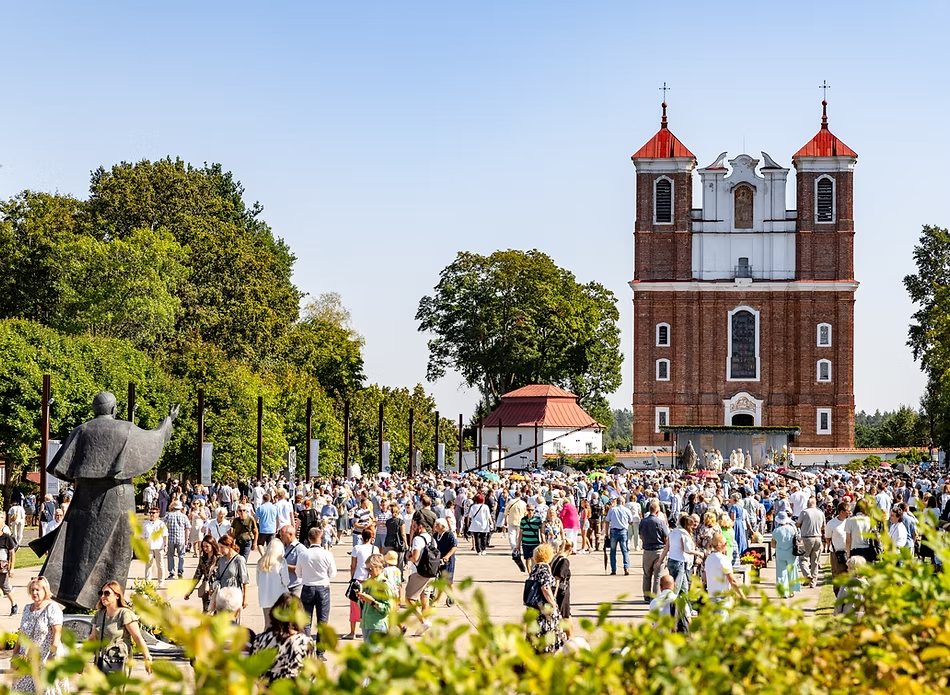
The main conference programme will take place at the Raseiniai District Culture Centre, while Šiluva and several other religious heritage sites will form part of the wider familiarisation programme. Raseiniai is located in central Lithuania, around 90 kilometres from Kaunas and approximately 190 kilometres from Vilnius. IRTF
Šiluva has an important place in Lithuanian religious life and will feature prominently throughout the programme. The Forum will also use the event to introduce international participants to pilgrimage destinations and religious heritage across the region. IRTF
A programme focused on cooperation and the future of religious tourism
The main conference opens on Thursday, 1 October with institutional welcome remarks from Arvydas Nekrošius, Mayor of Raseiniai District Municipality; Kęstutis Kėvalas, Metropolitan Archbishop of Kaunas; and Guoda Burokienė, Vice-Minister of the Economy and Innovation. IRTF
One of the opening presentations will explore Šiluva, the Way of Grace and the development of the International Religious Tourism Forum itself. The programme then moves into a broader European perspective, including the presentation of the JP2 Living Legacy Route, described as a journey linking 100 places and 100 stories. IRTF
Another session will examine global trends in the commercialisation of religious tourism, presented by Santiago Cano of REDITUR. The agenda also includes an expert presentation on what international tour operators expect from religious tourism destinations, covering practical questions such as accessibility, accommodation, guiding, storytelling, programme structure and cooperation with local partners. IRTF
That practical focus is significant. Religious tourism is increasingly competing in an international market where destinations need more than important churches or historical sites. Visitors also expect coherent routes, interpretation, services and experiences that help them understand the meaning of the places they visit.
Living heritage, pilgrimage and sustainable tourism
One of the central discussions of the Forum will be “Paths of Faith in Europe: Living Heritage, Pilgrimage and Sustainable Religious Tourism.”
The debate will focus on how religious tourism can grow while preserving living cultural and spiritual heritage, strengthening local communities and creating meaningful connections between pilgrimage centres across Europe. Participants include representatives of Lithuania Travel, the Lithuanian tourism administration, the diplomatic community and the Shrines of Europe network. IRTF
This discussion is particularly relevant to historic pilgrimage routes such as the Camino de Santiago.
Across Europe, pilgrimage routes face a similar challenge: how to attract visitors and create economic opportunities without reducing spiritual and cultural heritage to a purely commercial tourism product.
The balance between authenticity, local life and visitor growth is likely to become one of the major questions facing pilgrimage destinations over the next decade.
B2B meetings and international tourism development
The Forum is designed not only as a conference but also as a professional marketplace.
The afternoon of 1 October includes an exhibition and B2B meetings between international buyers, suppliers, exhibitors and institutional partners. Tour operators, travel agencies and tourism product developers will meet pilgrimage destinations, municipalities, tourism organisations, visitor centres, guides and accommodation providers. IRTF
That format gives the event a practical dimension: routes and destinations will have the opportunity to build partnerships capable of becoming real travel programmes in future seasons.
A journey through Lithuania’s religious heritage
On Friday, 2 October, participants will leave the conference room and experience Lithuania’s religious heritage directly.
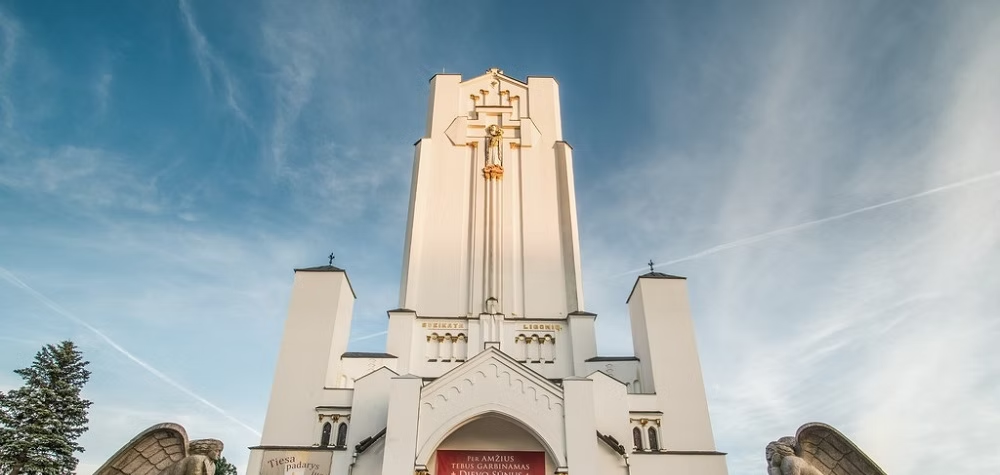
The programme includes a visit to Šiluva Shrine, the famous Hill of Crosses, Žemaičių Kalvarija and the Tytuvėnai Bernardine Monastery, where participants will have dinner followed by an evening tour. IRTF
Selected international buyers can also continue to Vilnius on Saturday for a familiarisation programme centred on Divine Mercy Vilnius. IRTF
Pilgrimage beyond borders
The International Religious Tourism Forum arrives at a moment when pilgrimage routes are gaining renewed international visibility.
The Camino de Santiago remains the world’s best-known European pilgrimage network, but similar initiatives are developing across many countries, connecting faith, landscape, heritage and local identity.
Lithuania’s Forum reflects that movement.
Its significance lies not only in promoting individual religious sites, but in encouraging destinations to cooperate, exchange experience and think of pilgrimage as part of a broader European cultural network.
For the Camino community, the message is familiar: pilgrimage has always crossed borders.
In Raseiniai and Šiluva, that tradition will now become the starting point for new conversations about how faith, heritage and tourism can walk together.