






April, May and June 2026 have left several deaths that have deeply affected the international Camino community
The Camino de Santiago is experiencing one of the strongest periods of growth in its recent history. Every week, thousands of pilgrims walk the different Jacobean routes, arriving from all over the world in search of spirituality, culture, nature, sport and human connection.
However, recent months have also been marked by several tragedies that have shaken pilgrims, hospitaleros, Camino associations and local communities along the routes.
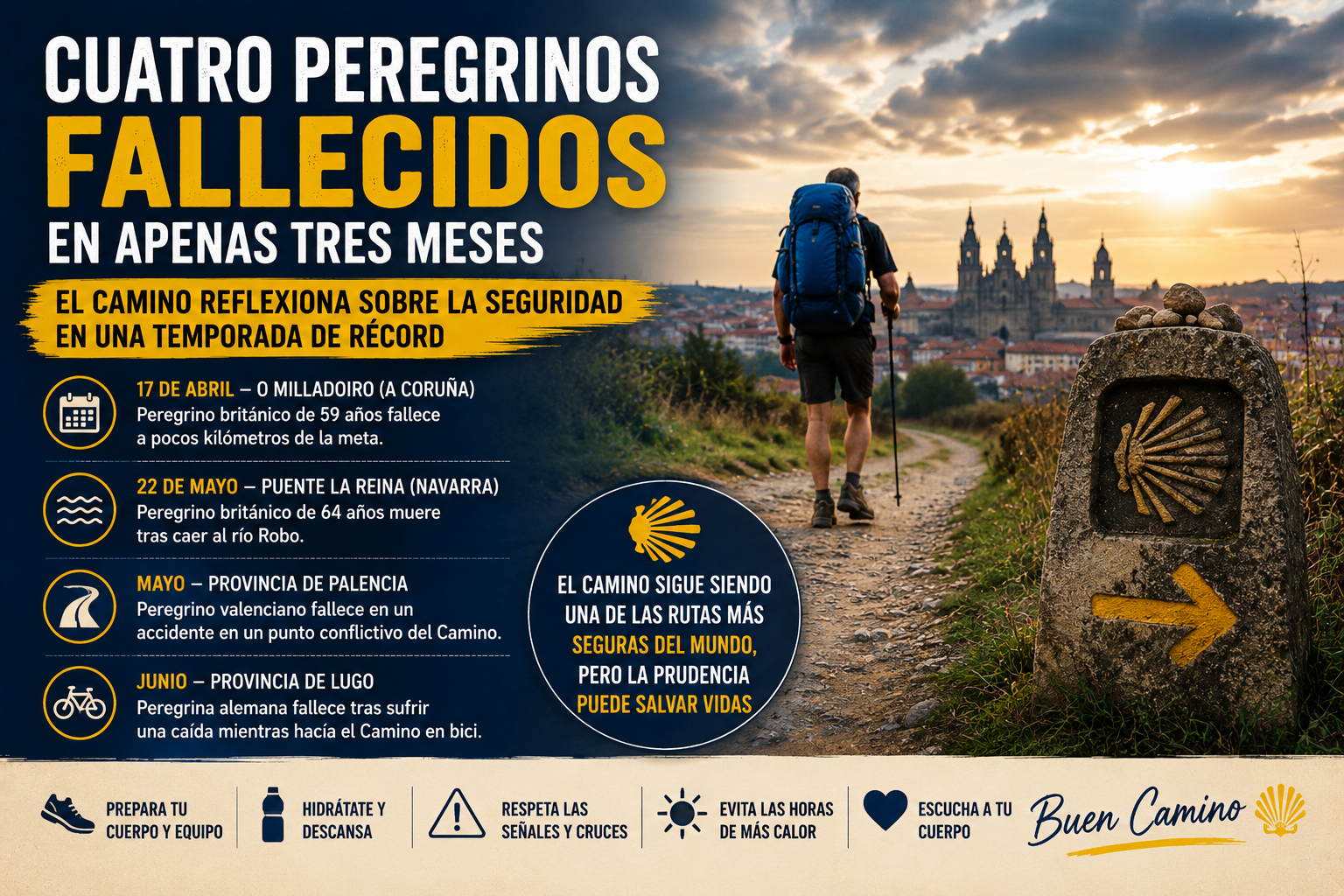
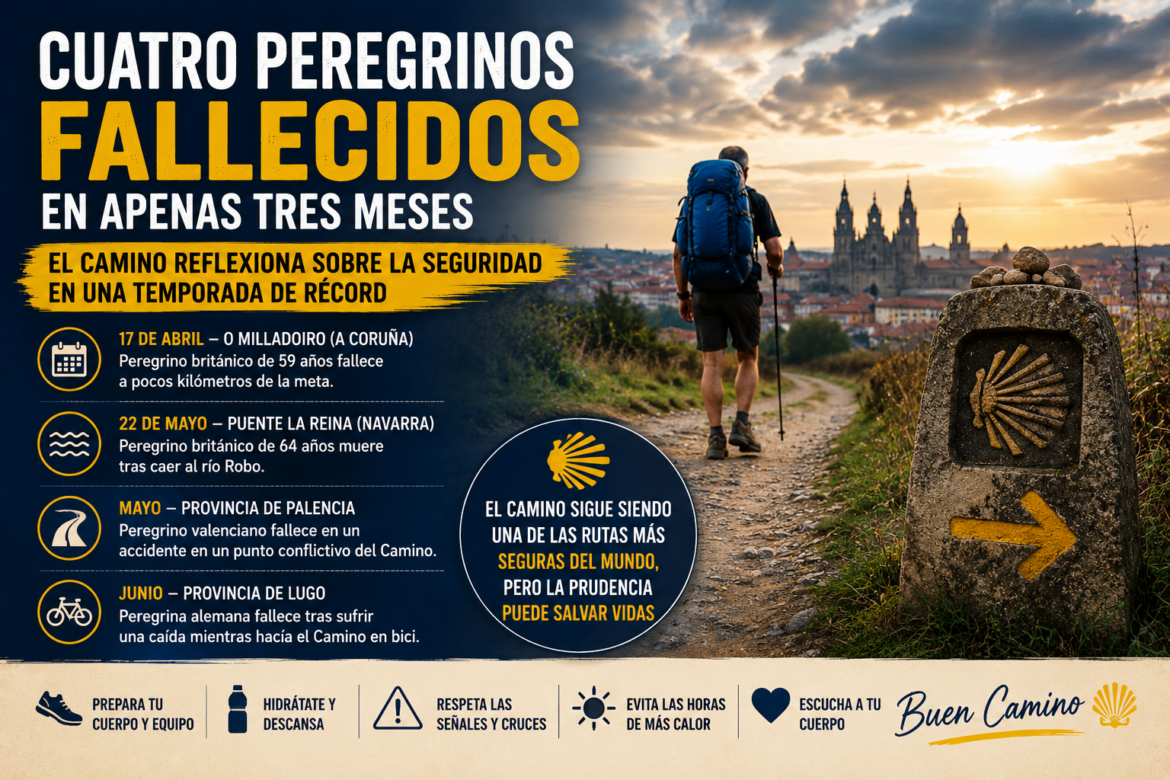
Between April and June 2026, at least four deaths of pilgrims have been publicly reported at different points of the Camino de Santiago. Four different stories, four different circumstances and one shared reminder: the Camino is generally safe, but it must always be approached with preparation, prudence and respect for one’s own limits.
A death just a few kilometres from Santiago
The first known case occurred on 17 April, when a 59-year-old British pilgrim suffered a sudden health incident in O Milladoiro, just a few kilometres from the Cathedral of Santiago.
The news had a particular emotional impact on the Camino community because the pilgrim was almost at the gates of Compostela. After hundreds of kilometres and many stages, the final destination was already within reach.
Emergency services quickly arrived at the scene, but sadly nothing could be done to save his life.
The incident was a painful reminder of something experienced Camino walkers know well: accumulated effort over days or weeks can take a toll, especially on people with previous medical conditions or risk factors that may not even be known to the pilgrims themselves.
A fatal fall in Navarra
The second death took place on 22 May near Puente la Reina-Gares, one of the most symbolic locations on the Camino Francés.
A 64-year-old British pilgrim died after falling into the Robo River. Initial reports suggested that he may have attempted to cross an improvised wooden structure over the river.
The incident sparked renewed debate about the need for extreme caution near rivers, bridges and alternative paths which may seem harmless but can present serious risks.
Experienced pilgrims often repeat the same advice: tiredness, overconfidence or the desire to gain a few extra metres can lead to decisions that should never be taken lightly.
A road accident reopens the debate on safety
The third known case occurred in the province of Palencia.
A pilgrim from Valencia died after suffering an accident at a particularly dangerous point of the Jacobean route. The tragedy prompted reactions from Camino associations and local groups, who called for a review of some crossings considered hazardous.
The coexistence of walkers, cyclists and road traffic remains one of the main challenges on certain stages of the Camino.
Although most routes have proper signage and protected areas, there are still places where pilgrims must pay maximum attention.
As many Camino veterans insist, no kilometre gained is worth taking an unnecessary risk.
The death of a German bike pilgrim shocks the Camino community
The fourth publicly reported case involved a German pilgrim who was completing the Camino de Santiago by bicycle.
The woman died after suffering a fall in the province of Lugo, an accident that caused great sadness among both bike pilgrims and walkers.
Every year, thousands of people choose to cycle the Camino. This way of travelling allows longer distances to be covered, but it also brings specific risks linked to speed, terrain, steep descents, weather conditions and the state of certain tracks.
Hospitaleros and cycling associations frequently remind bike pilgrims of the importance of adapting speed to the conditions of the route and always using appropriate protective equipment.
An increasingly international Camino
One of the most striking aspects of these incidents is the international profile of some of the victims.
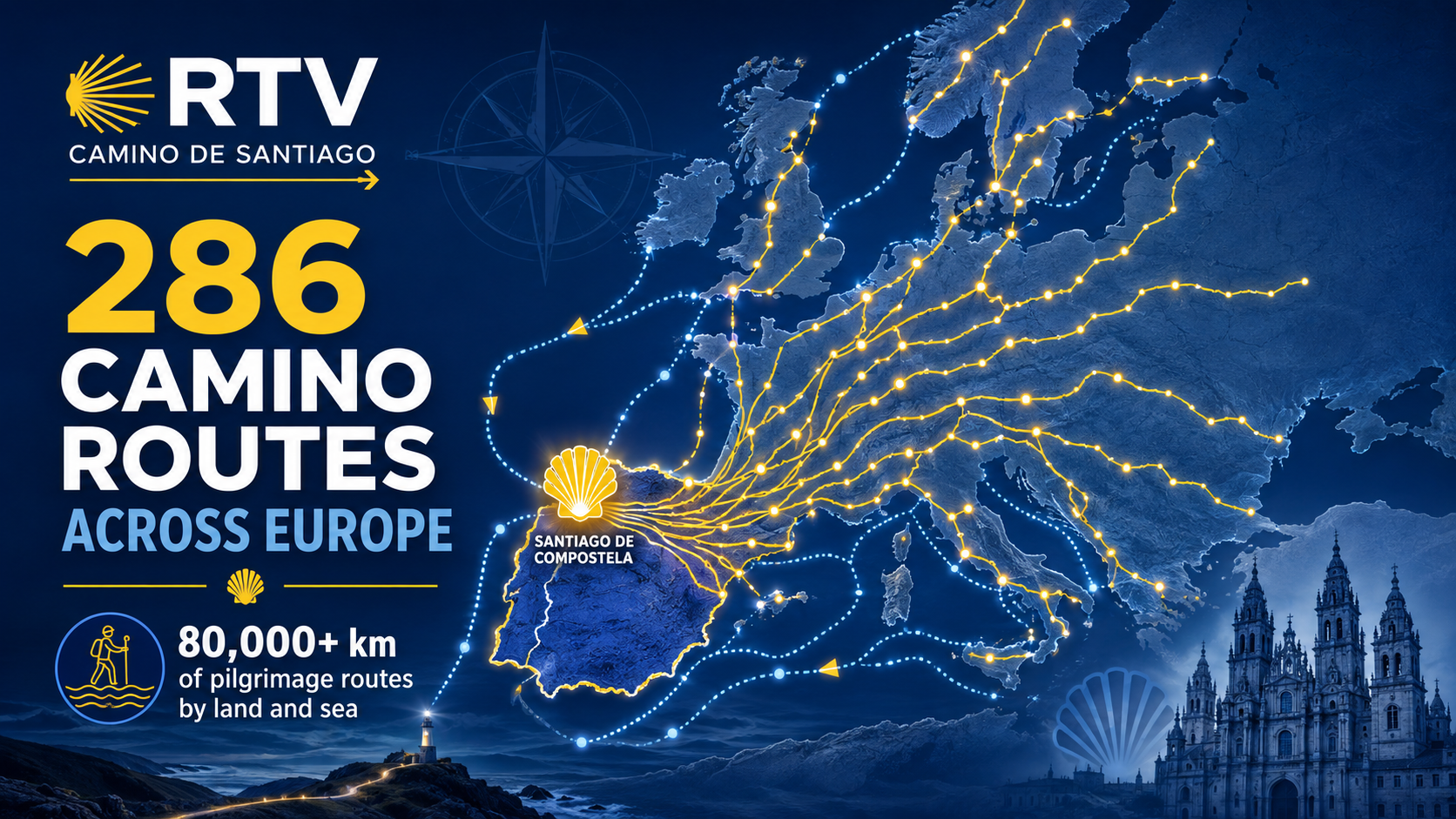
The Camino de Santiago has become a global phenomenon. It is no longer only a European pilgrimage route. Every year, pilgrims arrive from the Americas, Asia, Oceania and almost every corner of the world.
British, German, American, Korean, Australian and Brazilian pilgrims share paths and albergues with Spanish walkers, creating a multicultural community that is one of the great treasures of the Camino.
For that reason, any serious incident often has an international impact and generates messages of solidarity from many countries.
One of the safest pilgrimage routes in the world
Despite these tragic events, the overall reality remains clear: the Camino de Santiago continues to be one of the safest major pilgrimage routes in the world.
Every year, hundreds of thousands of people complete the different Jacobean routes without suffering serious incidents.
Most medical issues are related to blisters, tendinitis, exhaustion, small falls, heat stress or muscle pain caused by physical effort.
Deaths are rare when compared with the enormous number of pilgrims who walk or cycle the Camino every year.
However, every tragedy serves as a reminder that the Camino should never be approached with excessive confidence.
Basic safety recommendations
Health professionals and Camino associations agree on several key recommendations:
- Prepare physically before starting.
- Consult a doctor if you have cardiovascular disease or other relevant medical conditions.
- Stay properly hydrated.
- Avoid walking during the hottest hours of the day.
- Respect rest periods.
- Do not take unnecessary risks.
- Be especially careful on roads and crossings.
- Use suitable footwear and equipment.
- Cyclists should wear proper protection and control their speed.
- Always listen to the warning signs of your own body.
Many accidents can be avoided simply by slowing down, changing a stage or stopping when circumstances require it.
Remembering those who began their final Camino
Beyond statistics and headlines, behind each death there is a personal story.
There are families, friends, fellow pilgrims and dreams that were interrupted on the way to Santiago.
Once again, the Camino community has shown its ability to support, accompany and express solidarity in difficult moments.
Because the Camino de Santiago is not just a route. It is a great international family that shares experiences, effort, joy and also moments of grief.
As thousands of new pilgrims continue walking towards Compostela every day, the memory of those who could not complete their journey remains present in the collective heart of the Camino.
Buen Camino, but always with prudence
The best way to honour those who have lost their lives while walking or cycling the Camino is to keep promoting a safer, more responsible and more accessible pilgrimage for everyone.
Prudence does not diminish the adventure. On the contrary, it allows pilgrims to fully enjoy an experience that continues to transform lives generation after generation.
Reaching Santiago matters.
But returning home to tell the story matters even more.