The English Way has crossed a symbolic barrier before the end of the year.
More than 30,000 pilgrims have already completed the Camino Inglés in 2026, allowing the route to surpass the total recorded during the whole of 2025 while there are still more than two months left before the end of the year.
The figure confirms something that has been becoming increasingly clear over the last decade: the English Way is no longer a secondary Camino known only to a small number of pilgrims.
It has become one of the most established routes to Santiago.
And all this happens just a few months before the beginning of the Holy Year 2027.
A new record before the end of October
Data from the Pilgrim’s Office show that the Camino Inglés had already registered just over 30,200 pilgrims by mid-October.
That figure is already slightly higher than the approximately 30,200 pilgrims recorded during the whole of 2025.
The difference may seem small, but the important point is when it has happened.
The 2026 record has arrived before the end of October.
There are still November and December ahead, which traditionally attract fewer pilgrims but will continue to add arrivals to the final annual figure.
This means that the English Way is heading towards its best year on record.
From 9,000 pilgrims to more than 30,000
The transformation has been remarkable.
Around 2015, the route registered just over 9,000 pilgrims.
A little more than a decade later, that number has more than tripled.
The increase has been sustained almost every year, interrupted mainly by the restrictions of the pandemic.
Today, the Camino Inglés accounts for around 5.6% of all pilgrims registered in Santiago.
It remains far behind the French Way and the two main Portuguese routes, but it has consolidated its position ahead of other historic Caminos such as the Primitive Way or the Northern Way.
For a relatively short route, this is significant.
Ferrol remains the great gateway
The modern English Way has two historic starting points: Ferrol and A Coruña.
Ferrol is overwhelmingly the main one.
In 2026, more than 29,000 pilgrims have been registered as starting their journey there.
This is one of the reasons why the city has become increasingly important within the Camino map.
From Ferrol, pilgrims travel through places such as Neda, Pontedeume, Miño, Betanzos, Hospital de Bruma, Sigüeiro and finally Santiago de Compostela.
The route combines estuaries, historic towns, rural Galicia and some demanding inland sections.
Its length also makes it particularly attractive to pilgrims who have limited time but still want to experience several consecutive days of walking before reaching Santiago.
Why is the English Way growing?
There is no single explanation.
One factor is its manageable distance.
Many pilgrims cannot spend four or five weeks on the Camino Francés or several weeks on the Northern Way.
The English Way offers a complete pilgrimage experience in a much shorter period.
Another factor is accessibility.
Ferrol and A Coruña are well connected with the rest of Spain, and international pilgrims increasingly arrive through airports and transport connections in Galicia.
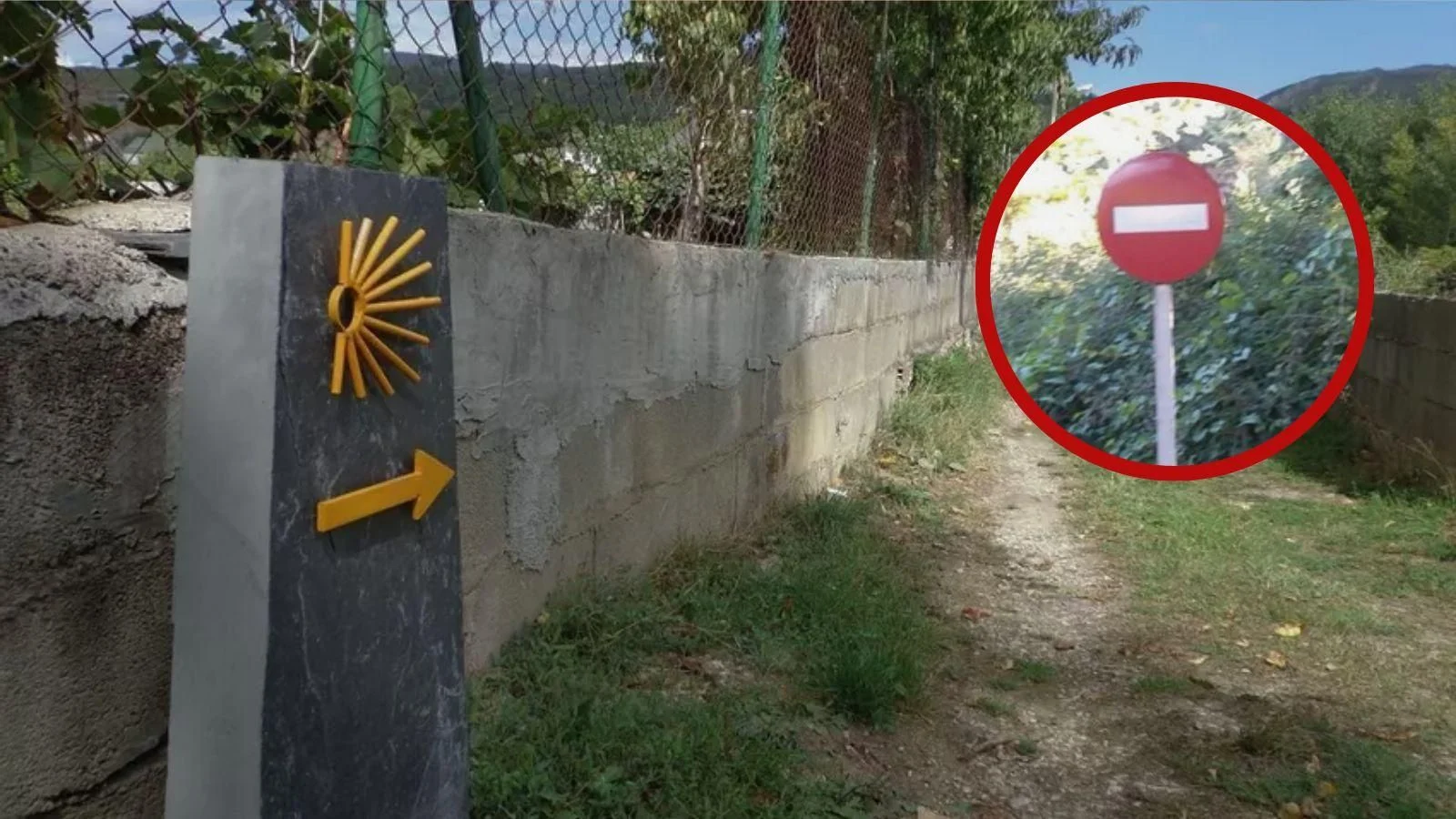
There has also been a clear improvement in infrastructure, signage, accommodation and services along the route.
Municipalities crossed by the Camino Inglés have invested in making the itinerary easier to follow and more comfortable for those walking it.
And then there is the most powerful factor of all: word of mouth.
Pilgrims who complete a quieter route often recommend it to others.
An increasingly international Camino
The name “English Way” is not a modern marketing invention.
Its history is linked to medieval pilgrims arriving by sea from northern Europe, particularly from the British Isles, before continuing on foot to Santiago.
Ports in Galicia became entry points for pilgrims from England, Ireland and other parts of northern Europe.
Today, the route once again has strong international potential.
For British and Irish pilgrims in particular, the history of the Camino Inglés creates an immediate connection with their own medieval pilgrimage traditions.
That historical identity is an advantage at a time when many travellers are searching for routes with a distinctive story rather than simply choosing the most popular Camino.
The challenge of Xacobeo 2027
The next major test will arrive very soon.
The Holy Door of Santiago Cathedral will open on 31 December 2026, beginning the Holy Year 2027.
There is no official forecast for the number of pilgrims expected next year.
But if the growth seen during 2026 continues, the English Way will almost certainly face greater pressure on accommodation, services and infrastructure.
This is where the route will have to find its balance.
Growth brings opportunities for towns, hostels, restaurants and local businesses.
But excessive concentration can also change the experience that made a quieter Camino attractive in the first place.
A route that is no longer “the alternative”
For years, the English Way was often presented as a lesser-known alternative to the major routes.
That description is becoming increasingly difficult to maintain.
More than 30,000 pilgrims in a single year is no longer a marginal figure.
It places the route firmly among the main Caminos to Santiago.
The challenge now is not simply to attract more pilgrims.
It is to manage that growth without losing the identity, tranquillity and historical character that helped the English Way become so attractive in the first place.
And with Xacobeo 2027 just around the corner, that challenge begins now.