

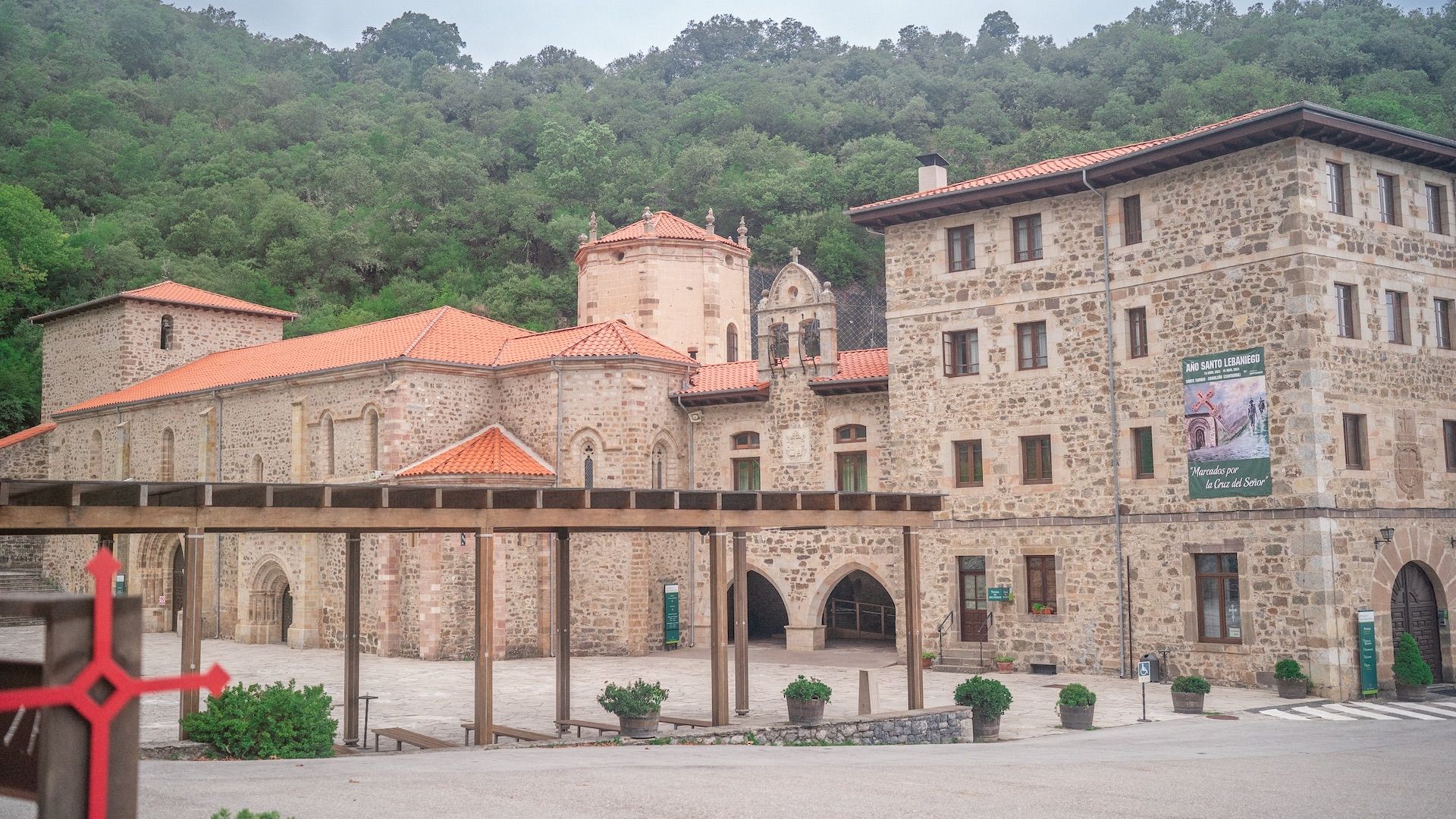
Camino Lebaniego will host the Universal Jubilee of Tourism in 2025. This fact consolidates the monastery as a "spiritual reference"
During the entire Middle Ages, only four jubilee years were declared. in perpetuum by papal bull: the Jacobean of Santiago de Compostela, those of Rome and Jerusalem, and the Lebaniego Holy Year. Cantabria is, in fact, the only region in the world through which there are two jubilee pilgrimage routes, both declared World Heritage by UNESCO, each with its corresponding holy year: the Camino de la Costa, towards Santiago, and the Camino Lebaniego itself, ending in Santo Toribio de Liébana.
Since medieval times, there has been a constant influx of faithful to venerate the remains of Saint Toribio de Astorga, to whom healing and miraculous properties were attributed, and especially to worship the Lignum Crucis, the largest fragment of the cross of Christ preserved today.
Scientific analyzes have determined that the wood of the relic belongs to a specific botanical species from the Jerusalem area that is more than 2,000 years old. Protected from the Holy Land by Saint Toribio himself, custodian of the relics of Christ, the piece of the cross arrived in Astorga with the permission of the Pope of his time. Later, it was taken to Liébana by Christians to protect it during the Muslim invasion.
A long history
The Monastery of Santo Toribio de Liébana has a long history, whose origin dates back to the 7th century, remaining in activity to this day. Its main peak occurred in the 8th century, when its abbot, Beato de Liébana, marked a milestone in the history of Christianity. «Blessed makes Santiago the Apostle the patron saint of Hispania, composing the hymn O Dei Verbum, where he is proclaimed “the shining head of Spain”, beginning the cult of Santiago,” explains the director of the Camino Lebaniego Foundation, Pilar G. Bahamonde. His masterpiece, the Commentary on the Apocalypse of Saint John, it was quite a best-seller medieval that gives rise to a unique literary genre, known for the codices called "beatos", in which he introduced explanatory images to the text. In the blessed ones there is also the first image of the apostle Santiago in the history of iconography. Included by UNESCO in World Memory, the illuminations of the blessed are internationally recognized. The Lebaniego abbot's knowledge of the Holy Scriptures and his defense of Christology against the adoptionism of Elipand of Toledo had a decisive influence throughout Europe, also earning him a great friendship with Alcuin of York, first advisor to the Emperor Charlemagne.
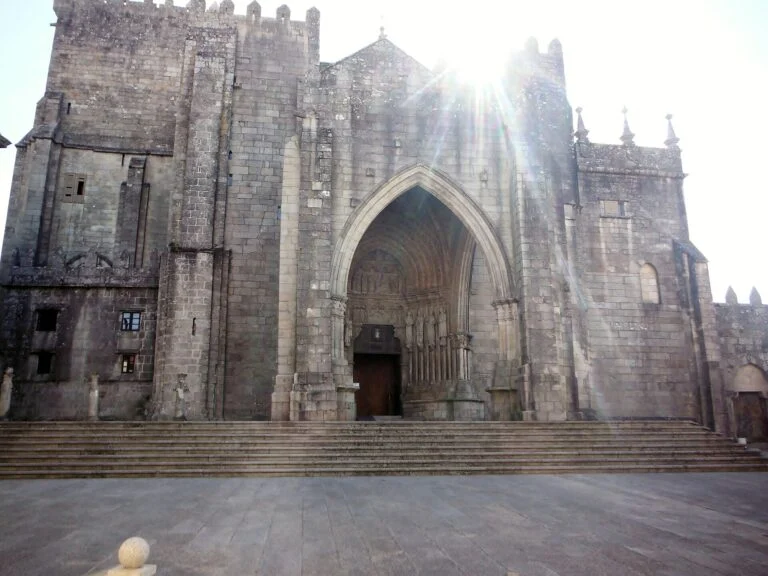
The monastery church, built in 1256 following the monastic Gothic style of Cistercian influence, houses the Door of Forgiveness, which opens every Holy Jubilee Year after three hammer blows by the bishop of the diocese. Once inside the temple, you access the 18th century baroque chapel which is presided over by the Lignum Crucis. In the temple you can also admire the recumbent statue of Saint Toribio de Astorga. Currently, the monastery houses a Franciscan community that guards the relics.
In addition to the monastery, the surroundings of Liébana are home to numerous hermitages of great spirituality and historical value; and a rich cultural heritage that includes historical sites, archaeological sites and religious architecture, such as Santa María de Lebeña (10th century) or Santa María de Piasca (12th century).
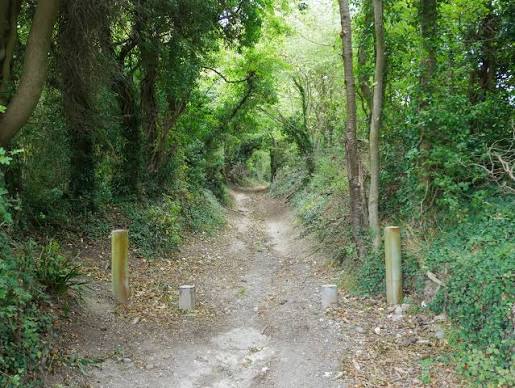
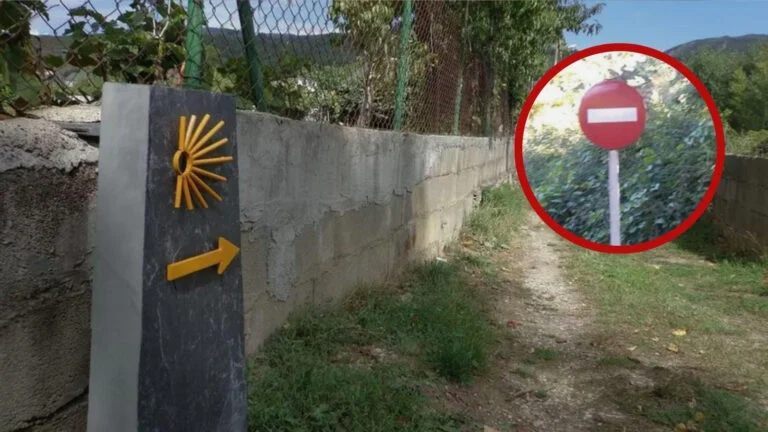
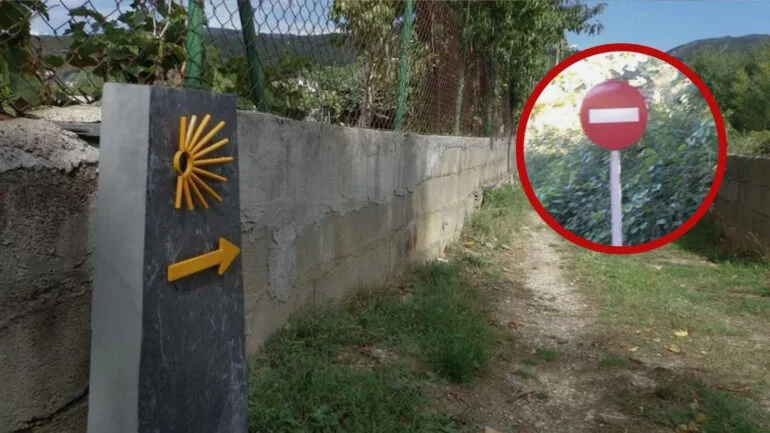
The Camino Lebaniego, which leads to the monastery, is, in its main route, 72 kilometers from San Vicente de la Barquera. Its travelers are called today as "crucenos" or "pilgrims of the cross." The route offers a unique pilgrimage that begins on the shores of the Cantabrian Sea and ascends to the heart of the Picos de Europa, constituting a biodiversity corridor considered "of high value" by the EU. In addition to the main route, there are other Caminos Lebaniegos, such as the Castilian, the Leonese, the Asturian and the Vadinian, which historically connected the monastery with the regions that give their name to the variants, linking it with the Camino de Santiago itself. "The Lebaniego Way acts, in this way, as a historical walkway between the Coastal Way and the French Way to Santiago," says the director, "and the pilgrim here becomes a mountaineer facing the majesty of the Picos de Europa."
It is not difficult to imagine, therefore, that apart from constituting a unique spiritual and cultural experience, it is also an engine of economic and social development in the area. The network of lodges that line the route favors numerous areas at risk of rural depopulation, where small producers in the primary sector play a crucial role in the conservation of biodiversity. Religious tourism, according to the UN World Tourism Organization, moves around 330 million people a year, which represents an important market for destinations with outstanding spiritual value, such as Santo Toribio. According to Bahamonde, “the profile of the Lebaniego Camino pilgrim is that of an increasingly younger, more international person with a high presence of women; motivated mainly by religious, spiritual or cultural reasons.
Conservation and promotion
The Camino Lebaniego Foundation has been working since its creation in 2019 on the conservation, rehabilitation and promotion of the pilgrimage routes to Santo Toribio de Liébana and the Camino de Santiago as it passes through Cantabria. Its areas of action include the improvement of infrastructure and tourism promotion, the preservation and dissemination of the cultural heritage and identity of the territory, the improvement of ecosystems, the promotion of social projects and research.
A recent milestone that underlines the relevance of Santo Toribio de Liébana is its election as the venue for the Universal Jubilee of Tourism. This event will consolidate the monastery as a place of "first-level spiritual and cultural reference" and will attract numerous pilgrims and visitors from all over the world.