




The Backpack our faithful companion: Preparing and carrying your backpack correctly is essential to enjoy the Camino de Santiago and avoid injuries. Here are some key tips:
1. Choose the Right Backpack
- Size:
- For most pilgrims, a 35-45 liter backpack is sufficient. If you travel very light, you could use a 30 liter.
- Avoid backpacks that are too large, as you will tend to fill them with unnecessary things.
- Characteristics:
- Internal frame: Helps distribute weight evenly.
- Padded and adjustable belt: Shift most of the weight to your hips, not your shoulders.
- Padded and adjustable straps: They should be comfortable and allow you to adjust the position of the backpack.
- Lumbar padding: Protects the lower back area.
- Pockets and compartments: They facilitate organization.
- Light: The empty backpack should not weigh too much.
2. Maximum Weight
- 10% rule: The weight of the backpack should not exceed 10% of your body weight. For example, if you weigh 70 kg, your backpack should not weigh more than 7 kg.
- Minimize weight: The less weight you carry, the better.
3. How to Organize the Backpack
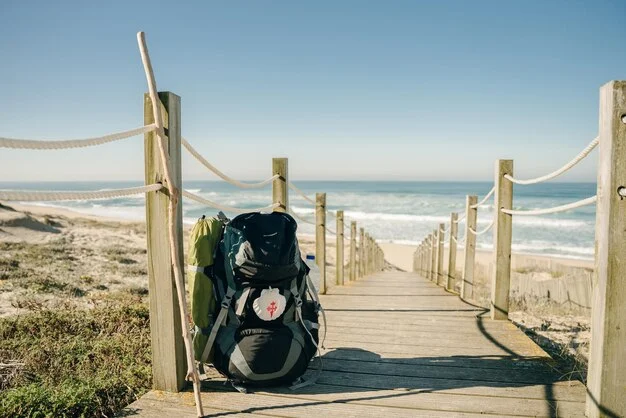
- Balance: Distribute weight evenly to avoid imbalances. The backpack must be able to stand up on its own.
- Center weight: Place your heaviest items (such as your toiletry bag and extra layers of clothing) in the center of the backpack and close to your back.
- Objects that are not used frequently: Put less used items, such as your sleeping bag and sleep clothes, at the bottom.
- Easy access objects: Store the items you'll need during the day (like your rain jacket, hat, food, water bottle, and first aid kit) in the top or side pockets.
4. What to Bring (Only the Essentials)
- Clothes:
- Small quantity (2-3 changes): Breathable t-shirts, hiking pants (long and short/removable), underwear, socks (special for hiking, seamless).
- Cover: A jacket or fleece.
- Waterproof: A raincoat or poncho.
- Footwear: Hiking boots that you have already worn and some light sandals.
- Sleeping bag: Light and compact (depending on the time of year).
- Hygiene items:
- Small size: Multi-purpose soap/shampoo, toothbrush, toothpaste, deodorant.
- Microfiber towel: Dries quickly and takes up little space.
- Basic first aid kit:
- Band-aids, gauze, disinfectant, pain relievers, Vaseline (to prevent chafing), small scissors, needle and thread (for blisters).
- Documents and money:
- Pilgrim's Credential, DNI/Passport, some cash.
- Others:
- Mobile phone and charger, flashlight, earplugs, sunscreen, cap/hat.
5. What NOT TO BRING
- Heavy and unnecessary things: Bulky books, heavy electronic devices.
- Excess clothing.
- Unnecessary hygiene products.
- Tent, stove, kitchen utensils (unless strictly necessary).
Additional Tips
- Adjustment: Adjust the straps and belt well to distribute the weight correctly.
- Breaks: Take regular breaks during your walk to rest your back and shoulders.
- Training: If possible, take training walks with your backpack before starting the Camino.
- Constant review: Check the contents of your backpack regularly and remove anything you are not using.
By following these tips, you will make your experience on the Camino de Santiago much more comfortable and pleasant. Good Way!

















