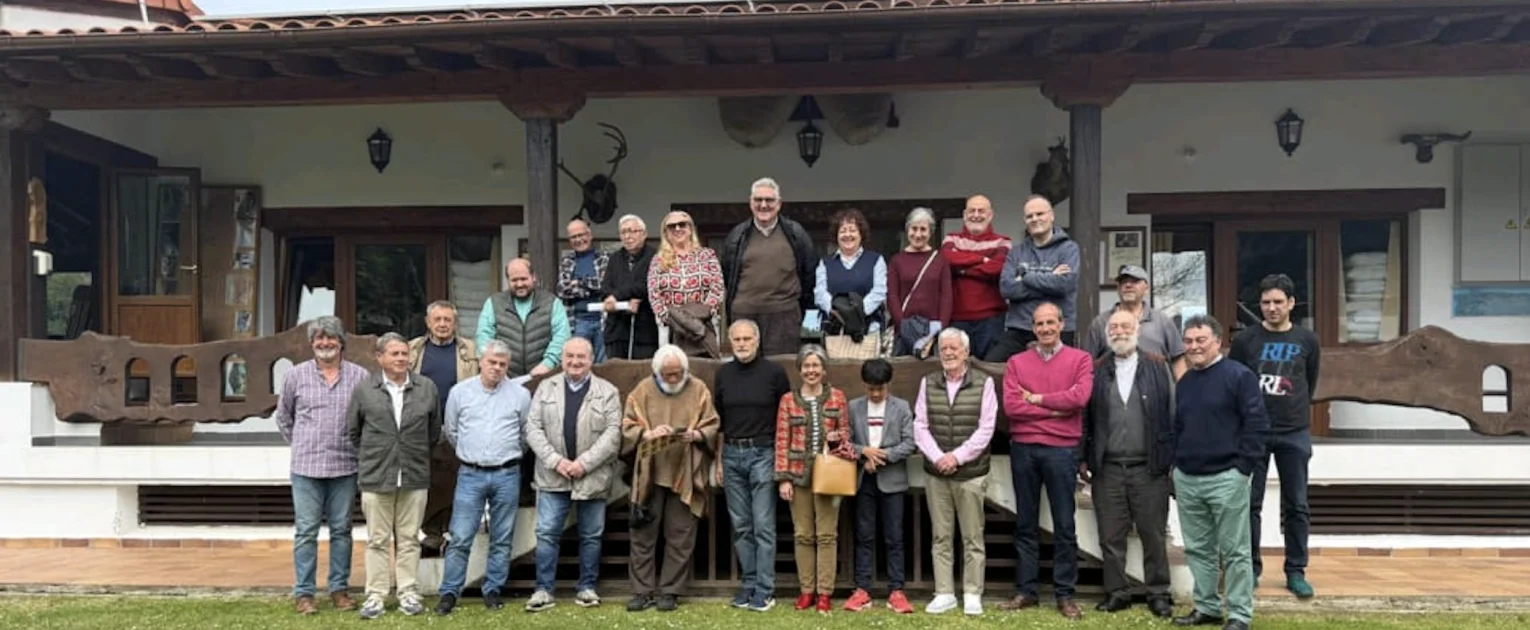
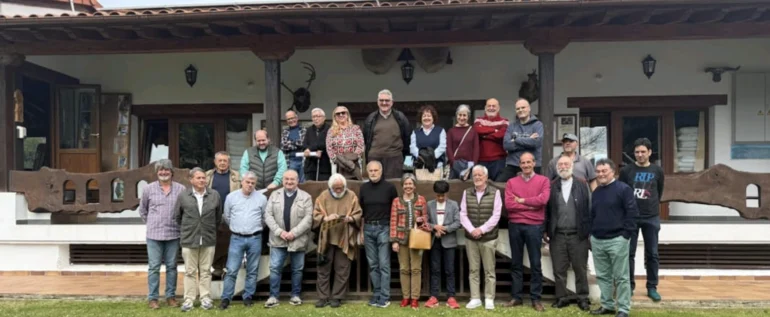
Dwhere we are and where we should go: With great expectations and a deep sense of unity, an extraordinary assembly was held yesterday, Saturday, April 5, in Güemes that brought together various associations of friends of the Caminos to Santiago from the Basque Country, Cantabria, Asturias and Galicia. In this key meeting, the candidacy presented by Valeriano Teja Oruña received unanimous support, a reflection of the trust and consensus among those present, achieving the approval of all attendees, with only one abstention and no vote against.
Before the vote, Valeriano Teja proposed a “consensus candidacy,” a project that sought the integration and collaboration of the four communities involved. This proposal contemplated a structure in which the vice presidencies would fall to representatives of each community, thus following what was established in the group's statutes.
In this way, the new board of directors was made up of:
- Valeriano Teja Oruña (Cantabria) as president.
- Jose Ignacio Galzacorta Arana (Basque Country), Bernardo Lucas Pérez Peña (Cantabria), Alejandro María Gaspar Guerrero (Asturias) and José Luis Fernández Ansedes (Galicia) as vice presidents.
- José María Balsa Vidal (Cantabria) as secretary.
- Gontzal Iñarra Rodriguez (Guipúzcoa) as treasurer.
Ernesto Bustio, an emblematic figure of the group and its honorary president, assumed the role of president of the electoral board, making official the proclamation of the candidacy led by Valeriano Teja. After this moment of great significance, the outgoing president said goodbye to those present, offering some words full of emotion and recognition for the seventeen years dedicated to this work and for the effort and work that marked his management.
The newly elected president, Valeriano Teja, took the floor to outline the main lines of action that will guide the new board of directors. As an initial gesture, he highlighted the importance of recognizing the work done by his predecessor and announced his intention to propose the granting of the highest award of the Los Caminos del Norte Group to the outgoing president.
Subsequently, he raised the need to undertake a process of reflection and analysis on the present and future of the Camino, inviting a strategic pause to evaluate the path traveled, clearly define where the Camino is currently and establish a roadmap that guides the direction to follow. A fundamental aspect of this reflection will be the study of the characteristics and needs of "modern-day pilgrims", as well as carrying out an exhaustive SWOT analysis to understand in depth the reality of the Caminos, especially the Caminos del Norte.
In his speech, he stressed the importance of planning effective actions to vindicate the value of the Northern Roads and promote initiatives that increase the visibility of these routes, with a special focus on those near the Cantabrian Sea. He proposed taking advantage of the framework of the 10th anniversary of the declaration of these Paths as a World Heritage Site to promote joint actions, increasingly global and less limited to local interests, seeking that the benefits reach the group as a whole.
To achieve these objectives, Valeriano Teja advocated putting aside individualism and cultivating a spirit of collaboration that allows sharing power and responsibility. He proposed the creation of working groups with specific goals and the implementation of mechanisms that improve efficiency and effectiveness in serving pilgrims. Likewise, he emphasized the need to preserve and strengthen the HOSPITALITY, a distinctive feature of the Camino de Santiago that differentiates it from any other type of route or itinerary.