



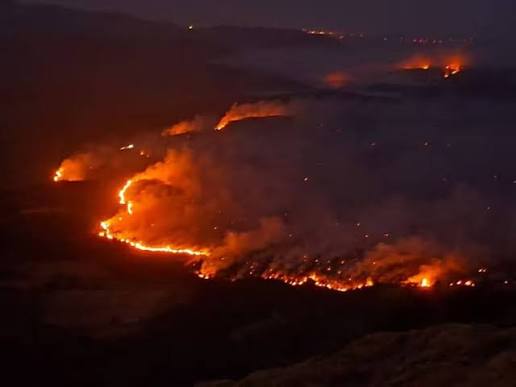
Pilgrims who are traveling or plan to start the CAragonese amino They must take extreme precautions in the face of the serious forest fire in Peñas de Riglos, in Huesca. The fire continues to be active this Thursday, August 13, with a complicated evolution, thousands of hectares burned, localities evacuated or confined and several roads cut off in an area directly related to the Jacobean itinerary.
The situation is especially important for walkers because Santa Cilia de Jaca, a town crossed by the Aragonese Way after Pony, is among the confined populations as a consequence of the evolution of the fire.
We are not, therefore, facing a fire far from the pilgrim's route. The emergency measures affect the environment through which this historic entrance route to the French Way runs.
Faced with a situation that can change quickly due to wind, temperatures and the evolution of the different fronts, the recommendation for pilgrims is clear: Do not start an affected stage without first checking the updated instructions from the authorities and emergency services.
Santa Cilia, in the middle of the Aragonese Way, confined
The Aragonese Way descends from Somport and passes through towns such as Canfranc, Villanúa, Castiello de Jaca and Jaca before continuing towards Santa Cilia, Puente la Reina de Jaca and Arrés, subsequently continuing towards Artieda, Ruesta and Undués de Lerda before entering Navarra. This journey is also documented by the Aragonese institutions themselves.
Precisely Santa Cilia de Jaca and Puente la Reina are among the towns whose confinement has been ordered before the evolution of fire.
Furthermore, during the last few hours there have been new evacuations in Santa Cruz de la Serós and Binacua, while the extinguishing services continue working on a fire that is putting the entire area under enormous pressure.
For a pilgrim who is currently in Jaca or plans to continue towards Santa Cilia and Arrés, these circumstances force us to reconsider any ordinary planning of the stage.
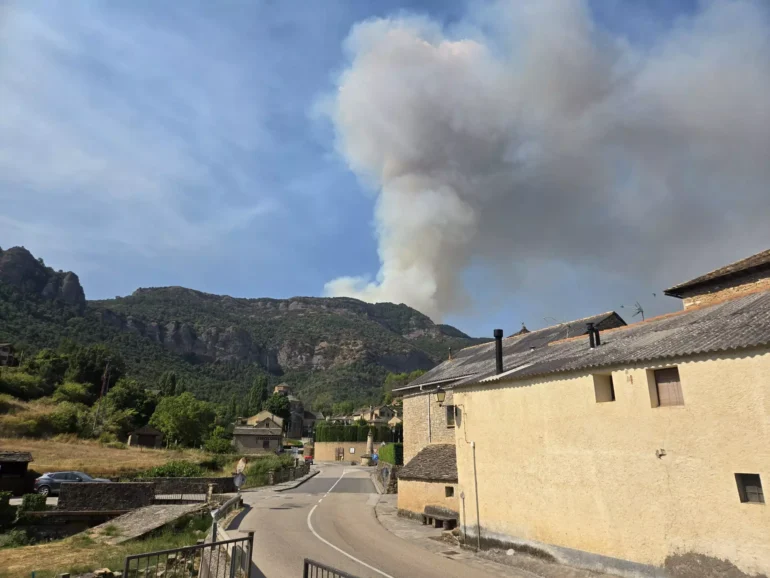
A fire of about 6,000 hectares
The magnitude of the fire explains the measures taken.
The latest information available this Thursday places around 6,000 hectares burned area, with a perimeter that reaches approximately 58 kilometers.
Nearly 1,000 people They have been affected by evacuations and confinements and more than 500 ground troops and around 30 aerial means are working on extinction efforts.
The high temperatures and wind are making work difficult. One of the most worrying fronts is in the direction of the protected space of San Juan de la Pena, an enclave of extraordinary historical and heritage importance also closely related to the Aragonese pilgrimage routes.
Roads closed in the area
The emergency is also having important consequences for mobility.
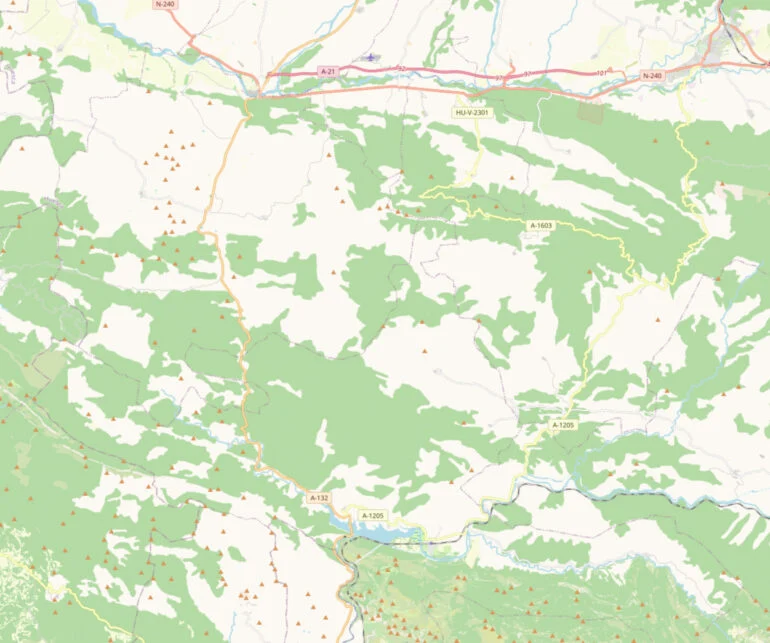
According to the information available this Thursday, different parts of the roads remain affected by road closures:
N-240
A-132
A-1205
The outages can be modified as the fire evolves and emergency teams work.
This affects not only pilgrims who walk, but also support services, transportation, taxis, companions and anyone who intends to access certain points of the route by road.
Is the Camino Aragonés closed?
Here it is important to be very precise.
It should not be interpreted that the entire Aragonese Way is officially closed.
What is confirmed is that there is a serious emergency that directly affects towns and roads located in the corridor through which the Jacobean route runs.
Therefore, a pilgrim should not rely solely on a trail appearing open on an app or map.
A passable track may lead into a subsequently restricted area, a road may be closed during the stage and the priorities of the emergency services may change in a matter of minutes.
Under these circumstances, The instructions of Civil Protection, Civil Guard, emergency services and local authorities prevail over any planning of the Camino.
Shelters may also be affected
The situation can also have an impact on the host network.
When a population is confined, a road remains closed or evacuations occur in nearby municipalities, the normal operation of shelters and other accommodation may be altered.
That is why we recommend to pilgrims Contact your accommodation directly before setting off, even if they have a reservation.
It should not be assumed that a shelter will be operating normally just because it appears open on an application or website.
What a pilgrim who is in the area should do
The absolute priority is Do not approach the fire or try to cross a restricted area to continue a stage.
Those who are in Jaca or nearby towns should check the situation before setting off and always follow the instructions they receive from the authorities.
It is also advisable to inform the next accommodation of any planning changes and assume that they may be necessary temporarily interrupt the Camino, modify a stage or use transportation to avoid an affected area, as long as the authorities allow the movement.
Missing a stage or changing the route can be frustrating.
Entering an area where firefighters, Civil Guard, EMU and other emergency services work can be dangerous both for the pilgrim and for those who are trying to control the fire.
A situation that can change during the day
This is probably the most important aspect of this information.
What is valid first thing in the morning may have changed a few hours later.
Forest fires evolve depending on the wind, temperature, humidity and the behavior of the different fronts. An open road may be closed and a locality may receive new lockdown or evacuation instructions.
For this reason, Camino de Santiago RTV recommends to any pilgrim who is currently traveling the Aragonese Way Check official information immediately before starting your stage.
It is not enough to check the situation the night before.
The Camino can wait
The Aragonese Way crosses one of the most spectacular landscapes and steeped in history of the Spanish Jacobean routes.
Precisely for this reason there will be time to go through it again.
In the event of a fire of this magnitude, the priority must be to facilitate the work of the emergency services, protect the population and avoid any unnecessary risk.
A stage can be recovered.
The safety of the pilgrim, the neighbors and those who are fighting the fire is above any Camino.

















