

The Civil Guard warns of a new risk on the Camino
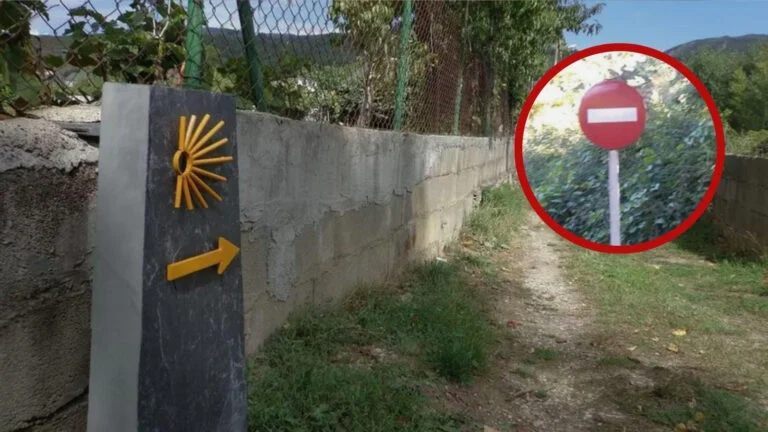
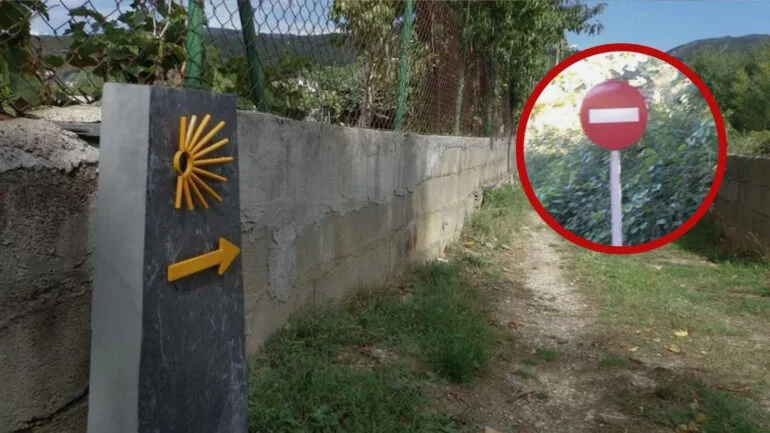
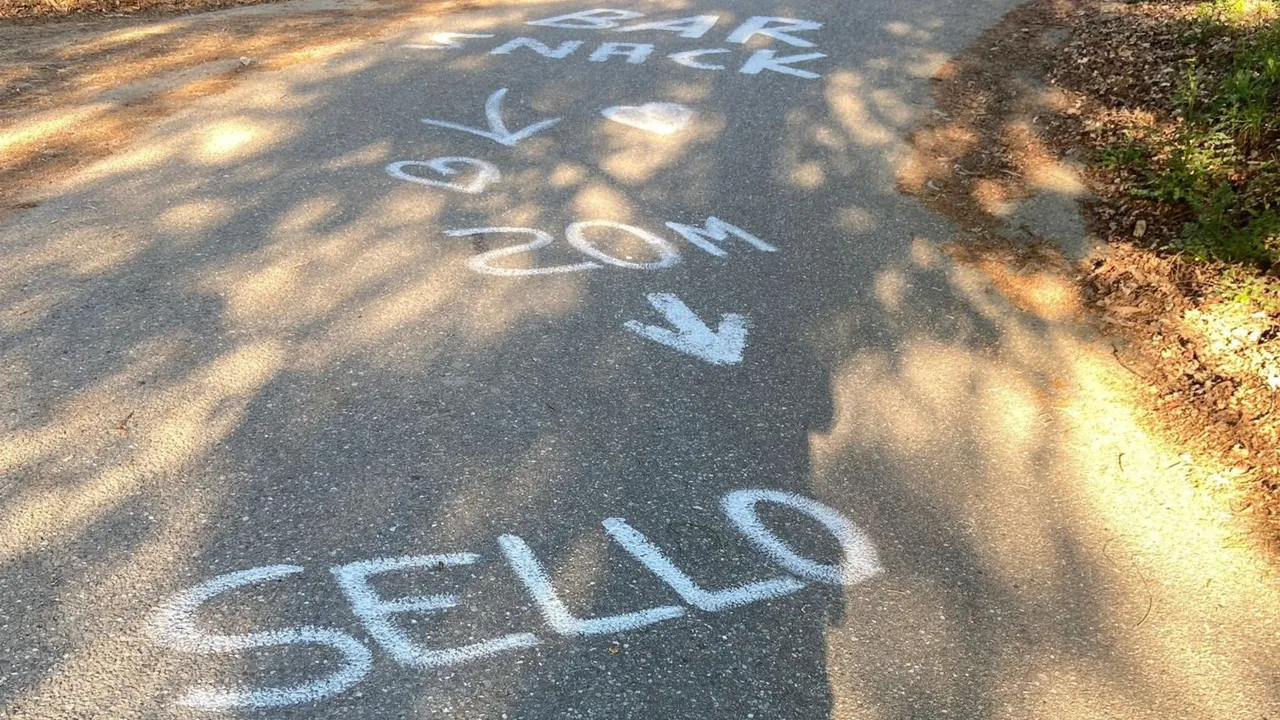
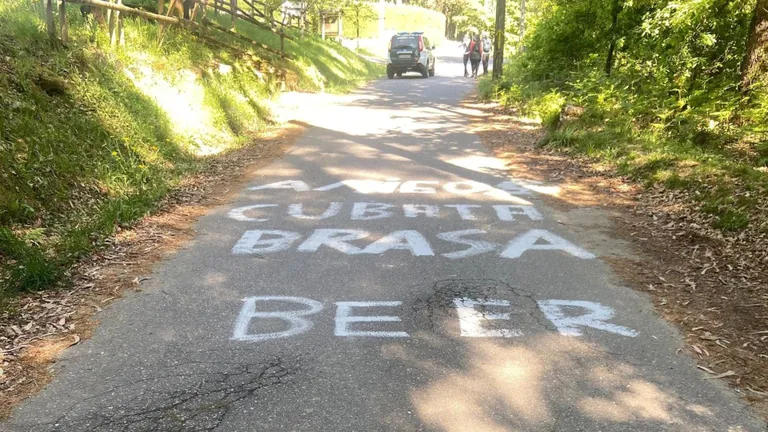
The Camino de Santiago once again faces an unexpected problem. The Civil Guard has warned of the appearance of misleading graffiti along the Portuguese Way, as it passes through Tui.
These false signs not only generate confusion among pilgrims, but can divert them from the official route, altering their experience and putting their orientation in one of the busiest areas of the Camino at risk.
As the agents have detected, some of these graffiti included messages that invited pilgrims to deviate towards a supposed establishment with striking promises.
Messages that seek to divert pilgrims
The problem is not just the existence of false signals, but their intent. The graffiti detected not only imitate traditional yellow arrows, but also incorporate messages that seek to attract walkers with non-existent offers or services.
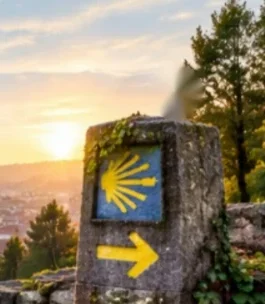
This type of practice breaks one of the fundamental bases of the Camino: trust in its signage. For years, yellow arrows have been the symbol that guides millions of pilgrims without the need for complex maps.
When that reference is altered, the impact is immediate.
Confusion on one of the busiest stretches
He Portuguese Way It is one of the routes with the greatest growth in recent years. Thousands of pilgrims choose it for its accessibility and for starting, in many cases, from Portugal.
The Tui area is especially important, as it marks one of the key entry points to Galicia. Any alteration in signage in this section has a direct effect on a large number of walkers.
Some pilgrims have already expressed their surprise at these confusing indications, which can cause them to waste time or take unnecessary detours.
A problem that affects the essence of the Camino
Beyond the specific incident, what happened raises a fundamental issue: the protection of the official signage of the Camino de Santiago.
The yellow arrow system is not just a practical tool. It is part of the identity of the Camino. Altering it, even for seemingly minor purposes, represents damage to the pilgrim's overall experience.
Recommendations for pilgrims
In this situation, the authorities recommend following only official signage and being wary of indications that do not fit with the usual route.
It is also advisable to use reliable applications or guides as support, especially in sections where doubts may arise.
Prudence, in this case, becomes another tool of the pilgrim.
A warning that should not go unnoticed
The Camino de Santiago continues to be one of the safest and best marked routes in the world. However, situations like this show that it is not without problems.
Maintaining the integrity of the route is key to preserving its essence. And avoiding these types of practices is everyone's responsibility.
Because on the Camino, getting lost can be part of the journey... but it should not be provoked.