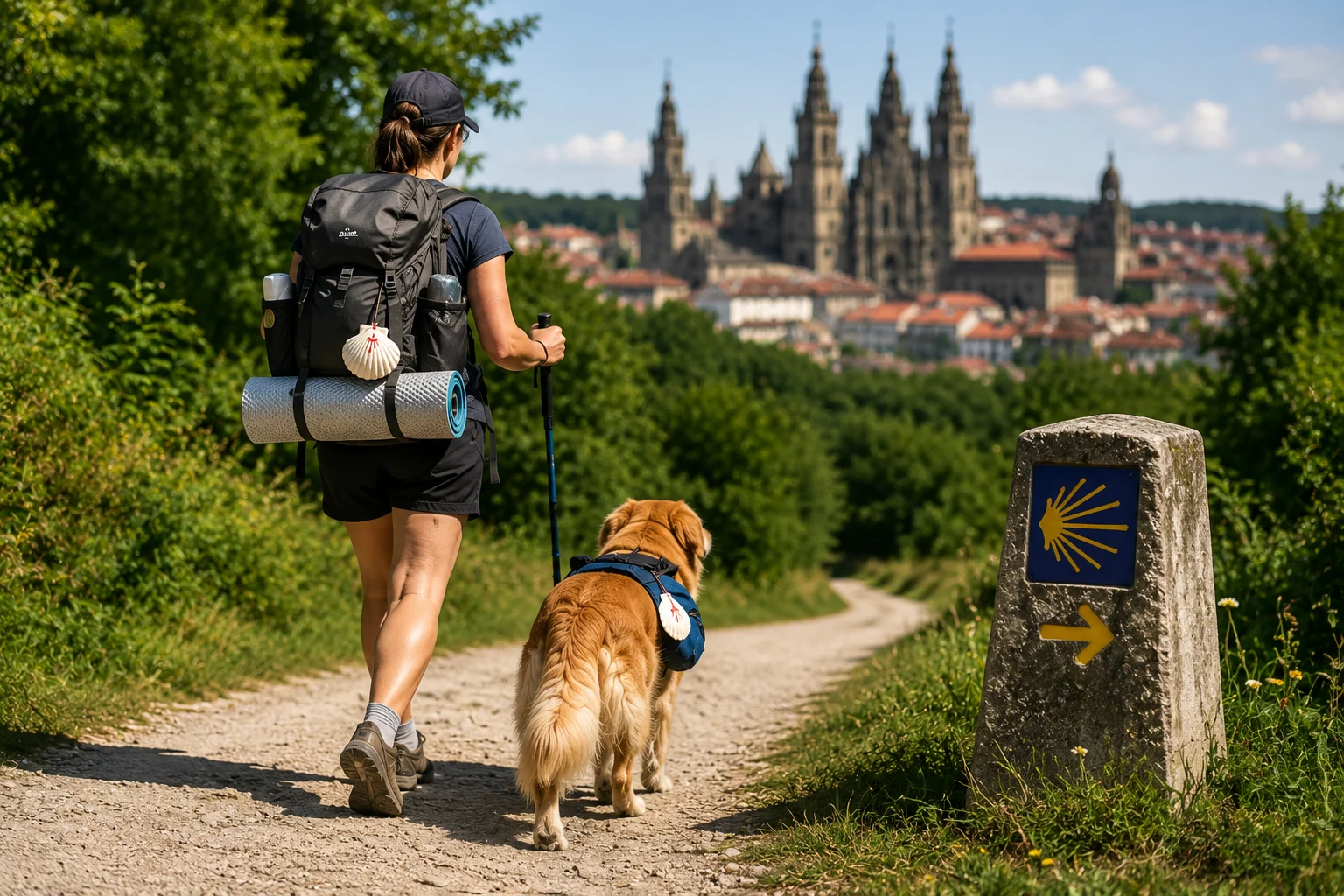
More and more pilgrims decide to share the adventure with their dog. These tips can make the difference between an unforgettable trip and a bad experience.
He Camino de Santiago It is an experience of improvement, friendship and discovery. For many pilgrims, it is also unthinkable to undertake this adventure without their most faithful companion: their dog.
In recent years, the number of people who travel the different Jacobean routes with their pets has increased. However, walking hundreds of kilometers with an animal requires special preparation to ensure its well-being and enjoy the trip in complete safety.
Can any dog do the Camino?
The answer is no.
Before planning the route, it is advisable to assess the age, state of health, size and physical condition of the animal.
Very young puppies, older dogs or those with joint, heart or respiratory problems may not be prepared to face long stages.
It is best to carry out a veterinary examination before starting the trip.
Training is also important
Just as pilgrims prepare their legs for weeks or months, dogs also need to get used to the effort.
The ideal is to start with progressive walks, gradually increasing the distance to strengthen muscles and pads.
This way you will avoid injuries when the time comes to tackle stages of 20 or 25 kilometers.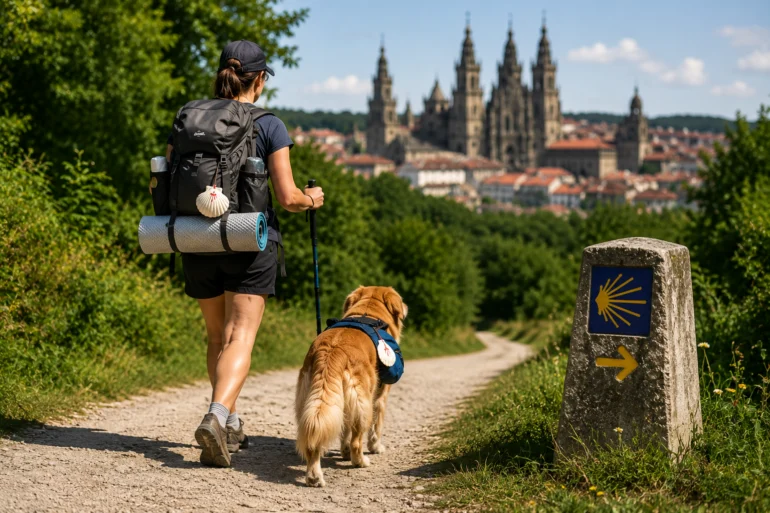
Protect your paws
The pads are one of the parts that suffer the most during the Camino.
The heat of asphalt, gravel, or rocky roads can cause wounds or blisters.
Always carry a small first aid kit for your pet that includes:
- Gauze and bandages.
- Antiseptic suitable for animals.
- Protective cream for pads.
- Tweezers to remove spikes or small stones.
Check their paws at the end of each stage.
Five minutes of review can prevent several days of pain.
Water, shade and breaks
Dogs regulate temperature worse than people.
During the summer months it is essential to avoid walking in the middle of the day.
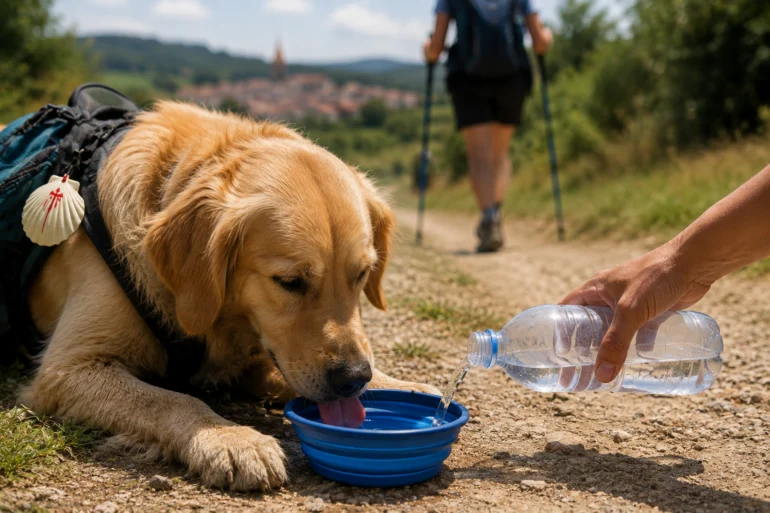
Take frequent breaks, look for shaded areas and offer water regularly even if the animal does not ask for it.
Never wait until he is thirsty.
Food during the Camino
Physical effort increases energy expenditure.
Many veterinarians recommend dividing the food into several small meals throughout the day and always maintaining their usual diet to avoid digestive problems.
Don't forget to bring some energy reward for the longer stages.
Look for “pet friendly” accommodations
Although there are more and more establishments that accept pets, not all shelters allow animals.
Before starting each stage, it is advisable to confirm where you can sleep with your dog.
Planning accommodation in advance will avoid surprises at the end of the day.
Respect the rest of the pilgrims
Not all people are comfortable with animals.
Always keep your dog under control, especially in crowded areas, when entering towns or when passing other pilgrims.
Always pick up their excrement and ensure that it does not disturb them during breaks or in accommodation.
Respect is also part of the spirit of the Camino.
The essential documentation
Before leaving be sure to bring:
- Updated veterinary certificate.
- Identified microchip.
- Vaccinations up to date.
- Deworming performed.
- Telephone number of the reference veterinarian.
It is also advisable to locate veterinary clinics along the route you are going to travel.
An experience that strengthens the bond
Those who have done the Camino with their dog agree on one thing.
They don't just share miles.
They share sunrises, silences, fatigue, joy and the excitement of arriving in Santiago together.
The bond between the two becomes even stronger.
Many pilgrims claim that walking with their pet helps them enjoy the present more, reduce stress and connect with nature. 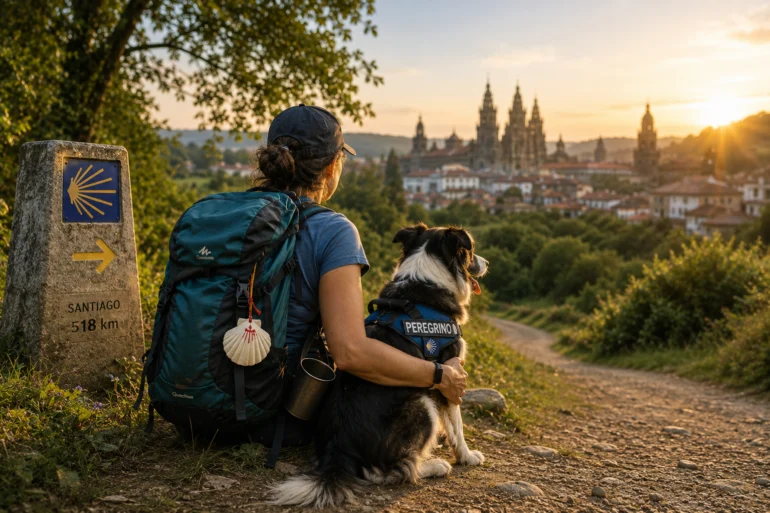
The Camino is also yours
Each yellow arrow leads towards Santiago.
But it also created hundreds of moments that you will remember for a lifetime with your four-legged companion.
If you prepare the adventure well, respect their needs and listen to their rhythm, the Camino can become an unforgettable experience for both of you.
Because in the end, it doesn't matter if you walk with boots... or with four legs.
The important thing is to arrive together.