The Jacobean phenomenon continues to cross borders. In Argentina, a project is advancing to create a new pilgrimage itinerary inspired by the Camino de Santiago that would unite Mar del Plata with Villa Gesell, crossing different towns in the province of Buenos Aires.
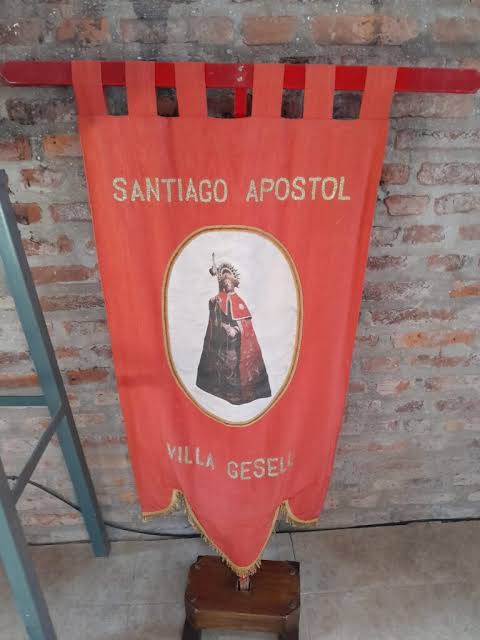
The proposal aims to connect the Cathedral of Saints Peter and Cecilia of Mar del Plata with the Santiago Apostle Sanctuary of Villa Gesell, configuring a route that combines pilgrimage, spirituality, heritage, nature, culture and gastronomy.
General Madariaga has just taken a new step to join the project. Mayor Esteban Santoro and the Director of Tourism, Juan Odriosola, held a meeting with representatives of the Villa Gesell Gastronomic Hotel Business Chamber and moved forward with the signing of a letter of intent to add the municipality to the future layout.

A Camino with Compostela inspiration
The initiative is not born from scratch. Already in 2023, the Diocese of Mar del Plata had reported a proposal to develop an initiatory path between the Cathedral of Mar del Plata and the Sanctuary of Santiago Apóstol of Villa Gesell, taking as a reference the great Compostela pilgrimage.
Now the project seeks to grow by incorporating municipalities, tourist services, heritage and different points of interest that allow structuring stages for future pilgrims.
Its promoters also propose that it could become a tool for regional development, following one of the best-known characteristics of the European Way: its ability to bring visitors and economic activity to small municipalities and establishments located along the route.
Villa Gesell already has Jacobean tradition
The connection between Villa Gesell and Santiago Apóstol is much deeper than one might think from Spain.
The town has a sanctuary dedicated to the Apostle and has celebrated its own Festival of Santiago for decades. This past July took place the 31st Winter Festival of Santiago Apóstol, which brought together neighbors, visitors and pilgrims.
The day included a walking pilgrimage, mass and even the traditional blown by a botafumeiro, accompanied by elements of Galician culture.
That is, it is not simply a matter of placing some yellow arrows and using the name of Santiago.
There is already a local tradition linked to the Apostle on which to build the project.
The Camino continues to become international
The Argentine initiative demonstrates the extent to which the Camino de Santiago has transcended Spanish borders.
Its model of pilgrimage, heritage and territorial development is being used as a reference in different parts of the world, although each new itinerary also raises an interesting question: how to preserve the spiritual and historical meaning of the Camino without converting its name solely into a tourist brand.
In Argentina, at least, the project is still in the definition phase. The final route, its stages, infrastructure, services and points of interest remain to be established.
But if it finally goes ahead, the pilgrims could have a new possibility in the future:
follow the footsteps of Santiago along the Argentine Atlantic without having to first cross the ocean.