



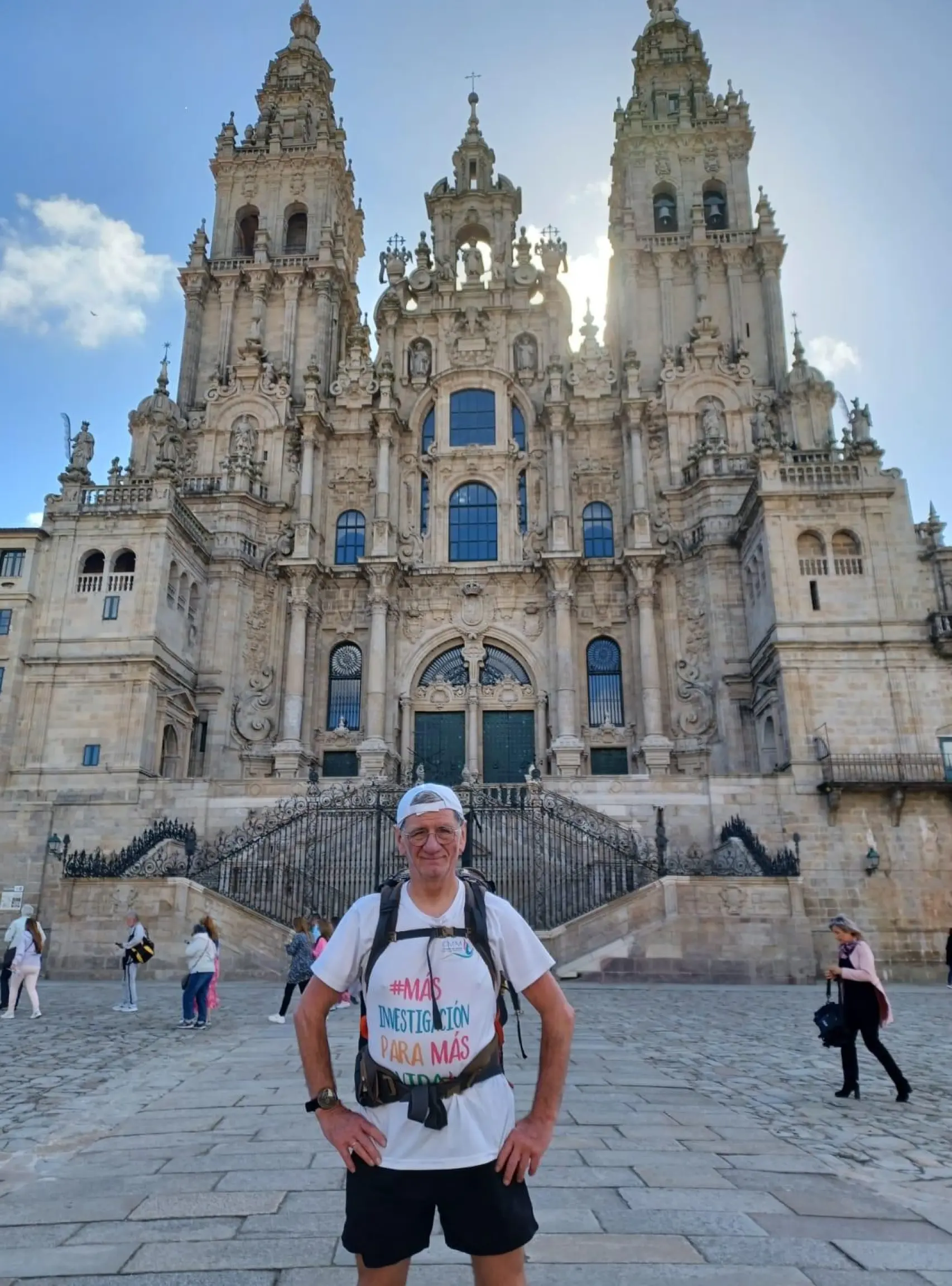
34 Caminos de Santiago at 71 years old
He Camino de Santiago It is the name given to the set of Christian pilgrimage routes of medieval origin that go to the tomb of Santiago El Mayor, located in the cathedral of Santiago de Compostela, in Galicia.
34 Caminos de Santiago at 71 years old. throughout history has been known as the Camino de Santiago, today called French Camino de Santiago, to the main itinerary that, starting from the western Pyrenees, runs through Spain until reaching the Galician city. Today, the term is used to refer to all existing Jacobean routes.
It happens to be a path that is full of manifestations of fervor, art and culture that It tells us about the spiritual roots of the Old Continent.
“I consider myself a fan of popular races and hiking. I had a promise, after overcoming an illness, to do the Camino de Santiago when I retired and so it was", our protagonist assures EL ESPAÑOL of Castilla y León in statements to EL ESPAÑOL.

His first path was the French one, from Piedrecita de O Cebreiro to Santiago de Compostela. About 165 kilometers. He contacted a group of unknown people and, as he confesses, the experience “didn't go very well” since “they didn't get along with each other.” However, it was “exciting to arrive at the Cathedral of Santiago.”
Remember that, when it started, the expense was “one euro per kilometer” and that in one stage “disbursed a total of 30 euros.” Now, after the increase in the price of everything, “it does not go below 40 euros per day” and “without spending money.”
You have to have breakfast, lunch and dinner and also enjoy having a couple of beers.
34 Caminos de Santiago
“The Camino de Santiago is engaging. To date I have completed 34. You pass through places, villages, small and large towns and large cities that allow you to enjoy, at the same time, doing a little tourism from different points along the way,” says our interviewee.
Makes mention of Sant Jean Pied de Port, from Logroño, Burgos, Sahagún, other Primitive Routes, the Camino del Norte, San Salvador, Epilogue to Fisterra and Muxía. Also to the Portuguese roads, inland and coastal, to the English, Sanabrés, Madrid and Mozárabe.
“They are all different places, they repeat themselves, the weather and the people you share every day where you pass are different and make you live new experiences,” he adds.
FOUNTAIN: THE SPANISH

















