



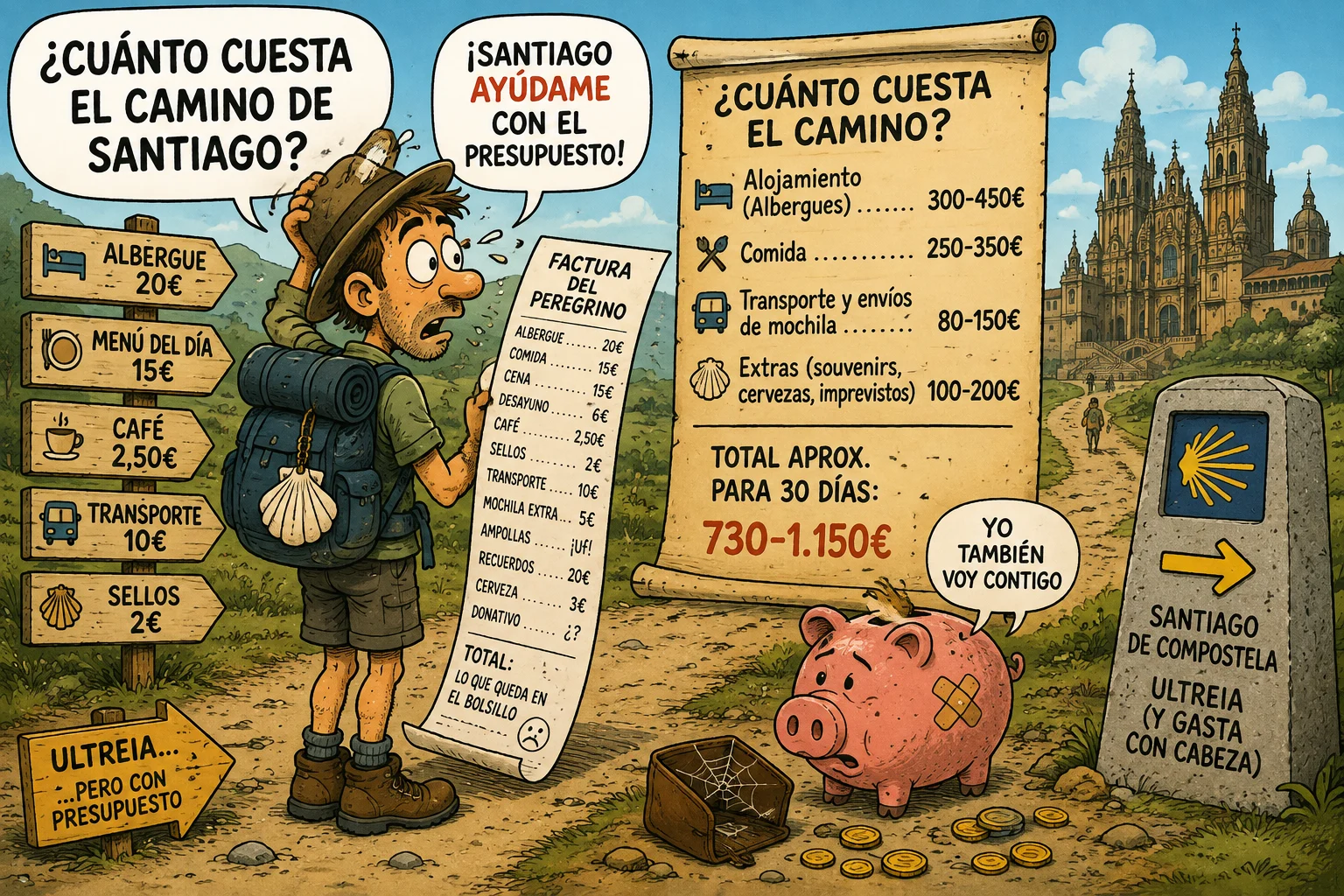
The question does not have a single figure, but it does have a useful answer: How much it costs to do the Camino de Santiago depends less on the route than on how you decide to experience it. You can go on a pilgrimage with 30 euros a day and arrive with just what you are wearing, or exceed 100 euros a day if you choose hotels, full dinners and frequent transfers. The Camino remains an accessible experience, but it requires doing things with your feet on the ground.
For a walking pilgrimage through Spain, a reasonable budget usually ranges between 35 and 65 euros per person per day, not counting the round trip to the starting point. This fork allows you to sleep, eat, wash clothes when necessary and face small expenses. Those who travel with more comfort, in high season or with transported luggage will have to calculate considerably more.
How much does it cost to do the Camino de Santiago per day
Daily expenses are mainly divided between accommodation, food and extras. We must not forget that prices change between communities, large towns and villages, nor that July and August have their own logic: more demand, fewer free beds and, often, higher rates.
Accommodation: from the pilgrim welcome to the hotel
Hostels are the great tool to keep the budget under control. In public or parish hostels, a place can cost around 8 to 15 euros, although some work with donations. Donation does not mean free: it means responsibility. If you have received a bed, a shower, a kitchen and a welcome, contributing according to your possibilities helps to sustain a hospitality that should not be taken for granted.
The private hostels They are usually located between 14 and 25 euros per night, with variations by route, season, room and services. Many offer disposable sheets, lockers, breakfast, laundry or more modern spaces. On the Camino Frances, especially in the last 100 kilometers, booking in advance may be necessary in the busiest months.
A single pension or a private room shared by two people usually costs between 45 and 90 euros. Hotels, charming rural houses and superior accommodations easily raise the cost to 80-150 euros or more per night. It is not a worse way of pilgrimage: it can be the right option for those who need to rest, are traveling with family, have reduced mobility or are looking for privacy. It's just another budget.
Food: the pilgrim's most flexible expense
Eating well on the Camino does not require you to spend a lot, but it is not advisable to turn each day into a race to save. The body walks, goes up, down and recovers during the night. Eating insufficiently ends up taking its toll.
A breakfast of coffee and toast can be around 3 to 6 euros. If you add juice, pastries or omelette, it rises quickly. At midday, a sandwich, an empanada, a prepared salad or a supermarket purchase allows you to eat for 5 to 10 euros. The classic pilgrim's menu usually costs between 12 and 18 euros, although in tourist areas it may be higher.
Dinner can cost 10 or 20 euros in a bar or restaurant, or much less if the hostel has a kitchen and a simple purchase is shared. Cooking two or three nights a week reduces the total cost, but not all accommodations have an equipped kitchen and you don't always feel like getting in front of the stove after 25 kilometers. Planning is useful, but the Camino also requires room for fatigue.
For reference, calculate 20 to 35 euros daily for food and drinks if you alternate supermarket, menu and a bar stop. With a lot of your own cooking, you can go down. With long breakfasts, frequent coffees, wines, desserts and à la carte dinners, you will definitely feel better.
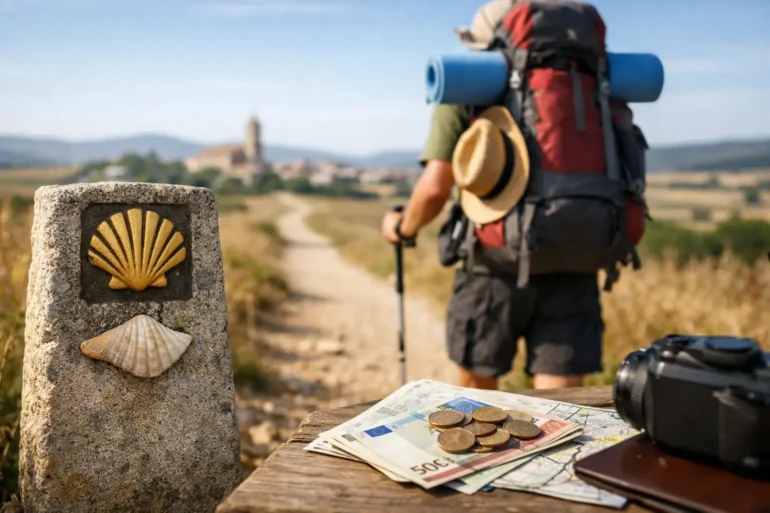
Transportation, luggage and other expenses that are forgotten
The budget does not start when you take the first step. Getting to Saint-Jean-Pied-de-Port, Roncesvalles, Sarria, Tui, Oviedo, Ferrol or Seville has a very different cost depending on where you are traveling from. Train, bus, plane, taxi or own car can represent from a few dozen to several hundred euros.
There are also small expenses that, added together, change the final figure: credentials, travel insurance, pharmacy, sunscreen, walking sticks, a raincoat, a special dinner, tickets to monuments, laundry and souvenirs. Reserve a game of 5 to 10 euros per day for unforeseen events It's sensible.
Backpack transportation deserves a separate mention. It usually costs approximately 5 to 8 euros per stage and package, depending on company, distance and conditions. For some pilgrims it is a whim; For others, the difference between continuing or giving up due to an injury, a bad back or an incomplete recovery. The Camino is not measured by the kilos carried, but by the honesty with which each person travels it.
If you bring a pet, include supplements for accommodation, food, water and possible transfers. If you travel by bicycle, check the supplements for storing or transporting the bike. And if you need regular medication, don't leave that expense until the last minute.
Actual budget according to the route and days
The duration matters more than the name of the route. Doing the last 100 kilometers of the French Way from Sarria in five or six days does not cost the same as traveling the Primitive Path complete for two weeks, nor have to walk the Vía de la Plata for more than a month.
To guide you, these calculations do not include transportation to the start or return from Santiago:
- Way from Sarria, 5-6 days: between 210 and 420 euros with an average pilgrim budget.
- Portuguese Way from Tui, 6-7 days: between 245 and 455 euros.
- Camino Inglés from Ferrol, 5-6 days: between 200 and 390 euros.
- Complete Primitive Way, 12-15 days: between 500 and 975 euros.
- Complete French Way, 30-35 days: between 1,200 and 2,275 euros.
These are estimates, not fixed rates. On a long route there are rest days, more expensive stages and times when a pilgrim decides on a private room to recover. That's also part of walking wisely.
How to save without losing the essence of the Camino
Saving should not mean demanding impossible prices from small town businesses. Bars, shops, taxis, hostels and hospitaleros are part of the life that keeps many routes open. The key is to choose well, not to cut blindly.
Traveling outside of July, August, Easter and designated long weekends usually offers better availability and more peace of mind. Carrying a reusable bottle, buying fruit and nuts at supermarkets, using stoves when practical, and limiting backpacking to the days necessary are decisions that make an impact. It also helps not to buy new material on impulse before leaving: many things are already at home and others are discovered unnecessary after two stages.
Book accommodation at busy points when the date warrants it, but avoid turning the entire Camino into a closed agenda. Reservation gives security; Flexibility allows you to listen to your body, stop where there is good conversation and change plans if the weather gets complicated.
How much money should you bring?
Although card payment is increasingly accepted, not all towns, small shelters or donations work the same. Carry a moderate amount of cash, for example 100 or 150 euros, offers peace of mind without taking unnecessary risks. The rest can be managed by card, always having a second means of payment in case the first fails.
Before starting, prepare a total budget with four blocks: travel to the start, daily expenses, return from Santiago and an emergency fund. Adding an extra 10% prevents a blister, a night's sleep or a change in weather from becoming a problem.
The best budget is not the lowest, but the one that allows you to walk without anxiety and treat those who welcome you with respect. Save time for a hot broth on a rainy day, for a night of recovery and to sit and talk with other pilgrims. Sometimes, that is the most valuable part of the Camino. Good Way!

















