



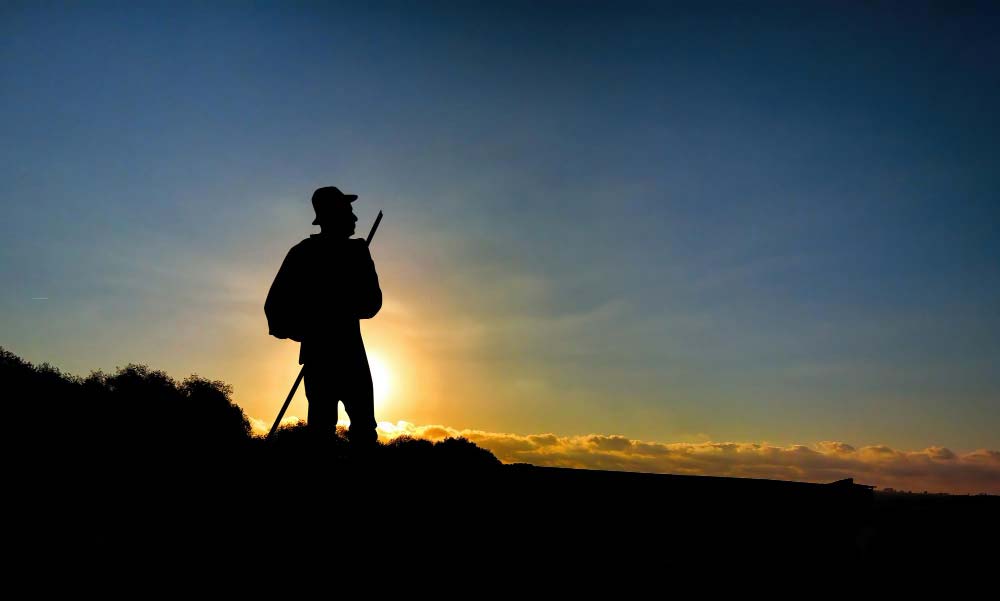
The Camino de Santiago as a spiritual experience: whether you believe or not, something moves inside
He Camino de Santiago It does not start in the first stage nor does it end in the Plaza del Obradoiro. Start earlier, much earlier, and continue later, even when you are back home. And you don't need to have defined faith, or pray, or know exactly what you are looking for. The Camino acts the same: it puts you in motion on the outside… and on the inside.
There are pilgrims who arrive with a clear faith and others who arrive with doubts, fatigue or simply curiosity. And the curious thing is that the Camino does not ask. It does not require spiritual credentials. It receives you just as you come, with your backpack full of clothes, fears, silences and unanswered questions.
Walking for hours, repeating the step gesture over and over again, letting the body set the pace and not the clock, gradually turns off the noise. The cell phone loses importance, the rush disappears and the mind begins to loosen. That's when something difficult to explain happens: you start to listen to yourself.
For some, that experience has a name and is called God. For others it is simply peace, clarity or a pending conversation with themselves. It doesn't matter what you call it. The Way does not correct, it does not judge, it does not impose. Accompany.
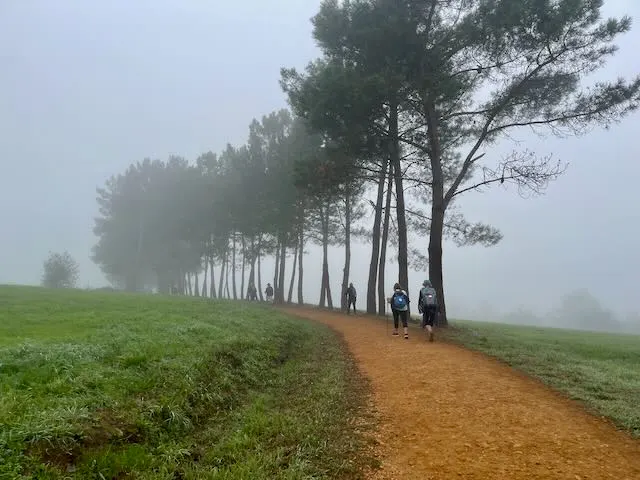
Entering a church on the Camino, even if you are not a believer, is usually another of those unexpected moments. Not always by faith, but by silence, the cold stone, the soft light that enters through a stained glass window. The pilgrim sits, breathes, rests. Sometimes he doesn't think about anything. And that, in a world that doesn't stop, is already deeply spiritual.
There are days when the Camino hurts. The body hurts, the memories hurt, the decisions not made hurt. And yet you continue walking. That simple gesture—continue—has something of a silent prayer, an act of trust. Step by step. No clear answers. No interior maps.
The Camino de Santiago does not promise spectacular revelations. It does not guarantee radical changes. But it does offer something very valuable: a space to be honest with yourself. Where there is no need to prove anything. Where no one asks you who you are off the Camino, only who you are while you walk.
Therefore, whether you believe it or not, the Camino leaves its mark. Because spirituality does not always have the form of prayer. Sometimes it takes the form of shared fatigue, a cold dawn, a brief conversation with a stranger or a silence that, finally, is not uncomfortable.
And when all that happens, even if you don't know how to name it, you know that something has moved inside. And that is the Way.

















