



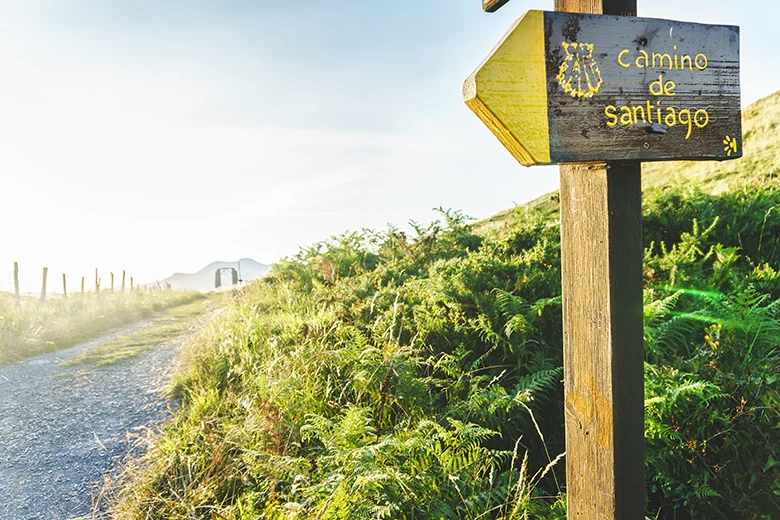
More accessibility, shorter stages and new ways of pilgrimage drive the rise of the silver generation on the Jacobean routes
He Camino de Santiago It is no longer only an adventure reserved for athletes, backpackers or young people in search of experiences. More and more people over 60 years of age decide to put on their boots, hang their credentials around their necks and undertake a pilgrimage that combines moderate exercise, culture, spirituality and coexistence.
The growth of the so-called silver generation It is transforming the way of understanding the Camino. Specialized companies, pilgrim associations and travel agencies have developed specific programs that facilitate the experience for those who wish to travel the Jacobean routes without facing excessively demanding stages.
Shorter stages to enjoy the Camino
One of the main adaptations is to reduce daily distances.
Compared to the traditional days of 20 or 25 kilometers, many programs for seniors propose routes of between 10 and 14 kilometers daily, allowing you to walk calmly, enjoy the landscapes and reduce the risk of injury or exhaustion.
This modality is attracting numerous pilgrims who had always wanted to do the Camino de Santiago but considered the physical effort required too demanding.
Backpack transportation gains prominence
Another of the services that is having the most success is transfer of backpacks between stages.
Thanks to this system, pilgrims can walk carrying only a small day backpack with water, documentation and personal items, while the main luggage is transported to the next accommodation.
Far from diminishing the authenticity of the experience, many pilgrims consider that this service allows them to better enjoy the tour and avoid back or joint problems.
More accessibility and better infrastructure
The changes also affect accommodation and route planning.
There are more and more hotels, guesthouses and hostels adapted to people with reduced mobility or special needs. In addition, many itineraries incorporate alternatives to avoid the most complicated or demanding sections.
The objective is clear: to make the Camino de Santiago for seniors be a safe, comfortable and accessible experience for everyone.
An experience that goes far beyond walking
Experts agree that the success of the Camino among the elderly is not explained solely by physical activity.
Many pilgrims find on the route an opportunity to face a new life stage, meet people from different countries, disconnect from everyday worries and dedicate time to personal reflection.
Retirement, family changes or simply the desire to fulfill a pending dream are some of the reasons that lead thousands of people to begin the pilgrimage each year.
The Camino does not understand ages
Hospitallers and Jacobean associations remember that the Camino has always been an open space for everyone.
In fact, it is not uncommon to find pilgrims over 70, 80 and even 90 years old on the routes who continue walking with enthusiasm towards Santiago de Compostela.
Experience shows that age is not the main factor in completing a pilgrimage. What is truly important is the preparation, the attitude and the ability to adapt the route to the possibilities of each person.
A phenomenon that will continue to grow
With the aging of the European population and the growing interest in active and healthy tourism, everything indicates that the presence of older pilgrims will continue to increase in the coming years.
The Camino de Santiago is thus consolidated as one of the best options for those seeking to combine moderate exercise, cultural heritage, nature and personal growth.
Because on the Camino speed doesn't matter.
It is important to keep moving forward.
And for thousands of pilgrims over 60 years of age, each step remains a new adventure.

















