



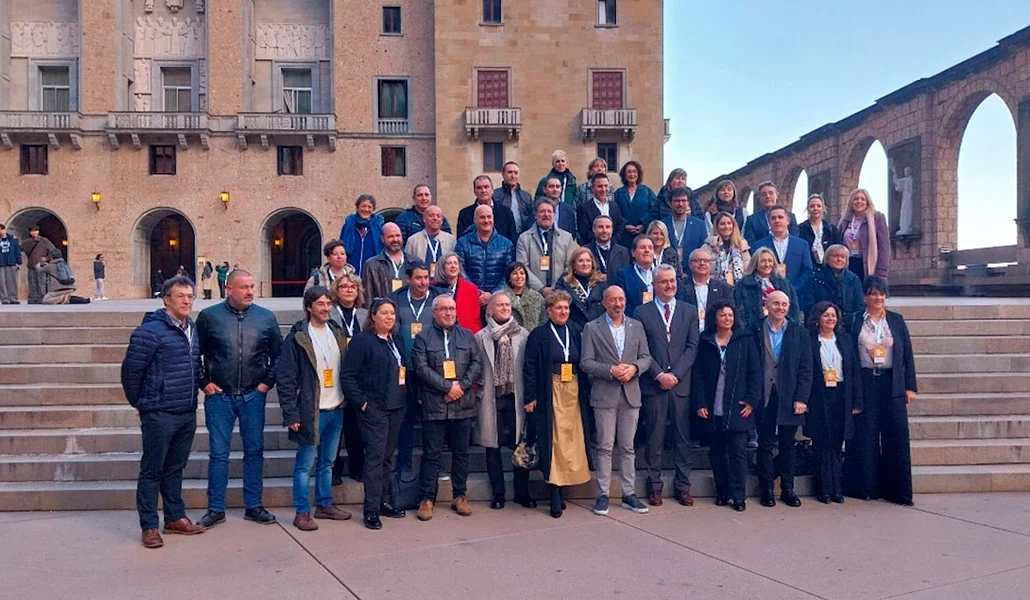
Palau d'Anglesola It is a town of 2,200 inhabitants in it Pla de Urgell, in Lleida, an irrigated agricultural region 20 kilometers of the capital. It is one of the 60 municipalities which is part of the Association of Municipalities of the Ignatian Way, constituted in Manresa a few days ago.
«Pilgrims pass through here to Santiago y a Manresa. We are hospitable and welcome you in a small eight-seater hostel"Very familiar," he explains. Francesc Balcells i Teixidó, mayor of the town. He tells what he does 15 years was created in the town Amics del Camí association to this end, connecting with a hospitality tradition that has led them to welcome more than 300 pilgrims last year. Does two years They also organized a work camp for young people that was called All roads lead to Palau, because another itinerary in the area links Catalan-speaking regions and another goes from Lérida to Gerona.
«Surely Saint Ignatius passed by here anonymously», says Balcells, but «being at the final part of his path we like to think that he forged his charisma walking through these places. If we transfer his pilgrimage to the spiritual exercises that he devised, these stages would correspond to conversion and change of life.

In this same sense, "to the inhabitants of Palau d'Anglesola It does us a lot of good to have the Camino here, it makes us better,” he adds. He says this because "the rhythm of a pilgrim it challenges us. And if you can talk to him, it opens your horizons and makes you unload your own backpack.
He Ignatian Way It is an itinerary that starts from Basque lands and passes through Rioja, Navarre y Aragon to Catalan lands, ending in Manresa, in one of whose caves the holy founder of the jesuits created the spiritual exercises. They are in total 650 kilometers divided into 27 stages, which specifically start from the birthplace of Ignatius in Loyola, in the Basque Country, to what is known as the Cova de San Ignacio in the city of Manresa, near the Montserrat monastery, in Catalonia.
This same route that the saint traveled in 1522 now unites these municipalities, which thus seek to organize the reception of pilgrims, make known their tourist attractions and optimize the cultural and historical potential that they treasure on the Camino.

















