




An increasingly attractive route for those seeking tranquility and nature, but with clear challenges in signage and rest points
The Camino Lebaniego continues to gain prominence as an alternative to the more traditional Camino de Santiago. This Cantabrian route, which connects the coast with the monastery of Santo Toribio de Liébana, is attracting an increasingly broad profile of pilgrims, especially young people and women, who are looking for a more authentic and less crowded experience.
However, this growth is also bringing to light some important shortcomings that the walkers themselves are beginning to point out clearly.
More pilgrims… and new needs on the road
The interest in Lebaniego Road has increased significantly on dates such as Easter. This increase has not always been accompanied by the same development in infrastructure, which forces pilgrims to plan their route in greater detail.
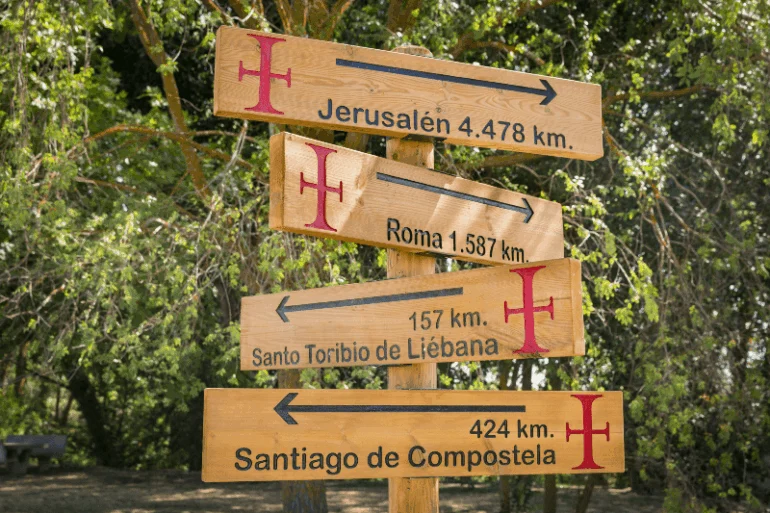
One of the main problems detected is the lack of sufficient signage in some sections. Although the route is marked, many pilgrims consider that it is necessary to reinforce the indications, especially in areas that are less traveled or where orientation is more difficult.
The lack of services: eating and rest, the great challenge
Another aspect that is most worrying is the scarcity of places to eat and rest during certain stages. It is not just about accommodation, but about something more basic: being able to stop, regain strength and continue the journey safely.
From the surroundings of the Camino itself, they are clear: pilgrims need more support points during the journey. This demand is repeated with increasing frequency, especially in rural areas where services are limited.
The balance between growth and authenticity
Despite these shortcomings, there is a clear idea among those who manage and live the Camino: massification is not sought. The objective is to maintain the essence of the route, its tranquility and its natural character.
Currently, the number of accommodation places is limited, which at specific times can generate a certain saturation, but it also contributes to preserving the authentic pilgrim experience.
This balance between growth and authenticity is one of the great challenges for the future of the Camino Lebaniego.

A real alternative within the Jacobean world
The Camino Lebaniego is not just another variant. It's a different experience. In just over 70 kilometers, the pilgrim passes from the Cantabrian Sea to the mountain landscapes of the Picos de Europa, on a route full of nature and symbolism.
Furthermore, its final destination, the Santo Toribio monastery, provides a strong spiritual component that continues to attract walkers of all kinds.
Listening to the pilgrim, key to the future
The growth of this route shows that more and more people are looking for alternative, less saturated and more authentic routes. But it also makes it clear that the pilgrim's experience must remain the priority.
Improving signage, providing rest points and guaranteeing basic services does not mean losing the essence of the Camino, but rather reinforcing it.
Because in the end, as on any Jacobean route, the important thing is not just to walk... but to be able to do it well.

















