




More than 20,000 pilgrims promote the rise of the “Eastern Way”
The Camino de Santiago continues to grow and expand its influence internationally, and one of the most striking phenomena in recent years is its connection with Japan. Every year, more than 20,000 pilgrims They participate in a trend that unites two of the most important pilgrimage routes in the world: the Camino de Santiago in Galicia and the Kumano Kodo in Japan.
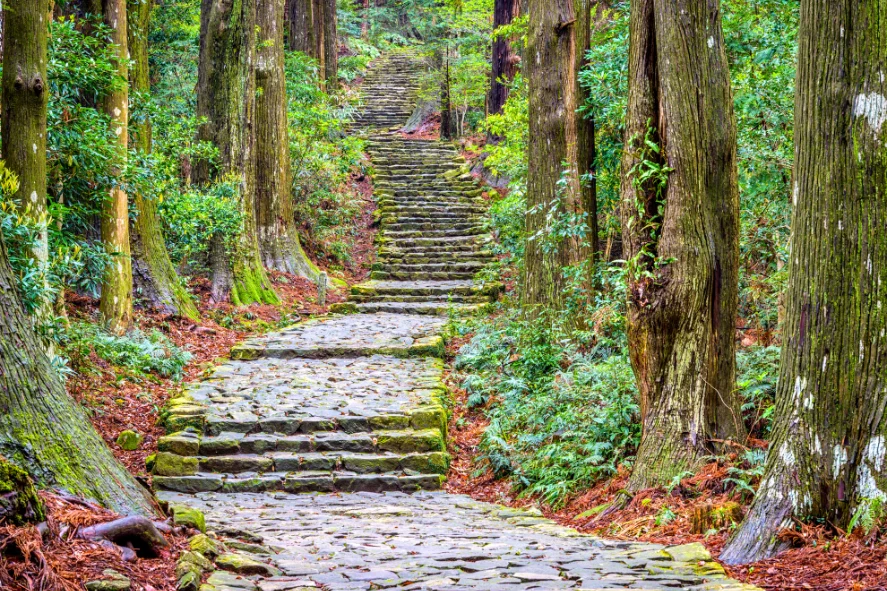
The latter, located on the Kii peninsula, is known as the “Eastern Camino de Santiago”. With more than a thousand years of history, it travels through mountains, forests and ancient temples, offering a deeply spiritual experience that is reminiscent in many ways of the Galician Camino. Both itineraries share a unique recognition worldwide and have become benchmarks of the spiritual tourism, hiking and cultural trips.
Two historical paths with the same essence
Despite the distance, the Camino de Santiago and the Kumano Kodo have a lot in common. It is not just about walking, but about living a transformative experience. The pilgrim not only travels kilometers, but also connects with himself and with other cultures.
In Galicia, the goal is the Cathedral of Santiago, a symbol of centuries of Jacobean tradition. In Japan, the route links several ancient sanctuaries in a spectacular natural environment, where spirituality is very present at each stage.
This parallelism has made more and more travelers decide to complete both routes, seeking a complete experience between East and West.
The growth of international tourism on the Camino
The increase in international pilgrims on the Camino de Santiago is a consolidated reality. Year after year, thousands of people arrive from different parts of the world, attracted by the mix of nature, history and spirituality.
This growth is also driving key sectors such as:
- accommodation and hostel reservations
- rural tourism and hotels
- trekking equipment and backpacks
- travel insurance
- gastronomic and cultural experiences
The Camino has become a first-class economic and tourist engine, especially in Galicia.
A cultural bridge between Galicia and Japan
The connection between the Camino de Santiago and the Kumano Kodo has given rise to an authentic cultural bridge between Galicia and Japan. It is not just about tourism, but about an exchange of traditions, values and ways of understanding travel.
Many pilgrims see in this double experience a way to delve deeper into the meaning of the Camino. Walking through Galicia and Japan has become a personal goal for those looking for something more than a simple trip.
A trend that will continue to grow
Everything indicates that this trend will continue in the coming years. The rise of experiential tourism, interest in hiking and the search for meaningful trips are promoting routes such as the Camino de Santiago on a global level.
More and more people are looking to disconnect from the daily rhythm and live authentic experiences, and the Camino offers precisely that: a unique combination of nature, culture and reflection.
Because today, the Camino is no longer just a route in Galicia…
It is a global phenomenon that connects cultures, continents and millions of pilgrims.
















