



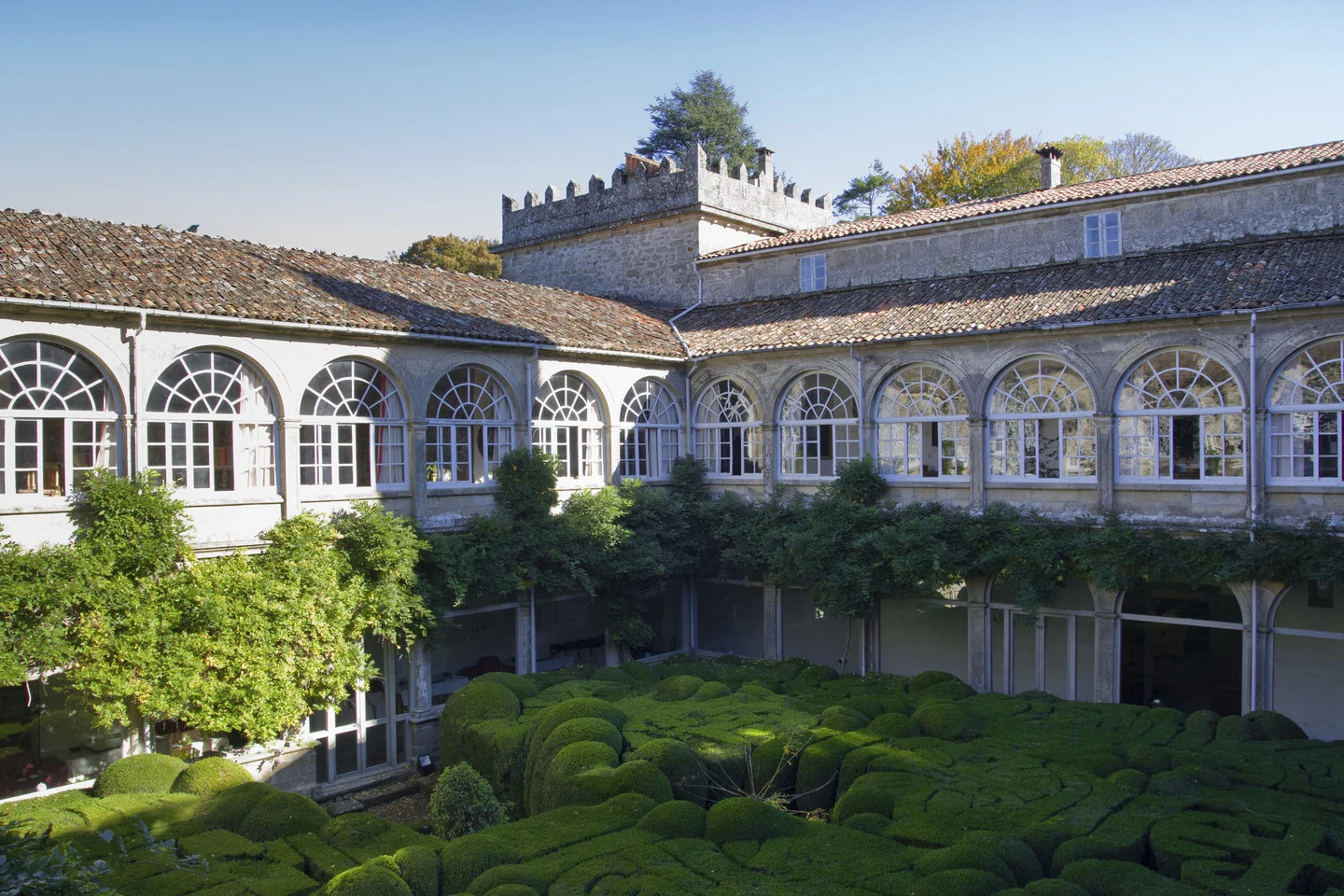
The hidden labyrinth of the Pazo de San Lorenzo: a silent treasure on the route to Santiago
A historical corner that dialogues with the spirit of the Camino de Santiago
A few steps from the hustle and bustle of the historic center of Santiago de Compostela, hides one of those places that seem made for pause and reflection: the labyrinth of the Pazo de San Lorenzo. This enclave, loaded with symbolism and beauty, connects naturally with the essence of the Camino de Santiago, offering pilgrims and visitors a space where the external journey is transformed into an internal journey.
The labyrinth, little known even to many Compostela residents, is part of the historic gardens of the pazo and is presented as a perfect metaphor for the Camino itself: moving forward, stopping, hesitating and finally finding the exit. A transit that is not only measured in meters, but in experiences and emotions.

A space of contemplation for the modern pilgrim
For those who arrive in Santiago after days or weeks of walking, the Pazo de San Lorenzo becomes a haven of calm. The labyrinth invites you to slow down, disconnect from the urban noise and rediscover the deep meaning of the journey. It is no coincidence that many pilgrims describe their passage through this place as a spiritual extension of the Camino, a last exercise in introspection before reaching the final goal.
This green enclave reinforces the idea that Santiago is not just a destination, but a set of spaces that continue the Jacobean story even after arriving in the city. The labyrinth acts as a symbol of transition between the effort of the journey and the meditation that characterizes the arrival in Compostela.
Living heritage in dialogue with the Jacobean route
The Pazo de San Lorenzo, with centuries of history behind it, represents the union between heritage, landscape and tradition. Its carefully preserved labyrinth adds a cultural and symbolic dimension to the surroundings of the Camino, enriching the experience of those seeking something more than photography in front of the cathedral.
From a tourist and cultural perspective, these types of spaces help to diversify the offer linked to the Camino de Santiago, inviting you to discover less traveled corners but deeply connected with its original spirit.
Santiago, beyond the goal
The presence of places such as the Pazo de San Lorenzo labyrinth reinforces the idea that the Camino does not end when it reaches the city. On the contrary, it transforms. Santiago offers the pilgrim scenarios where they can continue walking, this time inwards, completing a journey that combines history, symbolism and silence.
Thus, the hidden labyrinth is consolidated as a discreet jewel of the Jacobean universe, remembering that each Path has multiple endings... and many ways to be followed.

















