



The pilgrimage of Saint Teresa, by electric bicycle
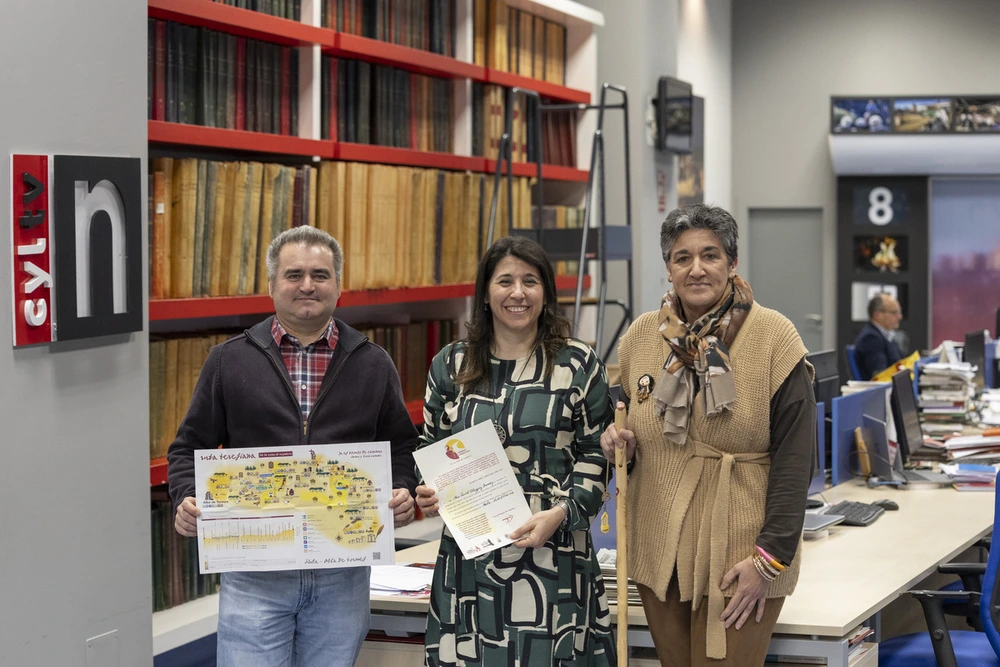
Like the Camino de Santiago, in Castilla y León there is another pilgrimage route that aims to become a benchmark within this field. This is the project 'From the Cradle to the Sepulcher', which begins in Ávila (birthplace of Saint Teresa of Jesús) and ends in Alba de Tormes (the town where her remains rest). A maximum route of 117.5 kilometers that passes through 23 municipalities, some with great significance in the life of La Santa (Gotarrendura, Fontiveros, Duruelo or Mancera de Abajo).
The pilgrimage of Saint Teresa, by electric bicycle: Although the route was born 11 years ago, it was not until 2015 when, in line with the commemoration of the V Centennial of the Birth of Teresa de Cepeda y Ahumada (secular name of La Santa), the association that structures the entire path emerged. «The initial objective of the route is to follow an itinerary from Ávila, where Santa Teresa was born, to Alba de Tormes, where her tomb is located. But, in the end, it is a route that tries to energize the municipalities, the economy and the resources and the enhancement of what is truly in them," explained the president of the entity, Dory Vicente.
The ideologist of the journey was the Carmelite Father Antonio González, who in the summer of 2013 made this journey with a group of young people with the idea of creating a Teresian path. An initiative that became a reality the following year as a common project between the 23 towns that comprise it and with the agreement of the Provincial Councils of Ávila and Salamanca. From then on, the path began to be marked with posts, plaques and red arrows, the main symbol of the Teresian route. The first organized march took place in August 2014 and, since then, thousands of pilgrims have made this journey.
Now, with the arrival of Holy Week, it has come to my attention. There is the option of traveling this route by electric bicycle, a complementary possibility to doing it on foot, on horseback or by conventional bicycle. «The bicycles are provided by the route. These will be placed at the beginning and at the end and can be recharged along the route," explained Dory Vicente with the collaboration of Ana Isabel Velázquez, secretary of 'De la Cuna al Sepulcro'. The idea is that the charging points are located, in addition to Ávila and Alba de Tormes, in Mancera de Abajo, the place where the fork between the north and south roads occurs. «First there was the south road. What happens is that we thought it was important to include Peñaranda de Bracamonte, first because of its services and second because there is a Carmelite convent that is very important from an artistic and spiritual point of view," said Velázquez. This bifurcation, which mainly affects the province of Salamanca, brings together the towns of Peñaranda de Bracamonte, Nava de Sotrobal, Coca de Alba and Peñarandilla on its northern slope (32 kilometers) and Macotera, Tordillos and La Lurda on its southern side (22 kilometers). Both join again in Garcihernández 8.5 kilometers from the end of the road.
'From the Cradle to the Grave' continues the legacy of other paths linked to the figure of Saint Teresa. «There has always been a pilgrimage to Alba de Tormes. In the heyday of the Duchy of Alba, the subjects made pilgrimages to Alba when the duke requested it. There was a vote that caused people not to work on their lands and forced people to go on pilgrimage. In the area of Alba de Tormes, the pilgrimage had an objective of veneration," argued Vicente. Now, that vision has been transformed into a tourist motive or personal introspection among walkers. Approximately half a thousand people travel the route each year with the aim of completing 'La Andariega', the pilgrims' credential. «When you ask the pilgrims their origin, it is very diverse. It draws a lot of attention that there are many foreign pilgrims,” said the president. Some nationalities that vary from Hungary to South America, passing through Poland or France.
It is impossible for the Teresian route 'From the Cradle to the Grave' to achieve the popularity and relevance that the Camino de Santiago has, among other reasons, because it emerged in medieval times. But if it can highlight and make known the small (but attractive) municipalities through which it runs, its creation will already have been worth it. Now, in the 21st century, you can follow in the footsteps of Saint Teresa even on an electric bicycle. One more incentive to try this interesting route.
FOUNTAIN: AVILA'S DIARY

















